


Turkmen Gul Weaving
These pieces of turkmen gul weaving are tribal carpets and small bags woven across Central Asia that bring rich reds and geometric motifs into modern interiors.
Turkmen Gul Weaving
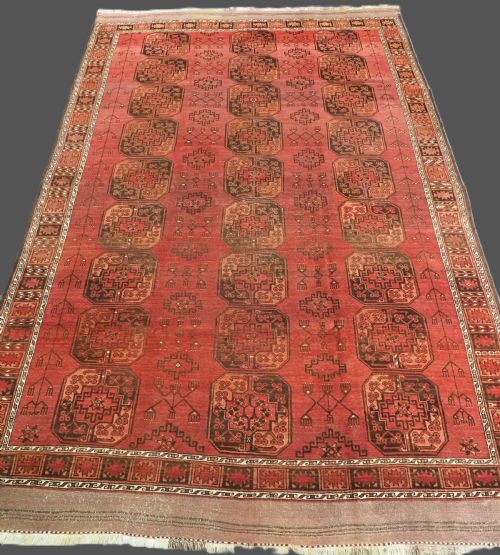
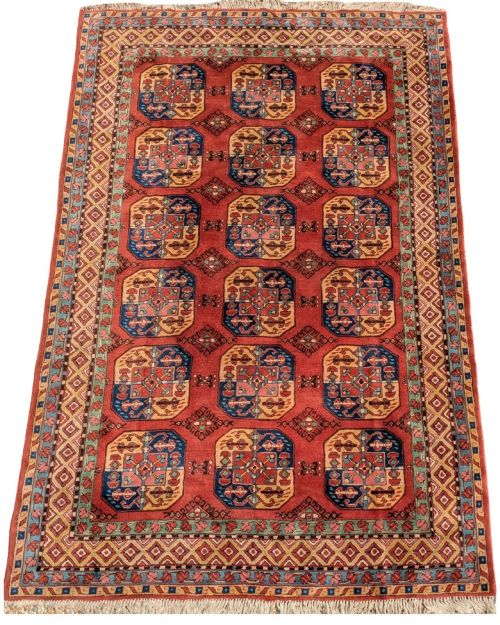
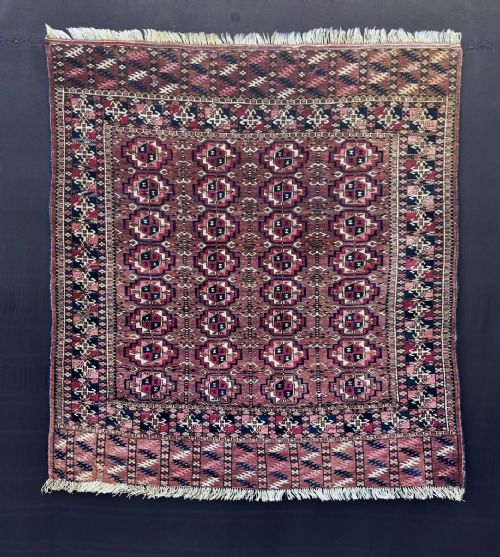
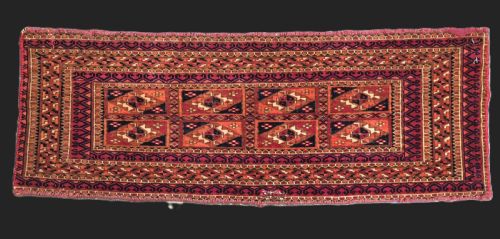
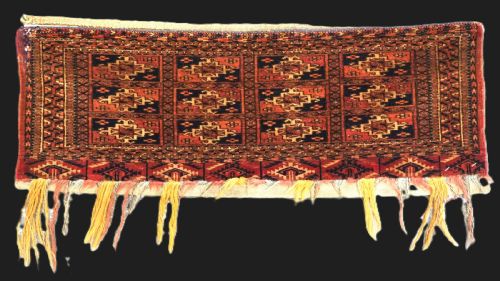
Turkmen gul weaving encompasses tribal rugs, large carpets, and smaller utilitarian bags created across Central Asian oases and steppes. Buyers searching this phrase encounter floor coverings and nomadic furnishings that reflect specific regional traditions.
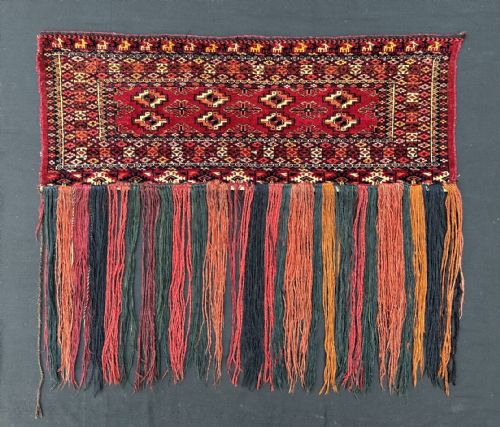
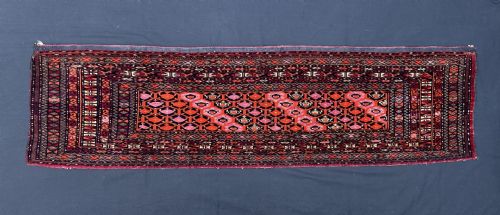
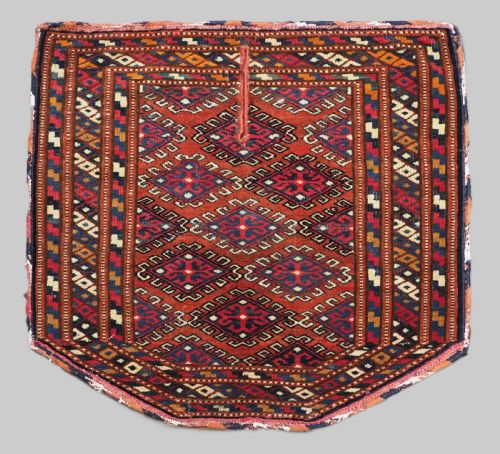
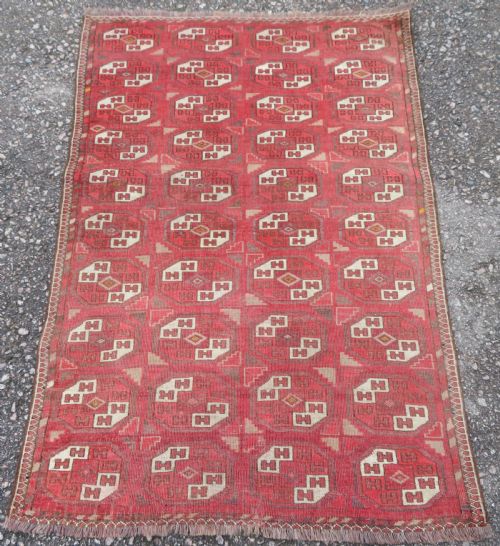
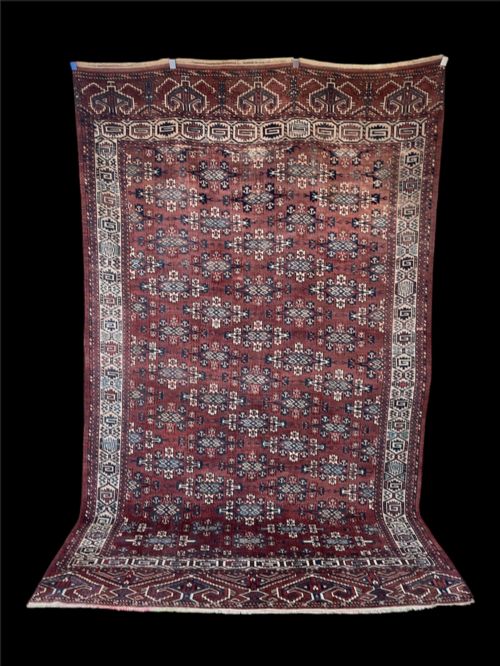
The most common formats on this page are torba faces, chuvals, and main carpets originating from tribal groups such as the Tekke, Ersari, and Yomut. These textiles range from room-sized carpets down to small dowry bags complete with original plain weave backs.
Pieces span the nineteenth and early twentieth centuries, capturing a period before industrial dyes changed traditional textile production. Each item preserves tribal motifs passed down through generations of nomadic weavers.
How they were made
Weavers relied principally on hand-spun wool for the pile, foundations, and structural elements, occasionally incorporating cotton, silk, goat hair, and horsehair for specific highlights or structural support. Natural dyes provided the deep red palettes and secondary tones characteristic of these tribal textiles.
The construction involves knotting wool onto warp and weft foundations, often finished with plain weave backs on bags or secure selvedges on carpets. Silk highlights appear in select dowry pieces to add contrast against the dense wool pile.
Listings span from the mid-nineteenth century up to the 1930s, featuring wool, silk, and natural dyes across nomadic rug formats.
What varies in quality
Quality rests upon the precision of the drawing and the density of the weave, where finer knots allow for sharper definition within intricate gul motifs. The depth and saturation of natural dye colours also separate standard examples from exceptional ones.
Survival of original elements such as plain weave backs, hanging loops, and complete borders elevates a piece. Structural integrity across the wool pile and foundation determines how well a carpet or bag retains its form over time.
Tekke Tribes·Sariq Tribe·Yomut Tribes
The Turkmen Gul Weaving Glossary
- Gul
- A primary octagonal medallion or motif repeated across Turkmen carpets and bags, identifying the specific tribe of the weaver. Different tribal groups utilised distinct gul patterns such as the kepse or schemle.
- Torba
- A small wall-hanging bag utilised by nomadic households for storage within the tent. These often display multiple guls on the face and sometimes retain their original plain weave backs.
- Chuval
- A large tent bag used for bedding and household possessions, distinguished from smaller bags by its greater proportions and specific multiple gul arrangements. Surviving examples frequently appear as cut faces or complete with backs.
- Kapunuk
- A tent door rug designed to frame the entrance of a nomadic dwelling. These possess a distinctive shape tailored to fit yurt doorways.
- Main carpet
- A large floor covering woven for domestic use or ceremonial purposes, featuring field repeats of major guls surrounded by complex borders.
Turkmen Gul Weaving: Frequently Asked Questions
What is a gul?
A gul is the repeating octagonal motif that forms the main pattern field on Turkmen weaving. Each tribal group designed their own specific gul variations.
These motifs served as visual markers of tribal identity and heritage across Central Asia.
How were these bags used?
Nomadic families utilised torbas and chuvals inside tents for storing clothing, bedding, and domestic items. They hung against the lattice walls or served as container units.
Over time, many of these bags were separated from their original plain weave backs during trade or transport.
How do I care for wool rugs?
Place wool rugs in low-traffic areas or mount smaller torbas securely on walls to limit physical wear on the pile. Regular gentle vacuuming without a beater bar removes trapped dust effectively.
Keep them away from direct sunlight to protect the natural dye colours from fading.
How can I tell different tribes apart?
Tribal attribution relies on the specific gul geometry, the structure of the secondary ornaments, and the dominant shades of red in the wool. Tekke and Yomut pieces display distinct drawing styles and border arrangements.
Comparing the arrangement of the medallions helps identify whether a piece originates from the Ersari, Tekke, or Yomut traditions.