

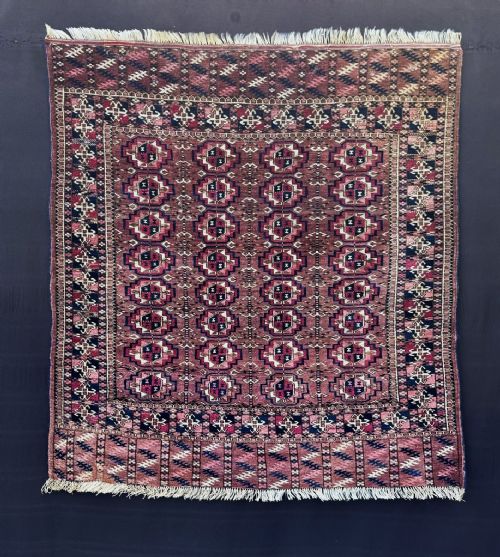


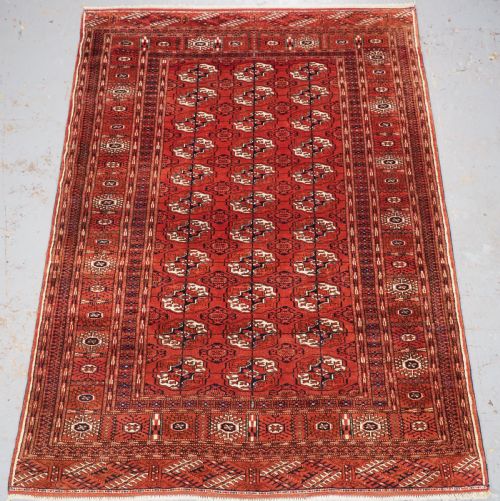


Turkmen Floor Rug
A turkmen floor rug brings deep red tones, geometric guls and nomadic heritage directly to a room.
Turkmen Floor Rug
A turkmen floor rug is a tribal weaving originating from Central Asia, including Turkmenistan and northern Afghanistan. These textiles served practical and ceremonial purposes for nomadic and village groups.
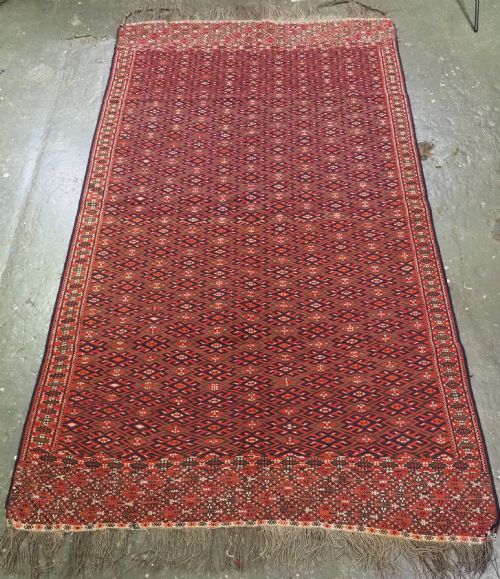
The pieces seen here span from the mid-nineteenth century through the early decades of the twentieth century. Main carpets, village rugs and flat-woven kilims represent the primary forms available.
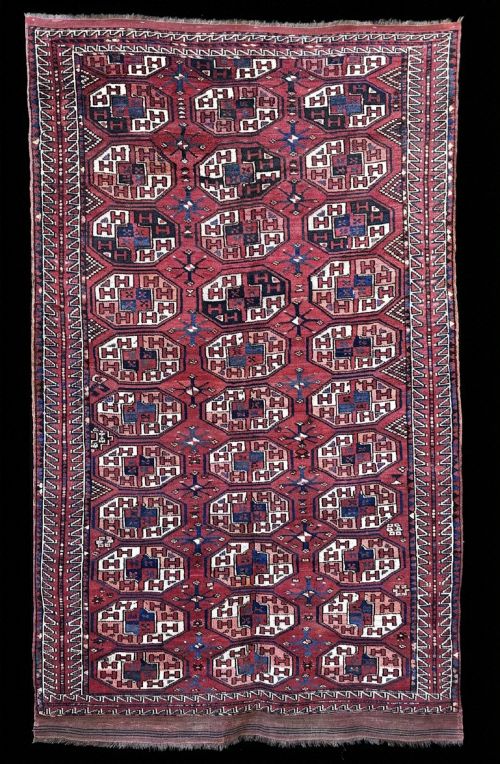
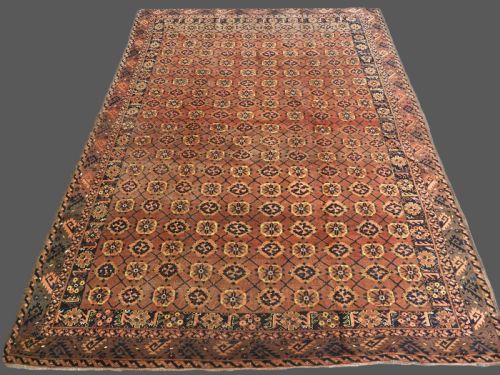
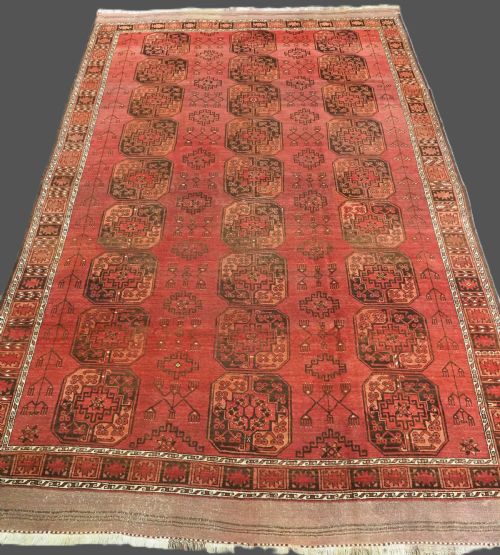
Tribal designations such as Yomut, Ersari, Tekke and Kizyl Ayak define the distinct regional patterns. Buyers most frequently encounter room-size main carpets and smaller village rugs bearing traditional octagonal gul motifs.
Materials and construction
Weavers utilised hand-spun wool and natural dyes to produce dense, hard-wearing piles. Cotton foundation threads appear alongside wool elements in many structural builds.
Flat-woven techniques such as soumak and kilim construction create lighter, banded textiles alongside the dense knotted pile carpets. Natural colour variations within the wool provide rich depth across the surface.
Turkmen Floor Rug Retail Price Guide 2026
Typical asking prices for turkmen floor rug among the pieces listed under this phrase on Sellingantiques today, from the lower quarter to the upper quarter. They describe what is for sale here now, not the wider market.
Listings span production dates from eighteen-sixty to nineteen-thirty, utilising wool, cotton, and natural dyes across tribal styles.
Quality and execution
Knot density and structural tightness dictate the fineness of the weave, particularly in flat-woven soumak kilims and pile carpets. Handling reveals the resilience of the wool and the firmness of the foundation.
Depth and saturation of the natural dyes separate standard examples from superior pieces. Crisp definition within the repeating octagonal gul patterns distinguishes the most accomplished tribal work.
The Turkmen Floor Rug Glossary
- Gul
- An octagonal medallion motif repeated across the field of a carpet. Each tribal group utilises specific variations to identify lineage.
- Soumak
- A flat-weaving technique where coloured weft threads wrap around the warp threads. This method creates a durable fabric with a braided texture on the face.
- Kilim
- A tapestry-woven flat rug without a pile. These pieces often feature banded or geometric designs.
- Main carpet
- A large format floor textile produced for domestic use or dowry purposes. These pieces display the full complexity of tribal design.
- Palas
- A term applied to flat-woven utility rugs and covers. They provide a lighter alternative to knotted pile carpets.
Turkmen Floor Rug: Frequently Asked Questions
Where were turkmen floor rugs made?
These textiles originate from Central Asia, encompassing regions inhabited by nomadic and village tribes in Turkmenistan and northern Afghanistan. Local weavers utilised materials sourced directly from their immediate environment.
Production centres around specific tribal groups such as the Yomut, Ersari, Tekke and Kizyl Ayak. Each group maintained distinct aesthetic traditions and structural methods.
How do I identify different tribal designs?
Distinguishing between tribes relies on the specific repeating medallion motifs known as guls, along with border arrangements and colour palettes. Yomut rugs often feature dynaok or kepse guls, while Ersari pieces display large traditional gul patterns.
Examining the weave structure and handling the wool provides further context regarding the origin. Comparing individual pieces helps clarify stylistic differences across regions.
Are these rugs suitable for heavy foot traffic?
Many examples are constructed with heavy-duty, hard-wearing pile designed for daily domestic use. The dense wool and tight knotting provide natural resilience against wear.
Placing a quality underlay beneath the rug helps protect the foundation fibres. Regular rotation ensures even distribution of foot traffic over time.
How should I clean and maintain my rug?
Gentle surface cleaning and regular vacuuming without a beater bar remove embedded dust and prevent fibre damage. Professional rug cleaning is recommended for deep maintenance to preserve natural dyes.
Avoiding prolonged exposure to direct sunlight prevents fading of the deep reds and secondary tones. Prompt attention to spills protects the hand-spun wool fibres.