


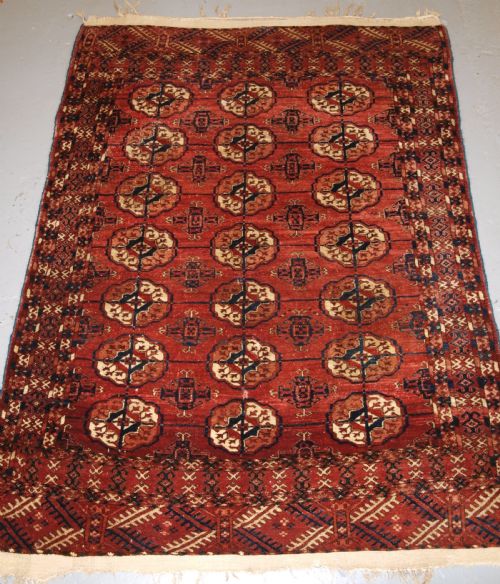
Turkmen Dowry Rug
These turkmen dowry rug pieces are tribal textiles created for traditional marriages, offering collectors distinct geometric designs and rich wool structures.
Turkmen Dowry Rug
When you examine a turkmen dowry rug, you look at tribal weavings produced across Central Asia during the nineteenth century. These items were woven as part of traditional wedding ceremonies by tribal makers.
Most examples found here belong to the Tekke group, alongside pieces attributed to Saryk, Yomut, Ersari, and Beshir tribes. They typically appear in compact or square formats designed for specific domestic and ceremonial functions.
Beyond standard floor rugs, the selection includes specialised formats such as torba bag faces and wedding dowry textiles. Their origins link them directly to nomadic and semi-nomadic tribal traditions of the region.
Materials and construction
Makers relied primarily on wool foundation and pile, often selecting exceptionally soft wool to achieve a dense handle. Selected examples incorporate silk highlights to accentuate particular motifs within the field.
Cotton also appears in the structural elements of these tribal weavings. Natural dyeing methods produced deep colour palettes, including cochineal and distinctive green tones.
Turkmen Dowry Rug Retail Price Guide 2026
Typical asking prices for turkmen dowry rug among the pieces listed under this phrase on Sellingantiques today, from the lower quarter to the upper quarter. They describe what is for sale here now, not the wider market.
Several weavers chose to encode their personal aspirations into the wool, ensuring every square inch held a quiet domestic blessing.
Judging quality in tribal weaving
Quality rests significantly on the fineness of the weave and the dexterity required to execute small knot counts. Pieces with exceptionally tight knotting and precise geometric layouts distinguish themselves from simpler work.
The handle of the wool and the depth of the dye palette further separate standard examples from superior pieces. Soft tactile qualities combined with well-preserved natural hues elevate the standing of an individual weaving.
The Turkmen Dowry Rug Glossary
- Gul
- The primary repeating octagonal medallion motif found across Turkmen tribal weavings. Each tribe utilised distinct variations to signal identity and heritage.
- Torba
- A small utilitarian tribal bag face produced for household storage or tent decoration. These items often mirror the finer weaving standards found in larger wedding rugs.
- Cochineal
- A natural red dye derived from scale insects, yielding rich crimson and magenta shades in nineteenth-century textiles. Its presence adds depth to the overall palette.
- Tekke
- One of the major Turkmen tribal groups known for precise knotting and symmetrical guls. Their dowry weaving forms the core of available nineteenth-century material.
Turkmen Dowry Rug: Frequently Asked Questions
What is a turkmen dowry rug?
These textiles are traditional tribal carpets woven by Central Asian groups for wedding ceremonies and household formation.
They function as expressions of tribal identity and artistic skill, featuring repeated geometric gul motifs and soft wool piles.
How were these rugs used originally?
Nomadic families utilised them within the yurt as decorative furnishings, storage bags, or ceremonial tent hangings during weddings.
Smaller square formats served specific domestic roles rather than functioning as large floor coverings in Western homes.
How do I care for a nineteenth century rug?
Protect the fragile wool and silk structures from direct sunlight and excessive foot traffic to preserve the natural pile.
Professional textile conservation cleaning ensures the cochineal and natural dyes remain stable over time.
How can I tell tribal groups apart?
Look closely at the primary gul shapes, structural proportions, and secondary border ornaments characteristic of different regions.
Tekke pieces display orderly rows of octagons, while Yomut or Ersari examples introduce alternative geometric arrangements and colour distributions.