
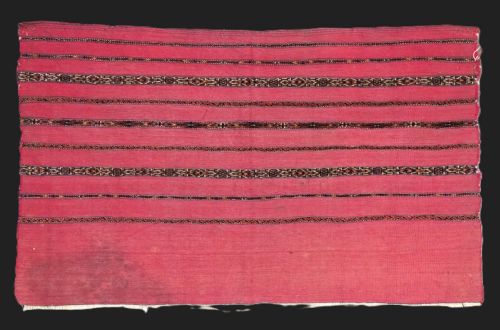


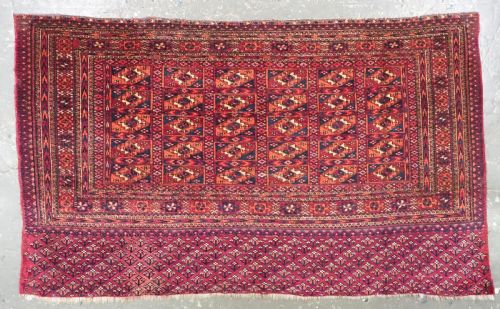


Turkmen Chuval Face
These tribal weaving fragments represent traditional tent storage bags used across Central Asia to hold bedding and household goods.
Turkmen Chuval Face
A turkmen chuval face is the decorated front panel of a large utility sack produced by nomadic and semi-nomadic Central Asian tribal groups. Collectors prize these textiles for their rich tribal patterning and historical depth, often finding examples woven by Tekke, Ersari, Yomut, and Saryk weavers. The pieces on this page primarily consist of antique bag faces created during the nineteenth and early twentieth centuries.
These items were originally functional components of a nomad's household, utilised within the yurt to organise bedding and belongings. Over time, the panels have been separated from their original backings, preserving the intricate face designs for display as wall hangings or collector textiles. Most examples demonstrate repetitive medallion motifs known as guls, which identify the specific tribe responsible for the weaving.
Materials and Construction
Weavers constructed these tribal textiles predominantly using hand-spun wool foundations and pile, combined with natural dyes to achieve deep red, madder, and brown tones. Artisans occasionally integrated white cotton and yellow or crimson silk highlights to add contrast to the primary field design.
The density of the knotting varies across the different tribal origins, with certain Tekke and Yomut pieces displaying exceptionally fine weave structures. Dyes derived from natural sources interact with the wool over generations, creating a stable, muted palette characteristic of authentic antique Central Asian tribal work.
Some nineteenth-century bags retain their original hanging loops, ready to resume their duties after a mere century or two of rest.
Assessing Quality and Merit
The fineness of the weave and the complexity of the gul arrangement dictate the standing of an individual piece within its type. Examples featuring scarce formats, such as the aina gul or turreted salor designs, command greater interest among advanced collectors.
Preservation of the original structural integrity, including surviving hanging loops or complete elem borders at the base, enhances the historical completeness of the textile. The vibrancy and depth of the natural dye palette further separate standard utility pieces from exceptional tribal examples.
Tekke Turkmen·Ersari Turkmen·Yomut Turkmen·Saryk Turkmen·Salor
The Turkmen Chuval Face Glossary
- Chuval
- A large tent storage bag used by Turkmen tribes for bedding and household possessions. The face of the bag carried the primary decorative weaving.
- Gul
- A repeating medallion or principal design motif used in Turkmen rug and textile production. Different tribes employed distinct gul shapes to signal their specific heritage.
- Torba
- A smaller utility bag utilised for storage within the nomadic tent. These pieces share similar structural techniques with larger chuvals but differ in overall rectangular proportions.
- Kizil
- A descriptive term referring to red-ground Turkmen weavings dominated by rich madder and cochineal dye tones. These red panels form a distinct group within tribal attributions.
Turkmen Chuval Face: Frequently Asked Questions
What is a chuval face?
A chuval face is the decorated front panel of a traditional nomad's storage sack from Central Asia. These panels were cut from larger utility bags used to house household bedding.
Today, they survive as flat textile fragments mounted for display. They provide direct insight into nineteenth-century tribal weaving traditions.
How do I identify tribal designs?
Tribal identity is primarily read through the repeating medallion motifs known as guls, along with the secondary border patterns. Different groups such as the Tekke, Ersari, and Yomut utilised distinct drawing styles and colour palettes.
Examining the structure of the elem border at the base also helps confirm the origin. Each group maintained specific geometric signatures passed down through generations.
Were these made for daily use?
Nomadic families relied on these heavy wool sacks for organising belongings inside traditional tents. They stored blankets, clothing, and personal items out of the dust of the floor.
Because they were functional objects, many surviving examples show the wear of domestic life. Only the decorated front panels generally survived in collectible condition.
How should I display a textile fragment?
These flat textile panels lend themselves well to mounting on a wall as decorative art. Professional framing or specialist textile mounting protects the wool structure from tension and dust.
Keep displayed pieces away from direct sunlight to protect the natural dyes. Gentle support across the top edge ensures the historic wool bears no undue weight.