


Turkish Prayer Carpet
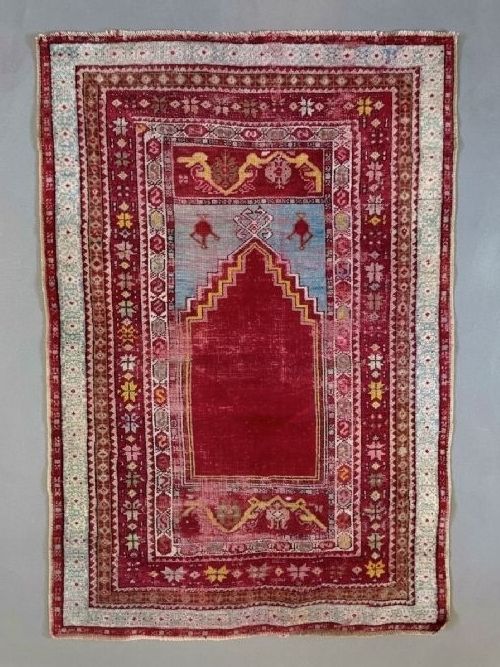
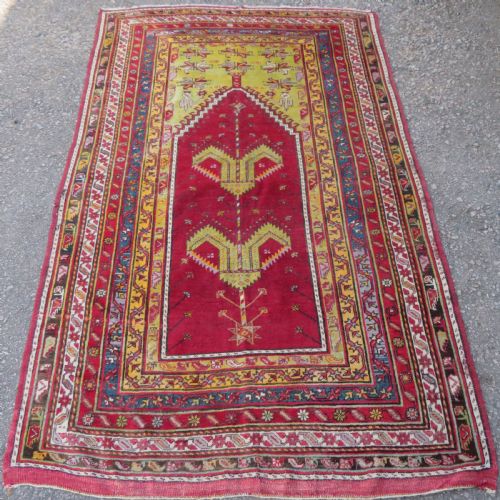
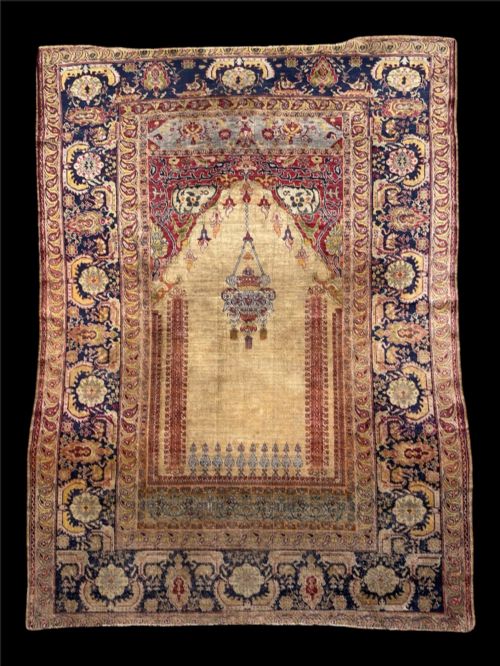
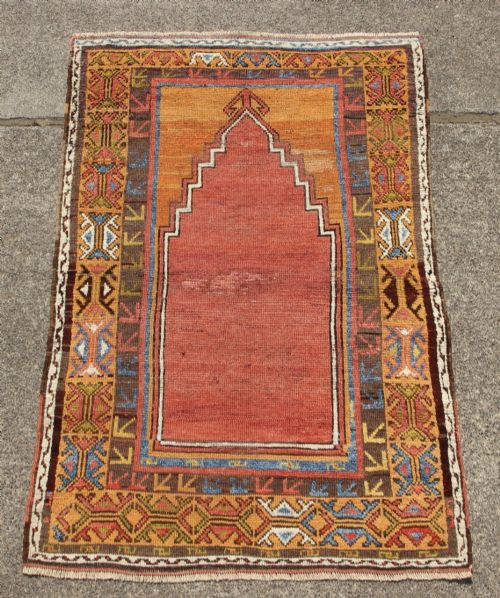
A turkish prayer carpet brings centuries of Anatolian weaving tradition into a room through distinctive architectural mihrab niches.
Turkish Prayer Carpet
A turkish prayer carpet defines a specific weaving tradition focused on portable floor coverings designed with a directional niche, known as a mihrab, pointing toward Mecca. These textiles emerge primarily from regional weaving centres across Anatolia, reflecting centuries of village and workshop production.
Buyers encountering this page will frequently meet nineteenth-century examples originating from traditional areas such as Konya, Kirsehir, Ghiordes, and Ladik. These pieces typically display distinctive geometric or floral prayer arches woven in wool or silk.
The format serves both a practical devotional function and a decorative purpose within interiors, often featuring central fields flanked by distinct borders and spandrels. Village rugs display bolder tribal motifs, while town or court pieces exhibit finer curvilinear drawing.
What varies in quality
The refinement of the drawing within the central prayer arch and surrounding borders establishes the visual hierarchy among these textiles. Tighter knot counts and more precise geometric or floral execution distinguish master workshops from standard village output.
Material selection significantly influences the tactile and visual grade of the piece, particularly the use of high-grade hand-spun wool versus standard commercial yarns. The vibrancy and stability of natural and vegetable dyes further determine the enduring character of the surface.
Structural integrity, including the survival of original side cordings and end finishes, dictates the preservation standard. Pieces retaining their full outer borders and uniform pile depth command greater appreciation among collectors.
Some multi-niche carpets provide enough designated prayer arches for an entire family to kneel in unison.
The Turkish Prayer Carpet Glossary
- Mihrab
- The arched architectural niche depicted on the field of a prayer rug, symbolising the direction of prayer towards Mecca. Its shape often helps assign a piece to a specific town or region.
- Ghiordes
- A historic weaving town in western Anatolia renowned for distinctive prayer designs featuring double-layered arches and soft floral motifs. Pieces attributed to this centre often display delicate pillar designs.
- Konya
- A major cultural centre in central Anatolia associated with robust village and workshop rugs featuring saturated colour palettes and strong geometric formats. Carpets from this region frequently employ heavy hand-spun wool.
- Sivas Saf
- A multi-niche prayer rug format containing several contiguous mihrabs designed to accommodate multiple worshippers simultaneously. These elongated textiles represent complex urban workshop weaving.
- Kirsehir
- An Anatolian district celebrated for prayer carpets utilising ivory or bright red grounds surrounded by characteristic star and leaf borders. The drawing in these examples tends toward stylised botanical forms.
Turkish Prayer Carpet: Frequently Asked Questions
How do I identify a prayer rug?
A prayer rug is defined by the presence of a central arched niche, or mihrab, which directs the user during daily devotions. This architectural motif often dominates the upper portion of the field.
Additional elements like flanking columns, hanging mosque lamps, or spandrels further confirm the devotional purpose of the textile, separating it from standard floor coverings.
Where were these carpets made?
These carpets originated across various regions of Anatolia, encompassing both settled urban centres and rural tribal districts. Specific towns like Ghiordes, Ladik, and Konya developed highly distinct regional styles.
Village weavers produced bolder, geometric interpretations, while court and workshop production favoured intricate floral drawing and occasionally fine silk materials.
How should I care for old wool?
Maintaining antique wool textiles requires gentle handling, regular low-suction vacuuming without a rotating beater bar, and professional conservation when structural issues arise. Keeping them away from direct, harsh sunlight prevents natural dye fading.
Periodic rotation ensures even wear patterns across the surface, preserving the pile depth and structural integrity of the foundation yarns.
What does an ivory ground indicate?
An ivory ground provides a pale, neutral background that makes the saturated reds, blues, and yellows of the central niche stand out with exceptional clarity. This lighter palette often points to specific regional preferences in areas like Konya or Bergama.
Such examples are frequently noted for their decorative versatility within modern interiors while retaining traditional Anatolian iconography.