



Turkish Oushak Rug
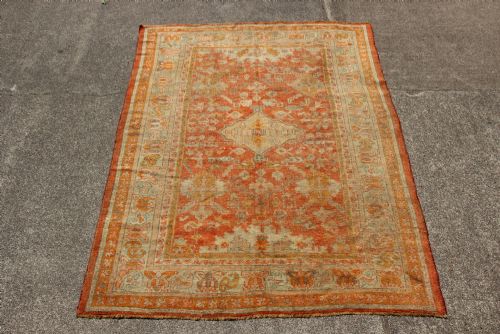
A turkish oushak rug brings large-scale floral geometry and pale, muted wool tones straight from Western Turkey into a room.
Turkish Oushak Rug
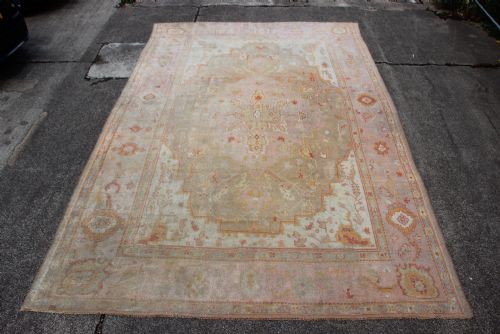
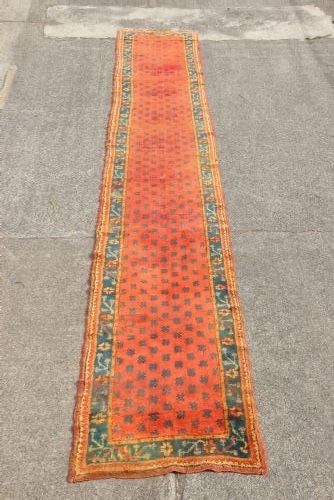
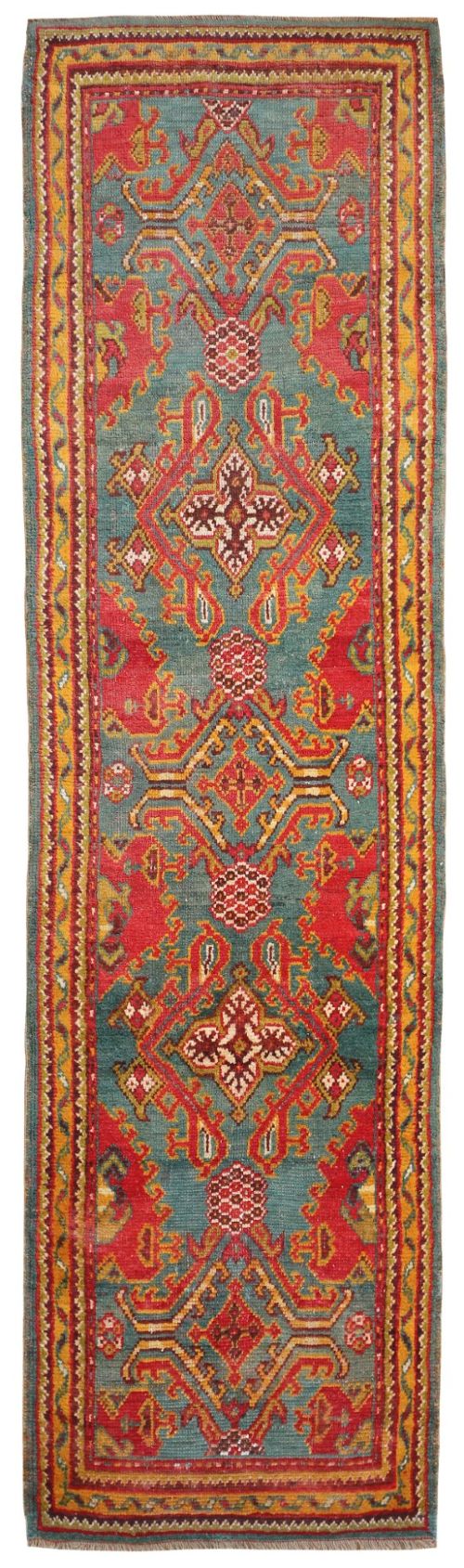
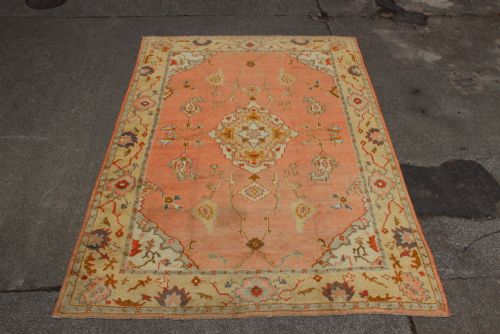
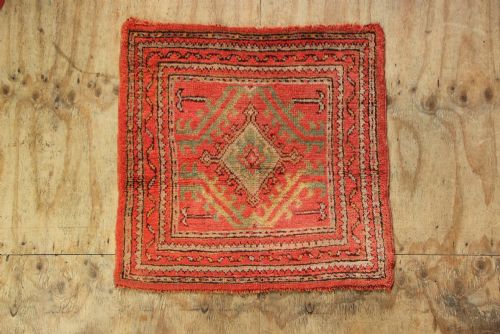
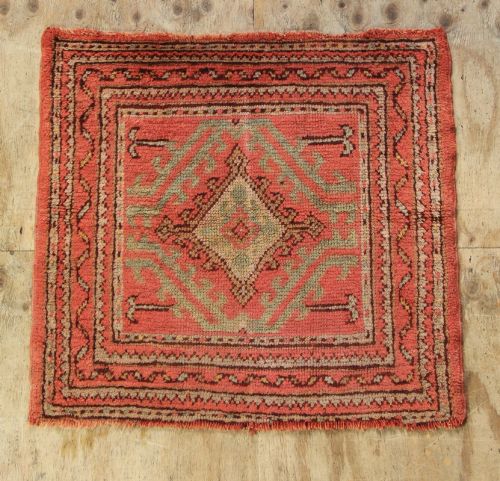
A turkish oushak rug is a hand-knotted floor covering originating from Western Turkey, often appearing in large carpet formats, long narrow runners, squares, mats, and kilims. These pieces span from the late nineteenth century into the early twentieth century, showing Ottoman and Anatolian stylistic influences across various room scales.
The buyer meets formats ranging from expansive carpets exceeding four metres to compact mats and paired runners. Designs incorporate traditional motifs, willow tree patterns, and distinct regional variations such as Ghiordes and Kula sub-types alongside standard Oushak production.
How They Were Made
These textiles are constructed using hand-knotted wool and cotton foundations, incorporating specialised soft wool and angora wool varieties. The choice of fibre directly influences the tactile handle and the way natural dyes settle into the pile over decades of use.
Weavers utilised traditional Anatolian knotting techniques on upright looms, employing natural dye sources that yielded the characteristic pale blues, beige grounds, and soft pastel shades recorded across the period.
Turkish Oushak Rug Retail Price Guide 2026
Typical asking prices for turkish oushak rug among the pieces listed under this phrase on Sellingantiques today, from the lower quarter to the upper quarter. They describe what is for sale here now, not the wider market.
Materials recorded across these pieces consist exclusively of wool, cotton, and angora wool.
What Varies in Quality
Quality rests in the fineness of the knot density and the crispness of the drawn Anatolian design. Superior examples display balanced proportions and deliberate colour distribution across the field.
The handling of the wool itself dictates the tier of the piece, with softer fleece grades creating a more supple drape. Dye stability and the subtlety of shade shifts further separate standard utility carpets from finer decorative formats.
Maple And Co
The Turkish Oushak Rug Glossary
- Oushak
- A traditional town and carpet-weaving centre in Western Turkey known for large-scale floral motifs and soft pastel palettes. These rugs frequently utilise relaxed geometric medallions rather than rigid symmetrical layouts.
- Kilim
- A flat-woven carpet or rug produced without a pile by tightly interweaving warp and weft strands. This technique results in a lighter, reversible textile with distinct sharp-edged geometric patterns.
- Angora wool
- A fine, soft fibre sourced from Angora goats or specific regional sheep that yields a particularly lustrous pile. It allows dyes to catch the light differently than standard sheep wool.
- Ghiordes
- A historic weaving region near Oushak associated with specific prayer designs and refined knotting structures. Pieces from this tradition often feature architectural mihrab arches.
- Warp
- The vertical foundation threads stretched tightly on the loom through which the horizontal weft and knots are passed. The condition and material of these cotton or wool threads determine the structural stability of the rug.
Turkish Oushak Rug: Frequently Asked Questions
How do I clean an old oushak?
Surface dust should be gently removed using a smooth suction vacuum without a beating brush attachment. Professional specialist cleaning remains essential for addressing deeper dirt to protect the natural dyes.
Water exposure must be strictly managed to prevent dye migration or cotton foundation shrinkage. Regular rotation ensures even wear patterns across high-traffic floor areas.
Where were these rugs woven?
Production centres were concentrated around Western Turkey, specifically in and around the historic town of Oushak and surrounding Anatolian districts. Local workshops utilised regional materials and traditional dyeing recipes passed down through generations.
Specific sub-regions such as Kula and Ghiordes contributed distinct local aesthetics to the broader Oushak tradition. These geographic origins define the stylistic vocabulary found in the surviving pieces.
What is an angora oushak?
An angora oushak incorporates exceptionally soft specialty wool into the pile construction, yielding a distinctively tactile surface. This specific fleece type absorbs natural dye tones with a unique depth.
Such pieces often display a lighter handle and a subtle sheen across the field. The material choice sets them apart from standard wool-pile regional variants.
How do I date a turkish oushak rug?
Dating relies on examining the structural materials, dye characteristics, and stylistic execution relative to late nineteenth and early twentieth-century conventions. Natural dye palettes combined with hand-spun wool foundations typically point toward the earlier end of the timeline.
Later pieces from the early decades of the twentieth century often display subtle shifts in chemical dye usage and finer, more uniform knotting. Comparing motif complexity helps contextualize the weaving period.