


Tufted Upholstered Daybed
A tufted upholstered daybed offers a reclining seat for nineteenth-century parlours, combining timber frames with buttoned velvet or damask covers.

Tufted Upholstered Daybed
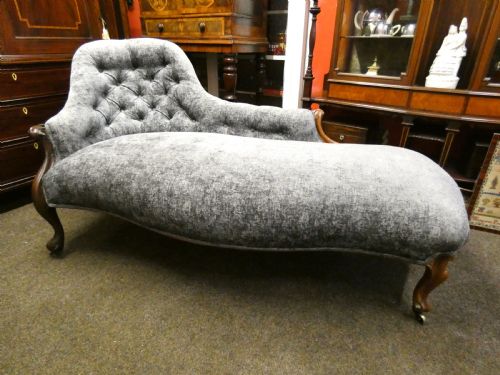
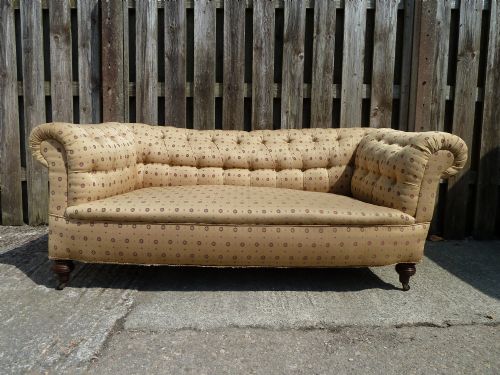
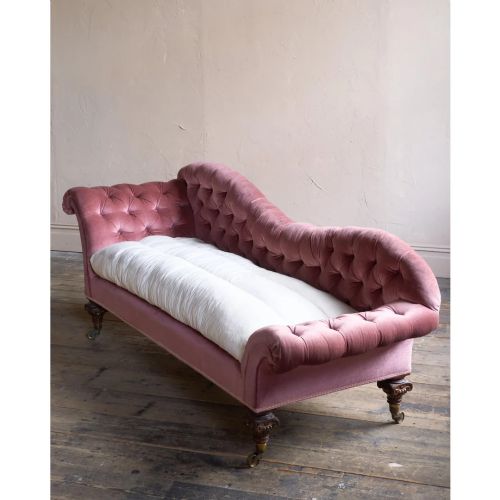
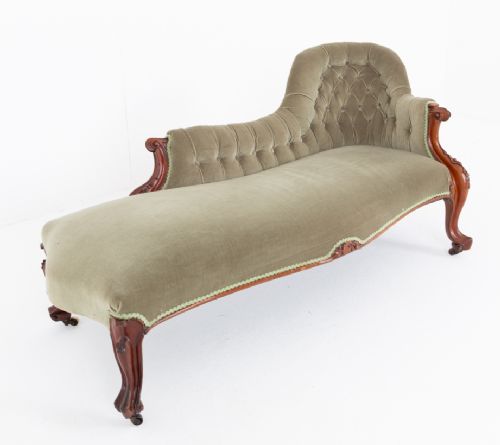
A tufted upholstered daybed bridges the gap between a sofa and a bed, providing an extended seat designed for daytime reclining. The pieces gathered under this phrase include Victorian chaise longues, Chesterfield sofas, and buttoned day beds from the nineteenth century.
You are most likely to encounter Victorian examples made from rosewood, mahogany, or walnut, often featuring deep buttoning and scrolling timber backs. These pieces span from the Regency era through to the late nineteenth century, taking forms such as double spoonback day beds and kidney-shaped couches.
Makers such as Howard & Sons, Holland & Sons, and Jas Shoolbred produced these seating arrangements in England, while French workshops also contributed daybeds. Their designs utilise column legs, ornate carved frames, and silk damask or velvet upholstery.
What varies in quality
The refinement of the timber carving and the symmetry of the wood grain separate standard seating from exceptional examples. Rosewood and walnut frames with intricate moulding reflect a higher level of cabinetmaking than simpler mahogany or plain wood structures.
The execution of the tufting and the choice of covering material dictate the visual impact of the upholstery. Pieces bearing maker stamps from established firms demonstrate documented provenance that elevates their standing among nineteenth-century seating.
Listings span the nineteenth century, capturing Victorian, Regency, and Louis XVI Revival styles executed in mahogany, rosewood, and velvet.
Howard & Sons·Holland & Sons·Jas Shoolbred·H. Goodall & Sons·Miles & Edwards
The Tufted Upholstered Daybed Glossary
- Chaise Longue
- A long chair for reclining, typically featuring an upholstered seat with a backrest at one end. Originating in France, these pieces became popular in Victorian drawing rooms.
- Tufting
- A method of upholstery where string or twine is passed through the padding and tied down with buttons to create a patterned, indented surface. This technique secures the stuffing and provides structural shape.
- Spoonback
- A chair or settee back carved into an oval shape that resembles the bowl of a spoon. It provides ergonomic support tailored to the human spine.
- Damask
- A reversible figured fabric woven on a jacquard loom, commonly utilised for nineteenth-century daybed upholstery. It displays patterns formed by contrasting warps and wefts.
Tufted Upholstered Daybed: Frequently Asked Questions
What is a tufted upholstered daybed?
A tufted upholstered daybed is a nineteenth-century reclining seat designed for resting, featuring buttoned fabric over a timber frame. These items function as a hybrid between a settee and a bed.
Examples typically incorporate mahogany, rosewood, or walnut structures with Victorian styling. They appear in forms ranging from chaise longues to Chesterfield day beds.
Where should I place a daybed?
These pieces suit drawing rooms, studies, or large bedrooms where their elongated form can rest against a wall. Their asymmetrical backs make them effective as statement seating in an open space.
Ensure the room has sufficient length to accommodate the extended frame without crowding other furniture. Position them away from direct sunlight to protect the velvet or damask upholstery.
How do I identify the period?
Dating relies on timber choices, leg styles, and framing characteristics associated with nineteenth-century design. Regency pieces show neoclassical influences, while Victorian examples often feature rosewood or walnut with deep buttoning.
Maker stamps on the timber frame or webbing provide definitive evidence of origin. Cabinetmakers like Howard & Sons stamped their work directly into the wood.
How do I care for the upholstery?
Maintain velvet and damask coverings through regular gentle brushing to remove dust and preserve the pile. Avoid harsh chemical cleaners that can degrade nineteenth-century textile fibres.
Keep the daybed away from heat sources to prevent the timber frame from drying out or splitting. Professional textile conservationists should handle deep cleaning of antique buttoned upholstery.