
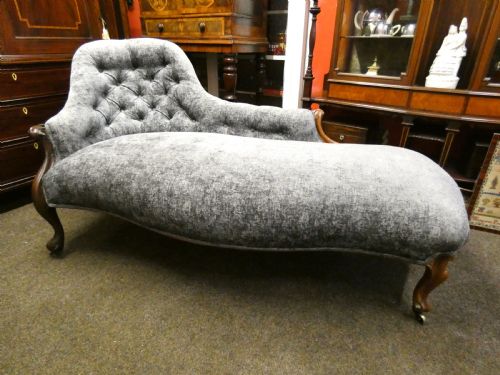
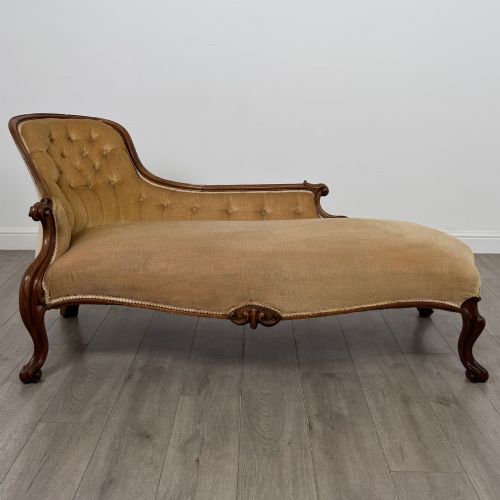
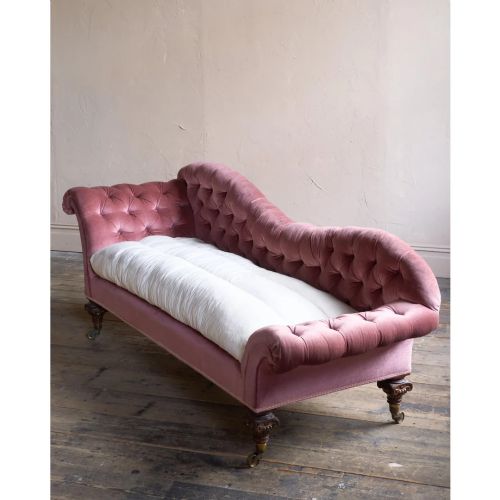
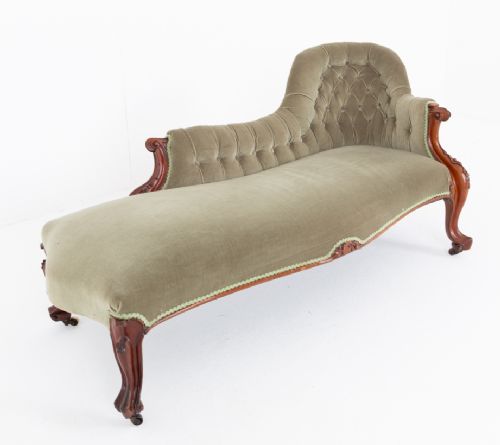
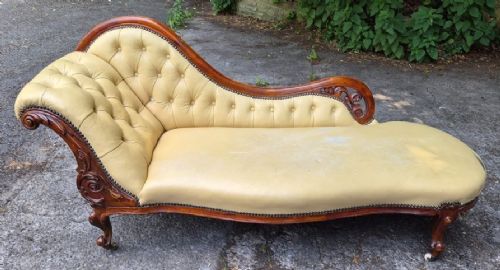


Tufted Fainting Chair
These tufted fainting chair examples are nineteenth-century day beds and chaise longues designed for reclining in comfort.
Tufted Fainting Chair
When you search for a tufted fainting chair, you are looking at nineteenth-century chaise longues, daybeds, and chaise longue sofas designed for reclining. These pieces originate predominantly from the Victorian period, with examples spanning from the Regency era through to nineteen hundred.
The versions you are most likely to meet on this page feature buttoned upholstery, carved mahogany or rosewood frames, and forms such as the classic chaise longue and day bed. Styles range from Victorian and Louis XVI Revival to Grand Regency.
How they were made
Upholstery techniques involved velvet, leather, blue damask, and various upholstery fabrics, finished with distinctive buttoning to secure the padding across the daybeds and chaise longues.
Listings span the nineteenth century, featuring Victorian, Regency, and Louis XVI Revival styles executed in mahogany, rosewood, and velvet.
What varies in quality
The choice of timber creates a fundamental distinction, with dense rosewood and finely grained mahogany frames sitting above simpler wooden structures. Carving detail on the wooden frames and columns also marks out superior pieces.
Fabric selection influences the character of each daybed, ranging from standard upholstery fabric to rich velvet and patterned blue damask. The precision of the buttoned tufting execution further distinguishes individual workshops.
Howard & Sons·Holland & Sons·Jas Shoolbred·Miles & Edwards
The Tufted Fainting Chair Glossary
- Day bed
- A form of couch used for lounging, resting, or reclining during the day. It bridges the function of a chair and a bed.
- Mahogany
- A durable, reddish-brown hardwood utilised extensively for nineteenth-century furniture frames. It accepts fine carving work.
- Rosewood
- A heavy, richly coloured timber valued for high-end cabinet making and furniture frames. Its grain provides a distinct aesthetic.
- Damask
- A reversible figured fabric traditionally woven on a jacquard loom. It appears in upholstery for period seating.
Tufted Fainting Chair: Frequently Asked Questions
What is a tufted fainting chair?
A tufted fainting chair is a nineteenth-century chaise longue or day bed designed for resting in a semi-reclined position.
These pieces combine wooden frames with buttoned upholstery to support the body during daytime relaxation.
How were these day beds used?
Victorian households utilised these pieces in drawing rooms and boudoirs for daytime resting and reading.
The elongated seat allowed occupants to recline without retiring to a full bedroom.
How do I identify a Victorian piece?
Victorian pieces often display carved mahogany or rosewood frames combined with buttoned velvet or fabric upholstery.
Design elements like ionic column legs and specific revival styles help anchor them to the nineteenth century.
Where should I place a chaise longue?
These items suit living spaces, large bedrooms, or studies with adequate floor length to accommodate their elongated form.
Position them where the asymmetrical backrest and upholstered surface can function as a primary seating accent.