



Tubelined Floral Pottery
Tubelined floral pottery brings raised, brightly outlined botanical patterns to ceramic surfaces, offering tactile depth and rich periods of design.
Tubelined Floral Pottery
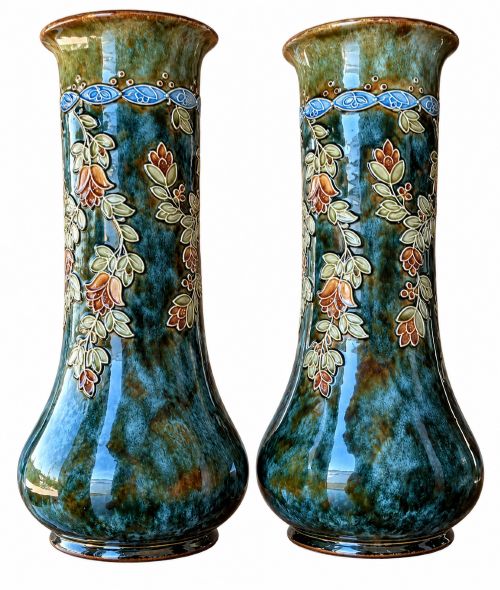
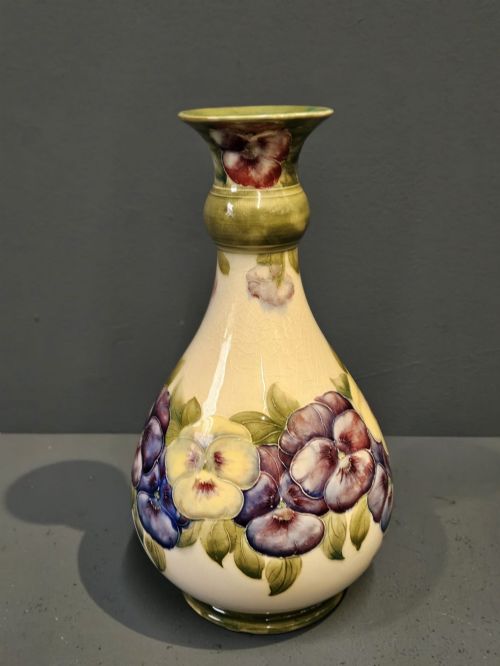
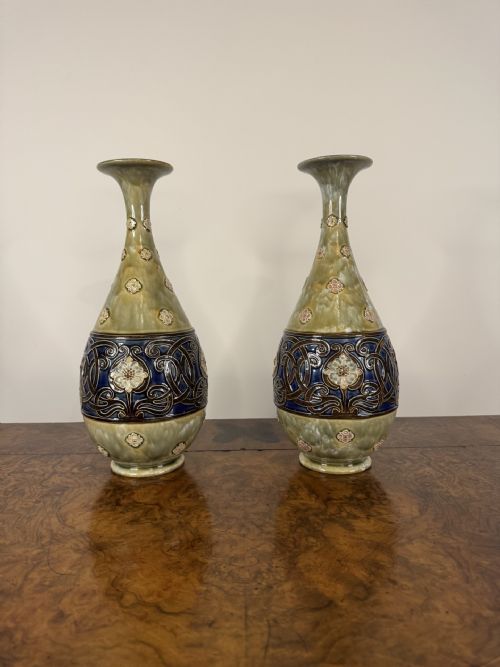
Tubelined floral pottery comprises ceramic vases and chargers decorated with raised outlines that separate areas of coloured glaze. When you search for tubelined floral pottery, you encounter works produced across several decades spanning the late nineteenth century through to the interwar period.
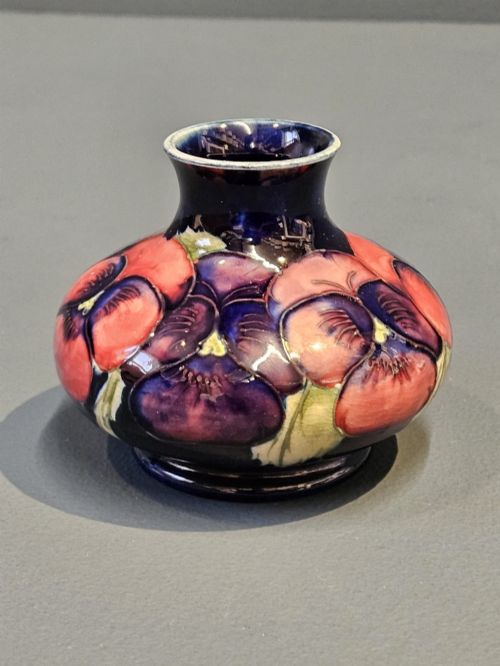
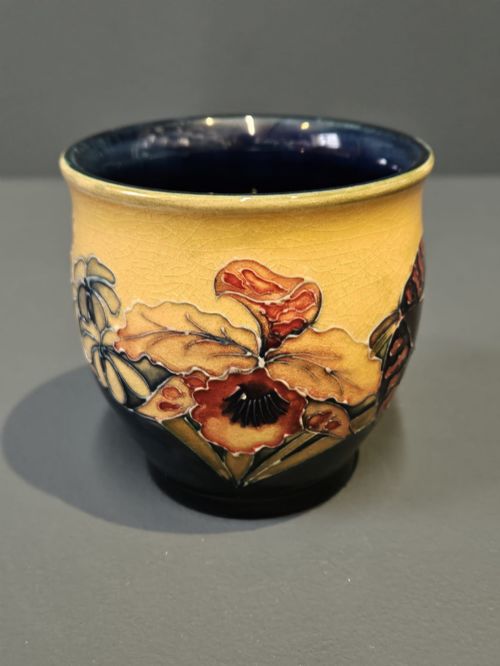
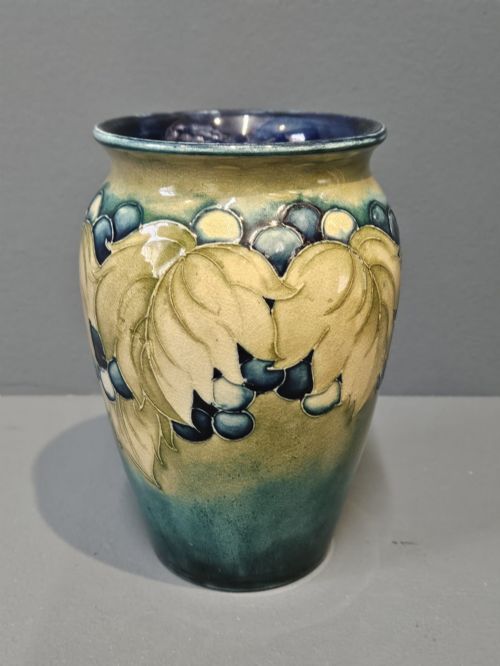
The objects on this page consist predominantly of vases, alongside chargers and dishes. Forms range from miniature vessels to large baluster shapes, reflecting the output of prominent potteries working in distinct decorative styles.
Most pieces date from the early decades of the twentieth century, with notable representation from the Art Nouveau and Art Deco periods. Makers such as Moorcroft, Royal Doulton, and Minton dominate the selection, bringing botanical motifs to earthenware and stoneware bodies.
How they were made
Potters shape ceramic bodies using earthenware and stoneware, building forms that receive fluid clay slip applied through a fine nozzle to create raised outlines. This linear framework confines pools of coloured glaze and enamel during firing.
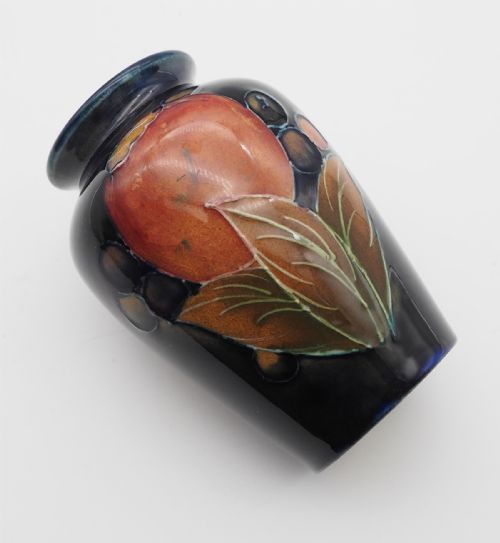
The application of glaze provides glossy or matte surfaces that accentuate the botanical designs, ranging from pansies and orchids to leaf and berry motifs. Subsequent kiln firings fuse the coloured enamels to the ceramic base.
The listings span periods from eighteen-eighty to nineteen-thirty, encompassing both Art Nouveau and Art Deco styles across earthenware and stoneware.
What varies in quality
The distinction between standard production and superior work rests on the precision of the raised clay lines and the complexity of the glaze palette. Skilled hands produce crisp, even contours that define floral details without blurring.
Artist involvement also elevates a piece, particularly when specific designers or decorators execute signed or monogrammed works on stoneware and earthenware bodies.
Royal Doulton·Moorcroft·William Moorcroft·Louisa Wakely·Minton
The Tubelined Floral Pottery Glossary
- Tubelined
- Decorated with raised lines of clay slip applied from a bulb or tube before glazing. This technique creates cells that contain individual pools of colour.
- Stoneware
- A hard, dense ceramic fired at high temperatures until semi-vitrified. It is impermeable to liquids even without glaze.
- Earthenware
- Porous pottery fired at lower temperatures, requiring a glazed surface to hold liquids. It forms the body for many decorated vessels.
- Baluster
- A vase form characterised by a swollen lower portion tapering to a narrow neck. This shape provides a stable base for prominent floral motifs.
- Secessionist
- A stylistic movement rejecting traditional historicism in favour of bold forms and simplified motifs. Minton produced notable examples in this manner.
Tubelined Floral Pottery: Frequently Asked Questions
How do I identify Art Nouveau pieces?
Art Nouveau items display organic, flowing lines inspired by natural forms, often incorporating whiplash curves and stylised floral designs. These pieces typically date from the late nineteenth century to the First World War.
Makers such as Royal Doulton and Minton utilised these sinuous motifs on stoneware and earthenware bodies.
What is the difference between earthenware and stoneware?
Earthenware is a porous ceramic fired at relatively low temperatures and requires a glaze to become waterproof. Stoneware is fired much higher until the body vitrifies and becomes dense and non-porous.
Both materials serve as bases for raised floral decoration, though stoneware often exhibits a heavier, more robust structure.
How should I display chargers?
Chargers are large decorative plates designed for display on walls, cabinets, or plate stands rather than for dining use. Their wide surfaces provide space for expansive floral compositions.
Placing them in rooms with stable humidity protects the glazed ceramic bodies from environmental stress.