



Tripod Revolving Waiter
These tripod revolving waiter pieces are tiered serving stands built for dining rooms, offering multiple rotating levels for effortless table service.
Tripod Revolving Waiter
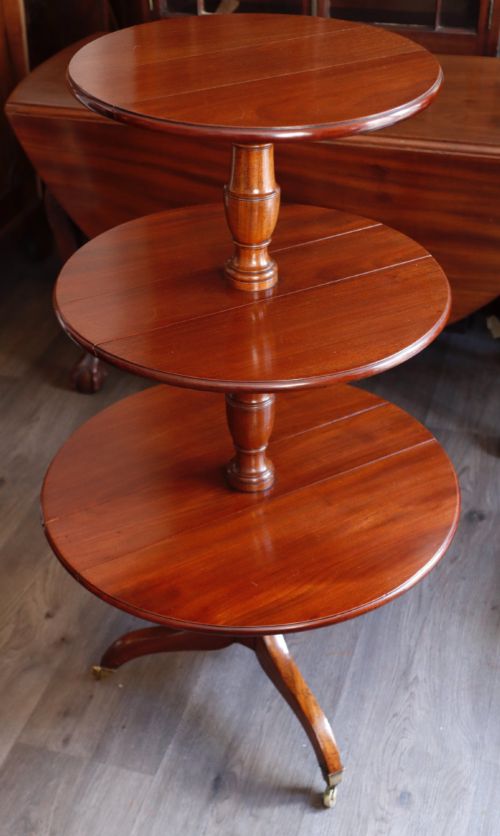
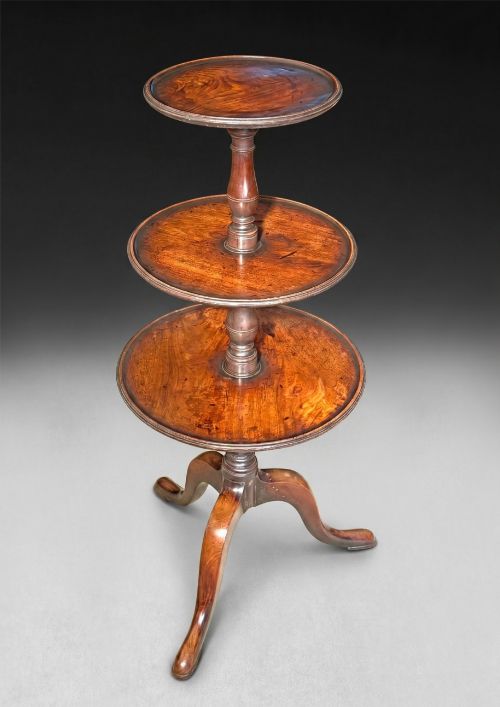
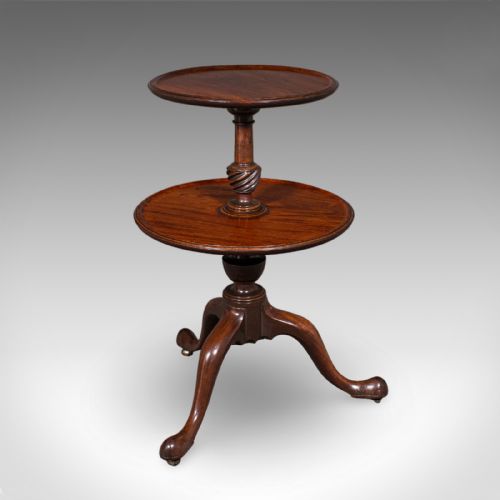
A tripod revolving waiter stands as a tiered serving piece designed for dining spaces, holding dishes and serving items across multiple circular levels. Buyers searching for a tripod revolving waiter encounter examples predominantly from the Georgian, Regency, and Victorian periods, spanning the eighteenth and nineteenth centuries.
The dominant material across these listings is mahogany, complemented by occasional walnut and marquetry inlay work. Pieces typically feature two or three rotating tiers supported on a central column above a tripod base with three legs.
How tripod revolving waiter pieces were made
Cabinet makers utilised solid mahogany and walnut timbers to construct the central columns and shaped tripod legs, frequently incorporating brass fittings for stability and movement. Tiers were turned from single boards or constructed with veneered surfaces, allowing the circular trays to revolve smoothly on their central spindles.
Inlaid examples incorporate marquetry techniques, setting contrasting wood veneers into the primary timber surfaces of the tiers. Turning and joinery methods defined the construction of the tiered serving stands during the Georgian and Regency eras.
Early diners relied on these spinning wooden tiers to pass the port when conversation grew too absorbing.
What varies in quality
Quality differences stem from the selection of timber figure, the crispness of the turning on the central column, and the proportions of the tripod base. Finer examples display carefully matched mahogany grain across multiple tiers and robust joinery in the leg attachments.
The mechanism allowing the tiers to revolve smoothly dictates the functional success of the piece, alongside the finesse of any marquetry inlay work present on the surfaces.
The Tripod Revolving Waiter Glossary
- Tripod base
- A support structure comprising three legs radiating from a central column, providing stability to the tiered serving stand. This configuration balances the weight of items placed on the revolving trays.
- Dumb waiter
- A tiered serving stand designed to hold food or drink without the need for additional servants during a meal. The revolving function allows diners to access items easily from seated positions.
- Marquetry inlay
- Decorative patterns formed by fitting contrasting wood veneers into recessed portions of a solid timber background. This technique appears on specific eighteenth-century variants within the selection.
- Tier
- A single circular shelf or tray positioned horizontally above another on a central column. Pieces commonly feature two or three of these rotating levels.
Tripod Revolving Waiter: Frequently Asked Questions
What is a tripod revolving waiter used for?
These tiered stands served dining rooms by holding extra dishes, wine bottles, and tableware within arm's reach during meals. The revolving feature allowed diners to access different items without standing up.
They functioned as practical serving assistants beside the main dining table, keeping the surface clear of clutter while organising courses.
How do I date a mahogany dumb waiter?
Dating relies on stylistic details such as the profile of the tripod legs, the turning of the central column, and the construction methods visible underneath the tiers. Georgian and Regency pieces show specific design traits distinct from later Victorian interpretations.
Examining the timber grain, fixing methods, and overall proportions helps establish whether a piece originates from the eighteenth or nineteenth century.
How do I live with a tiered serving stand?
A tripod revolving waiter fits naturally beside a dining table, in a corner, or as an accent piece in a living space displaying objects. The revolving tiers provide functional display surfaces for books, plants, or decorative items.
Placing the stand away from direct heat sources protects the timber and finish, while regular dusting maintains the polished mahogany or walnut surface.
Why do some pieces have two tiers and others three?
The number of tiers relates to the intended function and the period style, with both two-tier and three-tier formats appearing across the Georgian and Regency eras. Three-tier versions offer increased storage capacity distributed vertically up the central column.
Maker preferences and customer requirements determined the height and capacity of each individual serving stand during production.