




Tripod Mahogany Tier Table
A tripod mahogany tier table serves multi-level utility with a slender three-legged stance, bringing period timber and proportion into daily domestic use.
Tripod Mahogany Tier Table
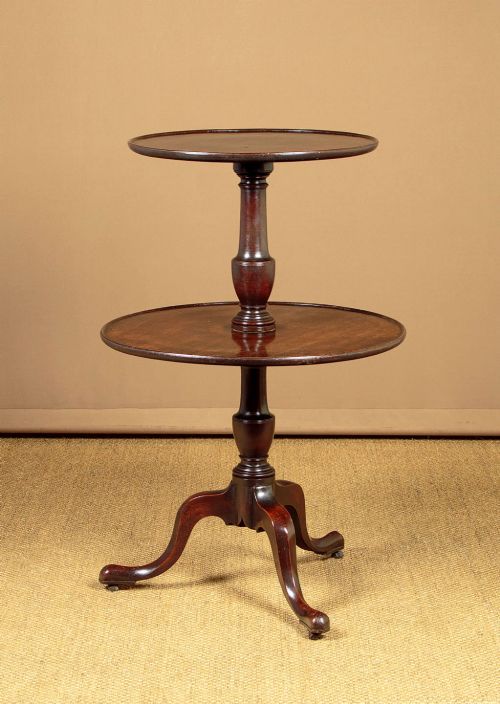
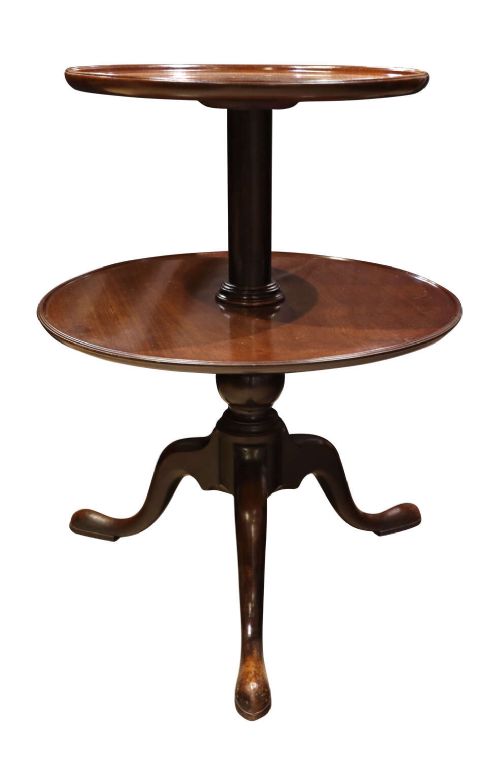
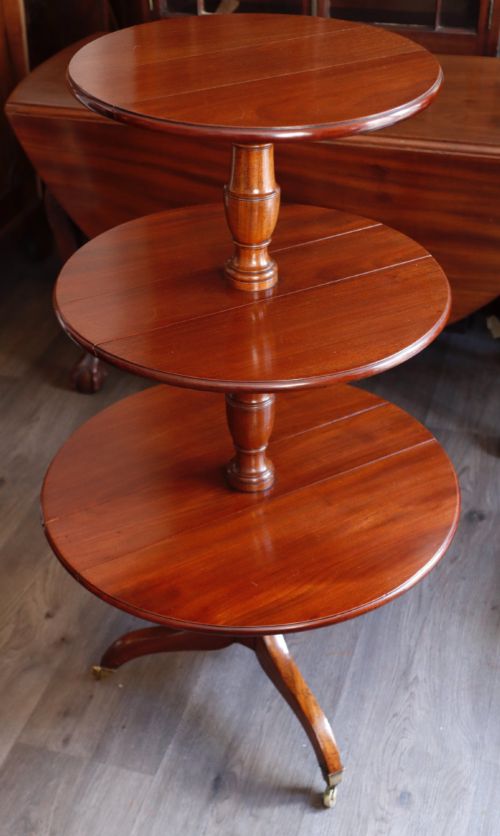
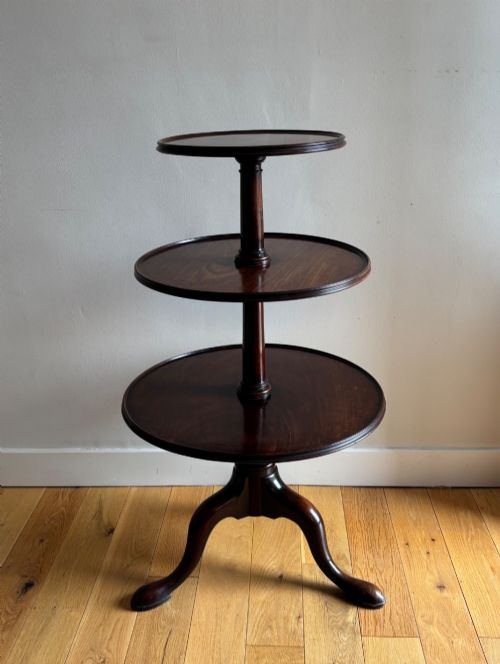
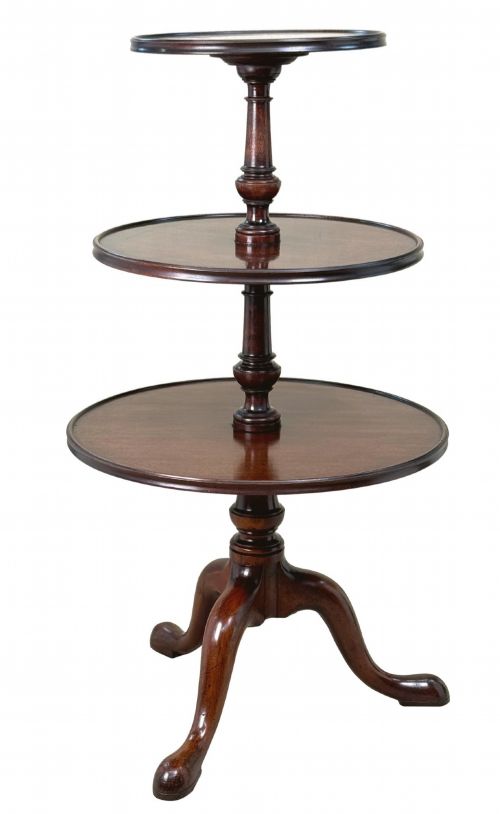
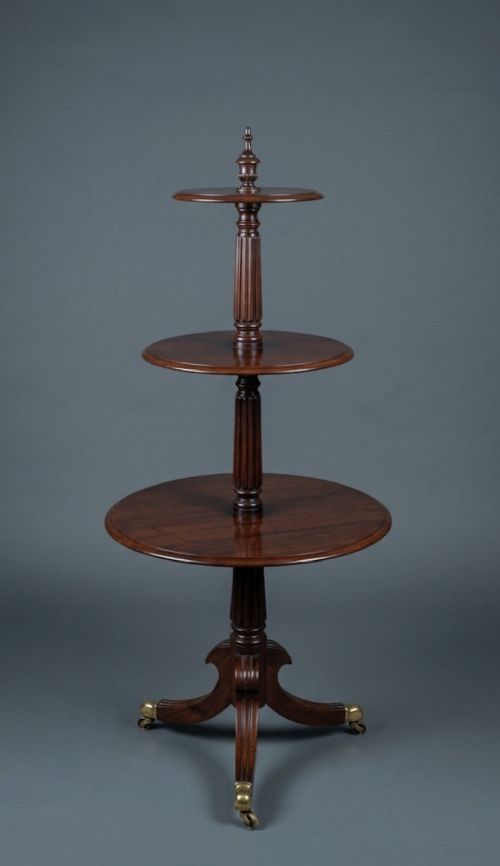
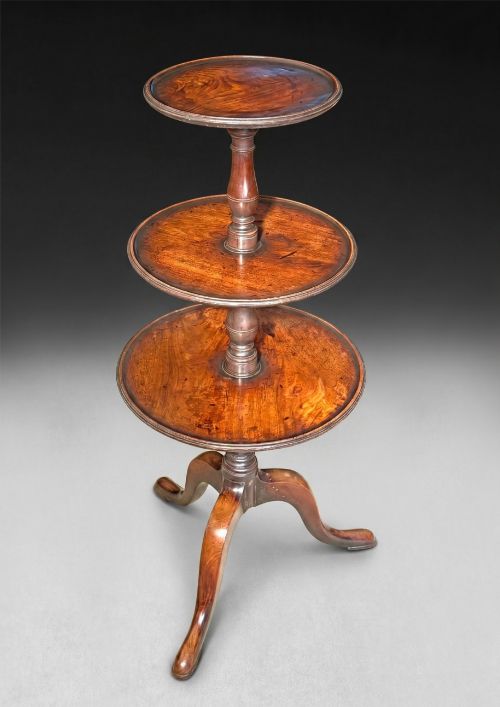
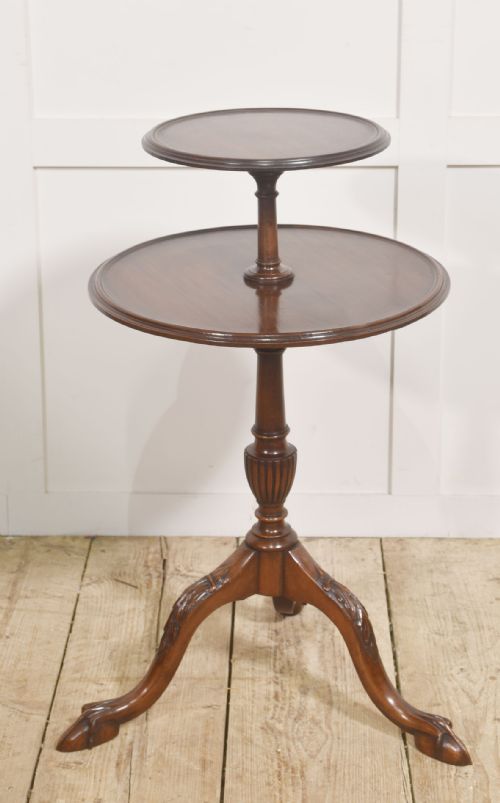
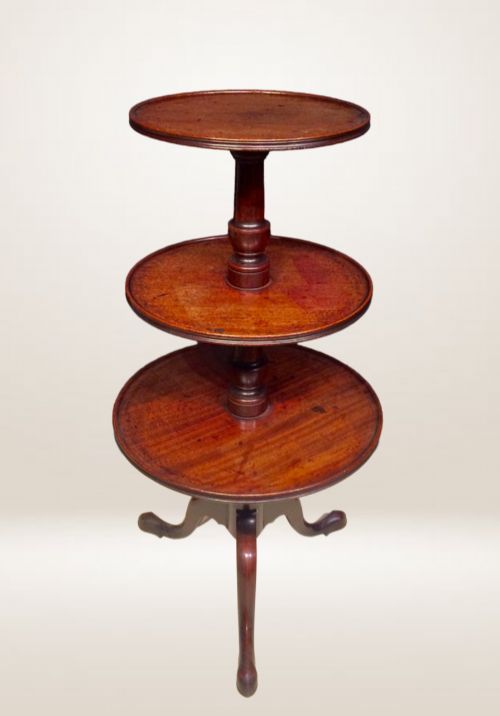
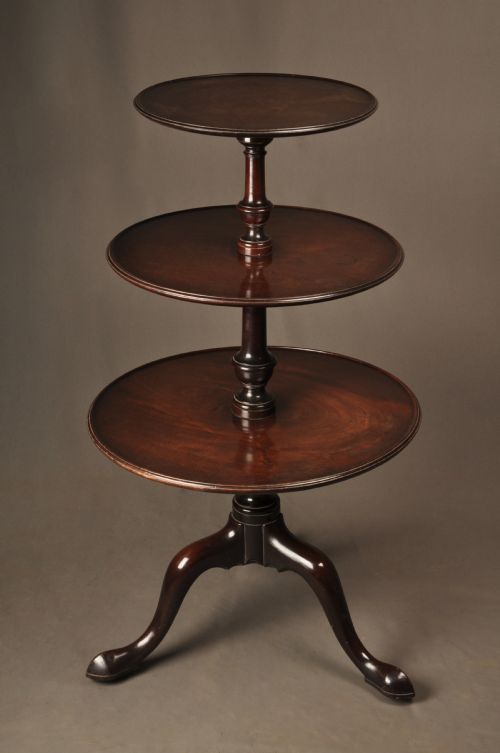
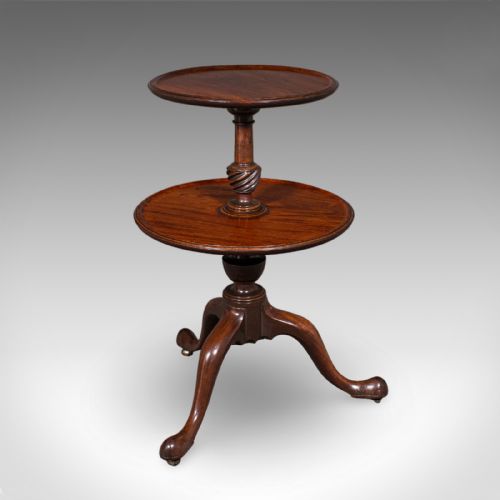
A tripod mahogany tier table primarily manifests as a dumb waiter or etagere designed with circular graduating tiers supported on a central pillar and three legs. These practical serving pieces date predominantly from the eighteenth century and the Regency period through to the Victorian era, offering tiered surfaces for dining rooms and drawing rooms.
The most common examples encountered on this page belong to the George III period, featuring two or three revolving circular trays mounted on cabriole or splayed tripod bases. Makers also produced folding variants, drop-leaf designs, and occasional wine tables that share the characteristic central column and three-legged support.
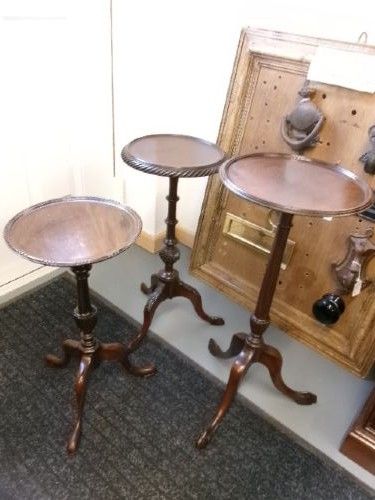
Later nineteenth-century and Edwardian pieces continue the tradition, sometimes adopting plant stands or side table formats while retaining the essential mahogany tiers and tripod foundation. Buyers select these items for their compact footprint and the vertical storage capacity provided by the stepped tiers.
Judging Quality
Quality rests upon the selection of timber, the crispness of the turning on the central column, and the elegance of the tripod legs. Superior pieces display dense, heavy Cuban mahogany with deep natural patina and slender, well-proportioned legs that terminate in original brass castors or pad feet.
Construction integrity distinguishes finer workshops, evident in the smooth rotation of tiered trays and the stability of the central column joint. Heavy-handed proportions or clumsy replacement legs reduce the visual harmony expected from period dining furniture.
Listings feature mahogany, solid mahogany, Cuban mahogany, and fiddleback mahogany alongside brass hardware.
Gillows
The Tripod Mahogany Tier Table Glossary
- Dumb Waiter
- A tiered serving table fitted with multiple rotating or fixed circular trays on a central pedestal, used historically to hold food and drink without servants present.
- Tripod Base
- A three-legged support system providing stability for a central pillar table on uneven floors.
- Etagere
- A piece of furniture consisting of a set of open shelves or tiers for displaying or holding small objects.
- Fiddleback Mahogany
- A figured variety of mahogany exhibiting undulating grain patterns resembling the back of a violin.
- Bird Cage
- A pivoting wooden block mechanism beneath a tabletop that allows the surface to tilt and rotate.
Tripod Mahogany Tier Table: Frequently Asked Questions
What was a tripod mahogany tier table used for?
These tables served primarily as dumb waiters in dining rooms, holding extra dishes, wine bottles, and glasses during meals. They allowed diners to help themselves without domestic staff present.
Over time, owners repurposed them as tea stands, plant holders, and occasional display surfaces in drawing rooms and parlours.
How do I tell an 18th century piece from a Victorian one?
Eighteenth-century examples typically display lighter proportions, finer turning on the central column, and timber with deep, mellow patination. Cuban mahogany was frequently chosen for these earlier items.
Victorian iterations often feel heavier in the hand, occasionally featuring bolder carved details, brass castors with different fixing styles, and revolving mechanisms that show nineteenth-century engineering.
Do the tiers on these tables always rotate?
Most traditional dumb waiter tiers revolve around the central shaft, allowing diners to reach different dishes easily from a seated position. Some variations, however, feature fixed tiers or drop-leaves designed for wall placement.
Checking the underside of the trays reveals the block and pivot construction that determines whether the surface turns.
Where should I place a tripod tier table at home?
Their compact footprint makes them ideal beside armchairs, in corners, or flanking a sideboard to hold lamps and books. The stepped tiers utilise vertical space efficiently without crowding smaller rooms.
Avoid positioning them in direct sunlight or next to heat sources, as antique mahogany responds to extreme temperature shifts.