





Georgian Dumb Waiter Stand
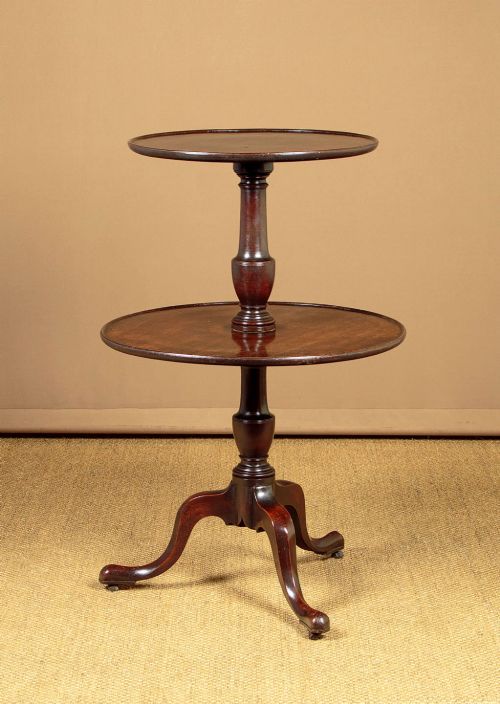
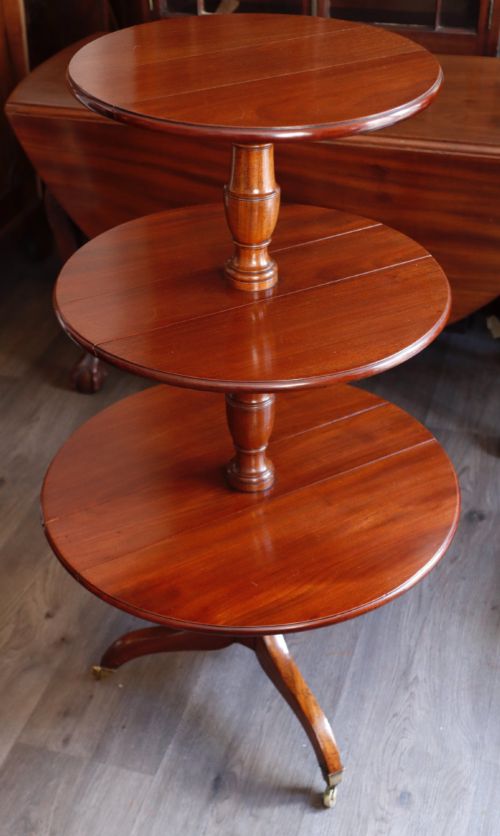
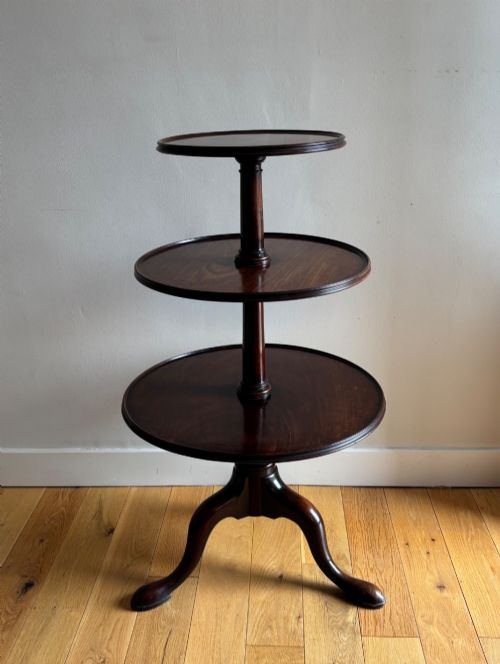
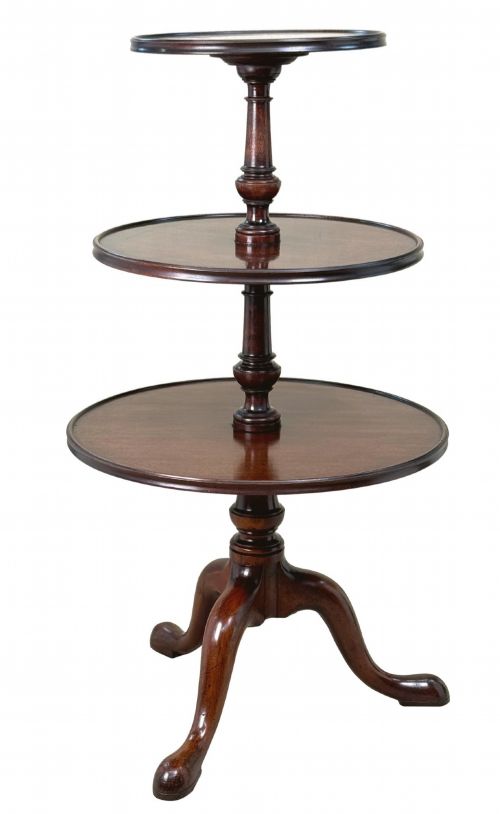
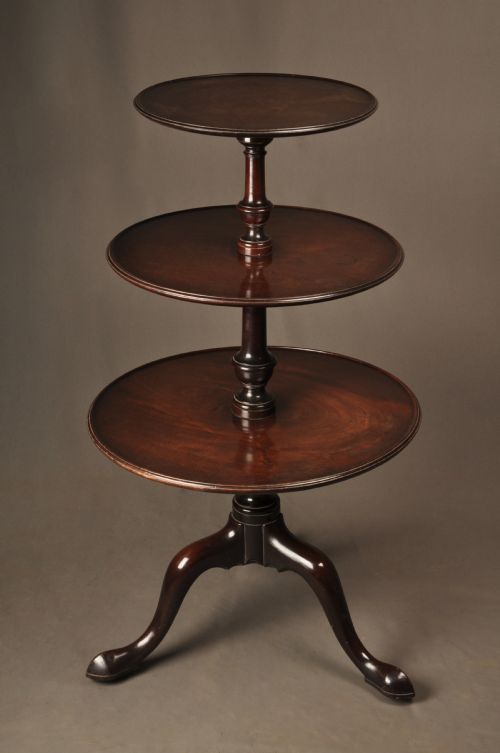
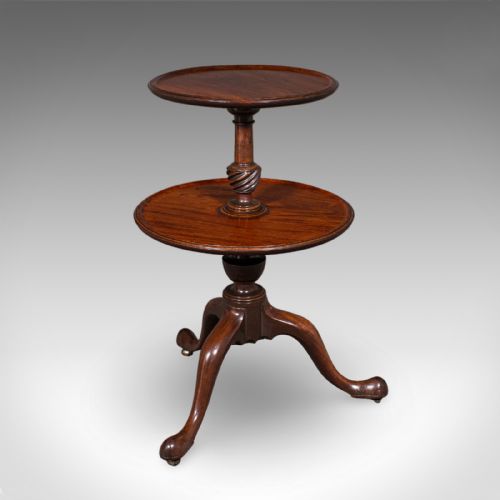
A georgian dumb waiter stand brings tiered timber shelving to a dining space, offering multiple revolving trays for service.
Georgian Dumb Waiter Stand
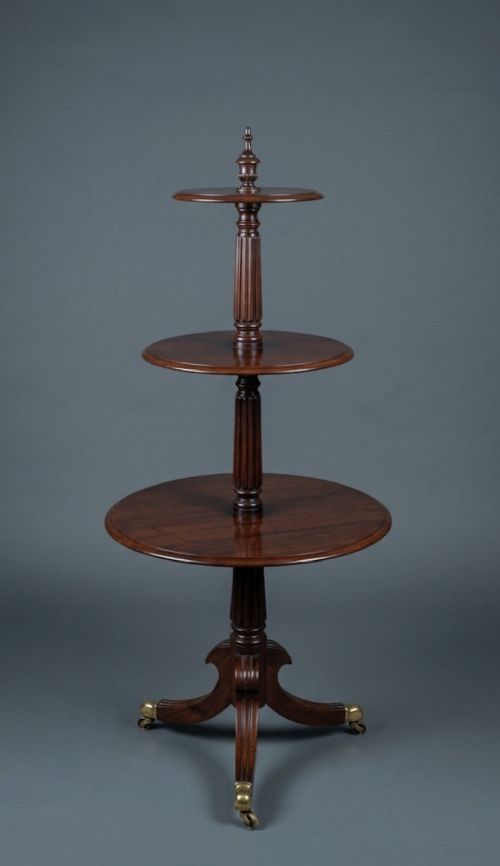
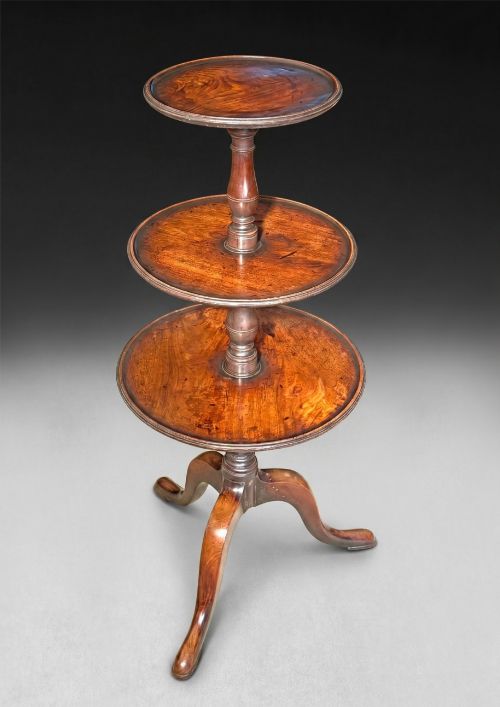
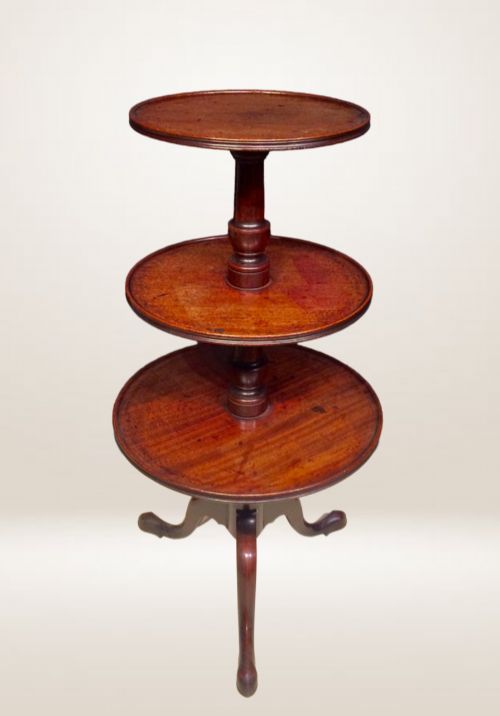
A georgian dumb waiter stand is a tiered serving piece designed for dining rooms, typically featuring graduated circular trays mounted on a central pillar and tripod base. When you search for a georgian dumb waiter stand, you encounter multi-level tables that allow diners to reach dishes without servants present. Most examples on this page date from the eighteenth century and the Regency period, constructed primarily with two or three rotating tiers. These stands function as practical side tables or afternoon tea serving units, utilising pivoting wooden mechanisms to present food and drink.
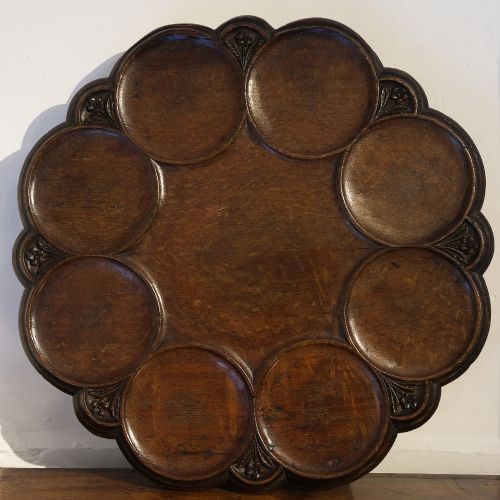
The forms range from simple two-tier circular trays to elaborate three-tier drop-leaf designs and occasional lazy susan variants. Makers built these objects to stand beside dining tables, holding decanters, plates, and silver without cluttering the main surface. Oak, pollard oak, and mahogany appear frequently across the selection, showing the domestic utility demanded by households of the period. While many adhere to strict Georgian and George III proportions, later Victorian interpretations and twentieth-century versions also populate the listings.
What varies in quality
Quality separates through the selection of timber figures, such as dense Cuban mahogany or figured pollard oak, compared to plain utility woods. The turning of the central column and the grace of the tripod legs dictate the structural elegance of the piece.
Mechanisms also distinguish finer workshop output, where revolving tiers spin smoothly on well-fitted brass or timber pivots without wobbling. Superior examples display crisp edge moulding, careful dovetailing, and original patination earned through centuries of use.
Listings span from the eighteenth-century George II era through Regency and Victorian periods, extending into early twentieth-century interpretations.
Gillows
The Georgian Dumb Waiter Stand Glossary
- Tripod base
- A three-legged support structure commonly found beneath the central pedestal of these tiered stands. This design ensures stability on uneven floorboards.
- Tiered table
- A piece of furniture featuring multiple horizontal surfaces arranged vertically on a single central shaft. These provide graduated display or serving space.
- Drop-leaf
- A table design incorporating hinged flaps that fold down when extra floor space is required. This mechanism appears on rectangular multi-level serving stands.
- Lazy susan
- A revolving tray placed on a table or stand to allow easy sharing of dishes. Some early nineteenth-century oak variants serve this specific function.
- Revolving mechanism
- The internal pivot that permits individual trays to spin around the central column. High-grade examples operate smoothly without excessive play.
Georgian Dumb Waiter Stand: Frequently Asked Questions
What is a georgian dumb waiter stand used for?
These tiered stands served dining rooms by holding extra plates, cutlery, and wine decanters near the table. Households utilised them to reduce the need for servants during meals.
Today, buyers place them in dining rooms, living spaces, or hallways as display surfaces and occasional tables.
How many tiers do these stands have?
Most examples feature either two or three graduated circular trays stacked vertically on a central column. Three-tier versions offer maximum surface area while maintaining a compact footprint.
Drop-leaf rectangular variants also exist within the broader category of tiered serving furniture.
How do you date a period dumb waiter?
Dating relies on timber choice, such as Cuban mahogany or pollard oak, alongside leg profiles and turning styles. Pieces attributed to the eighteenth century often display simpler George III tripod proportions.
Later Regency and Victorian iterations introduce heavier pedestals, brass mounts, or later decorative paintwork.
Do the trays rotate?
Yes, the defining characteristic of these stands is the revolving mechanism that allows upper trays to spin. This action let diners access shared dishes easily without standing.
Pegged wooden pivots or brass fixtures enabled the smooth rotation of each tier.
Where should I place one in my home?
A tiered stand fits well beside a dining table, in a corner of a drawing room, or as an afternoon tea serving station. Their small footprint makes them practical for holding plants, books, or decorative objects.
Ensure the revolving tiers have enough clearance from walls to spin freely.