



Tripod Base Dessert Stand
A tripod base dessert stand provides tiers for serving, appearing in mahogany across Georgian and nineteenth-century periods.
Tripod Base Dessert Stand
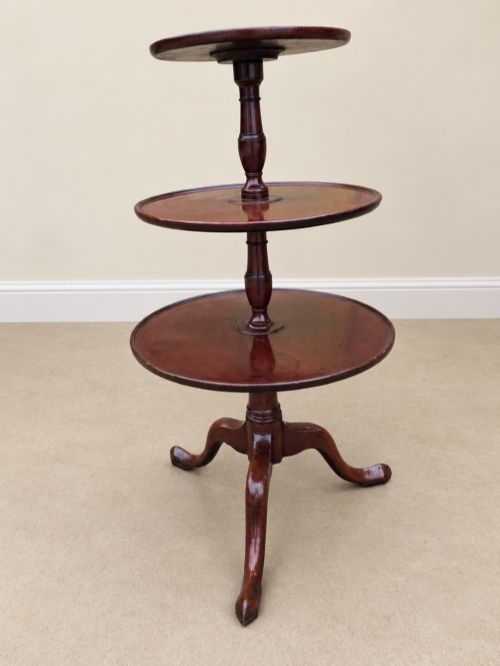
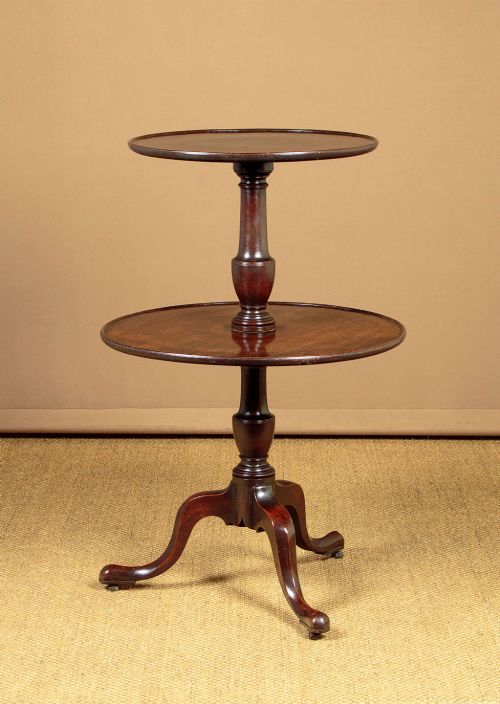
A tripod base dessert stand functions as a tiered serving piece, appearing as a dumb waiter, folding dumbwaiter, or tiered table. These items serve dining rooms and drawing rooms for presenting food or desserts.
The versions met on this page date from the eighteenth century, Georgian period, George III era, and early nineteenth century. Examples include circular tops, revolving tiers, and folding mechanisms.
Makers built these pieces in mahogany, sometimes incorporating brass fittings. Forms span two tiers and three tiers, designated as occasional tables, side tables, and serving stands.
How these pieces were made
Cabinet makers utilised solid mahogany and mahogany veneers to construct the tiered platforms and central columns. The timber provides a sturdy structure capable of supporting multiple revolving or fixed trays.
The support structure relies on a tripod base beneath a turned pillar, ensuring stability across two and three-tier formats. Metal components such as brass fastenings or hinges appear on folding variants.
Tripod Base Dessert Stand Retail Price Guide 2026
Typical asking prices for tripod base dessert stand among the pieces listed under this phrase on Sellingantiques today, from the lower quarter to the upper quarter. They describe what is for sale here now, not the wider market.
Early designers gave dinner guests the ability to spin their dessert in circles without leaving their chairs.
What varies in quality
Construction methods dictate stability, particularly in multi-tiered and revolving examples where the central column meets the tripod legs. Superior execution ensures smooth movement in rotating tiers and secure joints in folding mechanisms.
Timber selection and grain figure across the mahogany platforms determine visual distinction between standard examples and finer George III pieces. The crispness of turning on the central pillar and legs reflects the maker's skill.
The Tripod Base Dessert Stand Glossary
- Dumb waiter
- A tiered serving stand designed to hold food or dessert without the immediate presence of servants. These pieces feature multiple revolving or stationary trays on a central column.
- Tripod base
- A three-legged support system providing stability for the central column of a table or serving stand. This configuration allows compact placement around dining furniture.
- Georgian
- The period spanning the reigns of the first four Georges, noted for stylistic developments in mahogany furniture. Pieces from this era often display classic proportions and restrained ornamentation.
- Tiered table
- An item of furniture featuring multiple horizontal surfaces arranged vertically. These levels increase display and serving capacity within a compact floor footprint.
Tripod Base Dessert Stand: Frequently Asked Questions
What is a tripod base dessert stand used for?
These pieces function as serving stands and dumb waiters to hold food and dessert courses during dining. The tiered structure allows multiple dishes to sit within reach of diners.
In period settings, such stands relieved servants from constant attendance at the table. Today, they serve practical display and serving roles in dining rooms.
How do you identify a Georgian dumb waiter?
Georgian examples utilise mahogany timber and feature tripod bases supporting two or three tiers. Dating typically spans the eighteenth century through to about eighteen hundred.
Stylistic markers include turned central pillars, circular trays, and sometimes folding mechanisms or revolving tiers. Construction methods reflect the cabinet-making standards of the George III era.
Are these stands revolving or fixed?
Listings include both revolving three-tier dumb waiters and folding variants. Some examples feature fixed platforms arranged vertically on the central pillar.
Revolving versions allow diners to spin individual tiers to access food easily. Folding stands permit compact storage when not in use.
What materials are used in these pieces?
Mahogany serves as the primary timber across the listed examples, providing structural strength and dark grain patterns. Brass hardware appears on folding mechanisms and specific fittings.
Cabinet makers relied on these materials for durability in dining furniture. The combination of mahogany and brass defines the visual character of the period.