
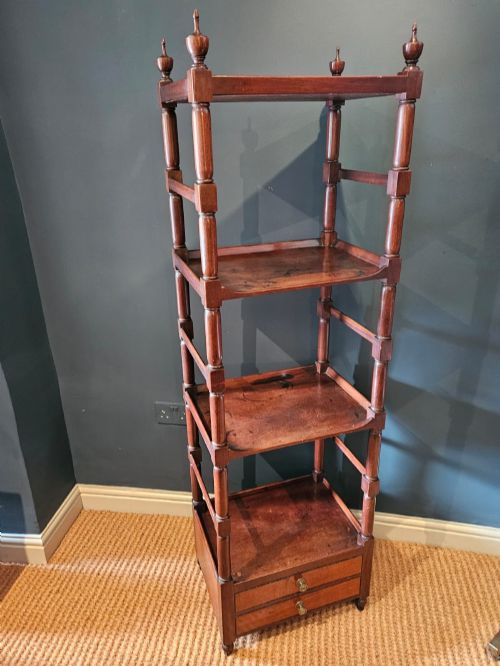
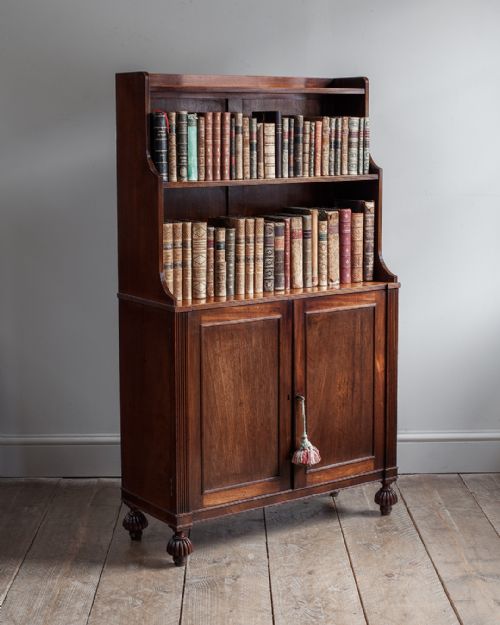
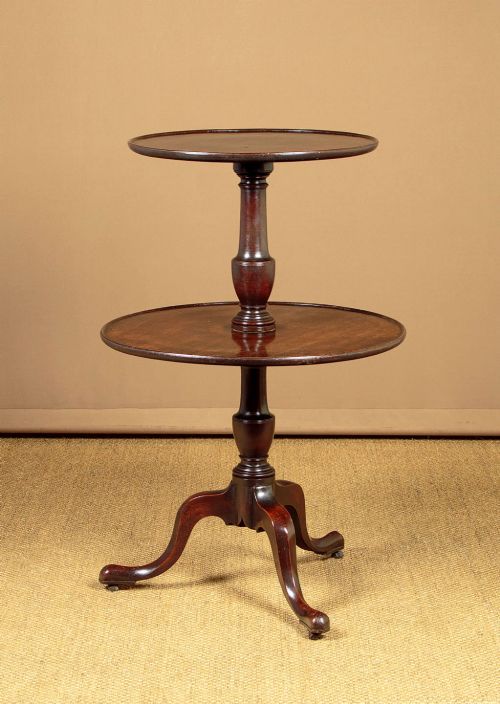
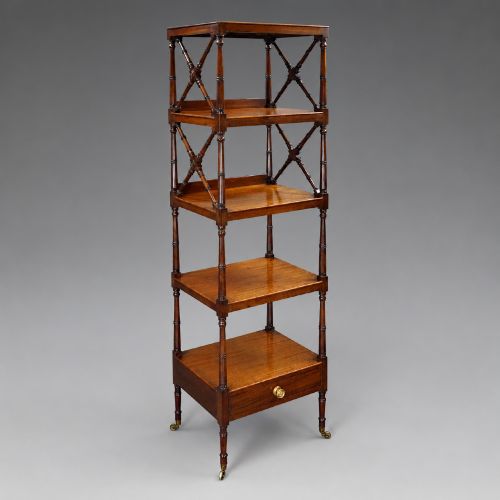
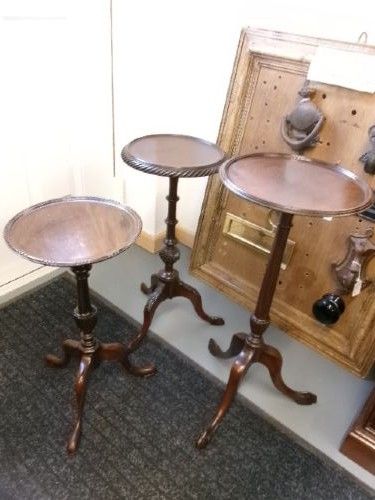
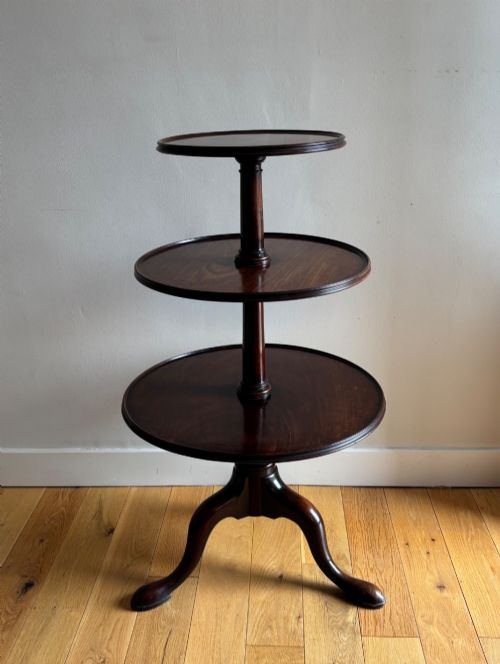
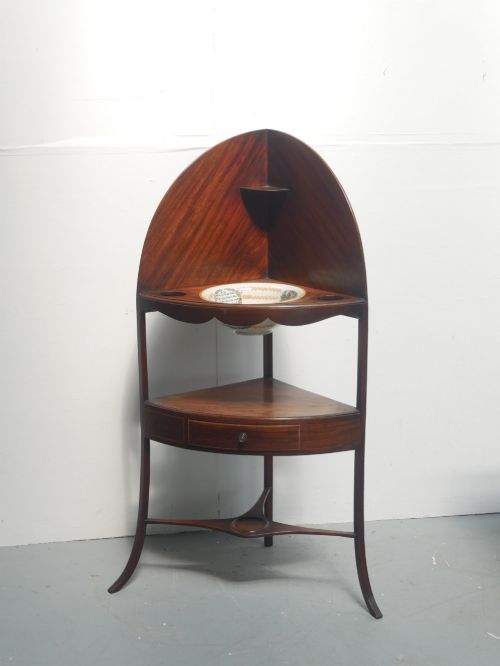
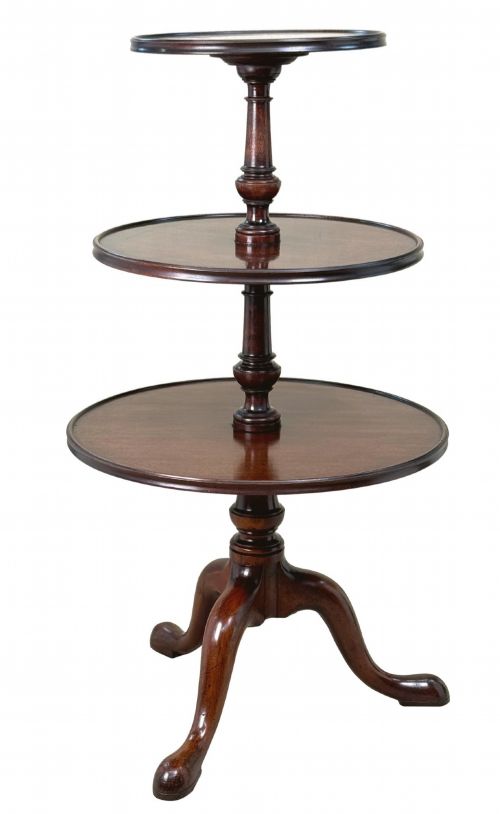
Georgian Mahogany Tiered Stand
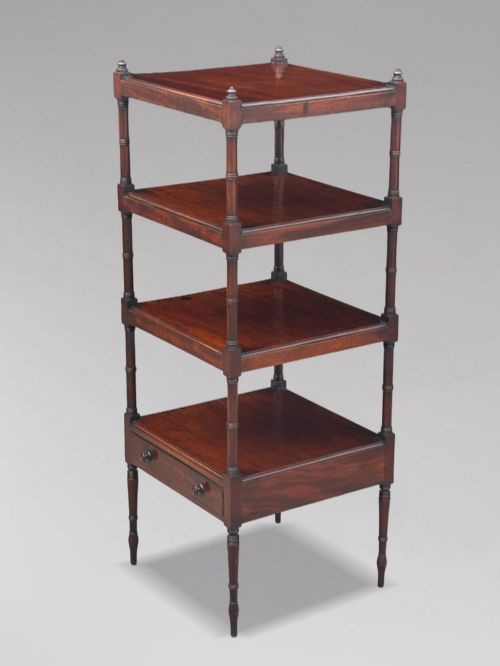
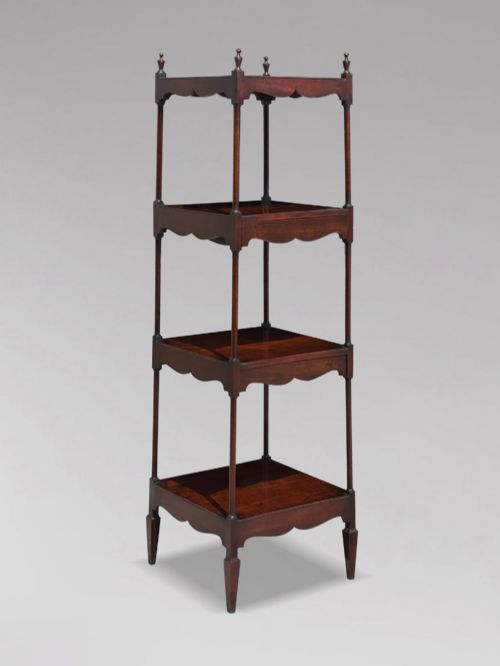
A georgian mahogany tiered stand brings functional levels and rich timber grain to a room, offering multiple surfaces for display and service.
Georgian Mahogany Tiered Stand
The selection centres heavily on pieces from the Georgian, Regency, and nineteenth-century periods, with occasional twentieth-century revivals. Circular tiered serving stands and graduated shelf units dominate the forms available.
Makers constructed these tiered pieces to serve specific domestic functions, from dining room service tables to corner washstands and library bookshelves. Each multi-level design maximises vertical space while maintaining a compact footprint.
Markers of Quality
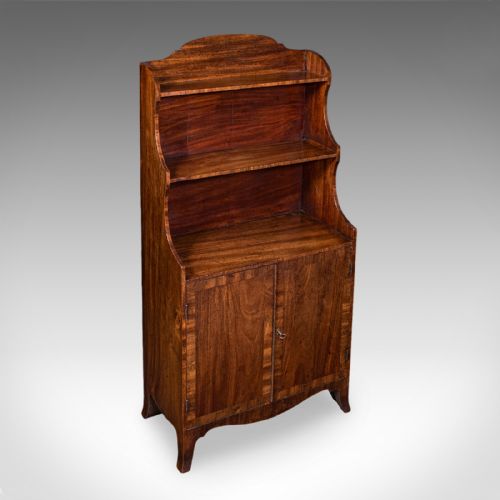
Superior examples display careful timber selection, particularly in matched flame mahogany veneers and thoughtful grain alignment across multiple tiers. The crispness of carved details and the subtlety of boxwood inlay distinguish finely wrought items from plain utility pieces.
Structural integrity in multi-tiered forms depends on the rigidity of central columns and the secure fitting of joints between shelves and uprights. Quality rests in the balance of the proportions and the smooth mechanical action of revolving or portable designs.
Some nineteenth-century portable bookshelves packed flat for travel, proving that modular convenience predates flat-pack furniture by centuries.
Gillows
The Georgian Mahogany Tiered Stand Glossary
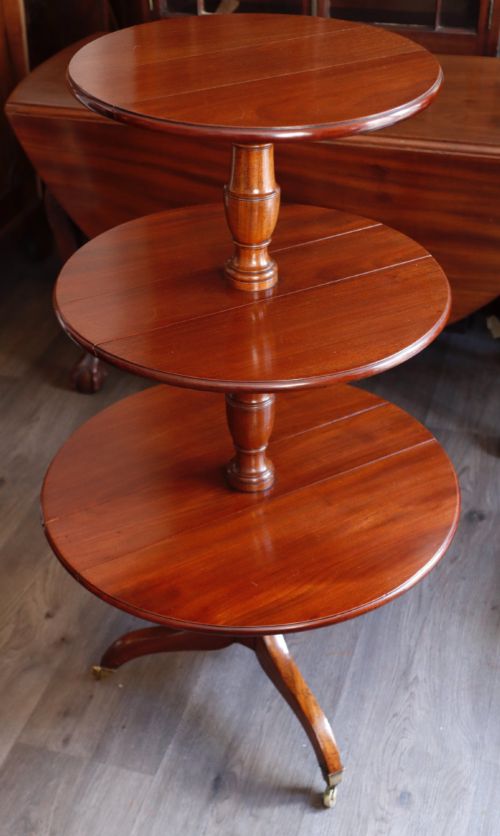
- Dumb waiter
- A multi-tiered serving table, often circular with graduated revolving shelves, used in dining rooms. These pieces allowed diners to access food and drink without servants present.
- What-not
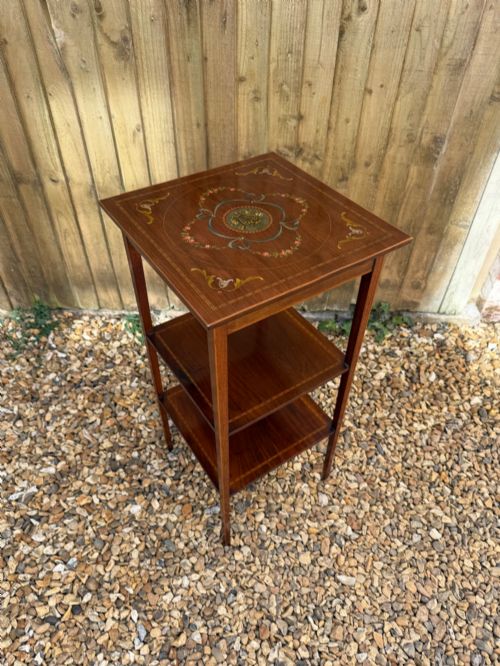
- An open multi-tiered shelving unit designed for displaying ornaments, books, or small objects. The form gained popularity during the Georgian and Regency periods.
- Waterfall bookcase
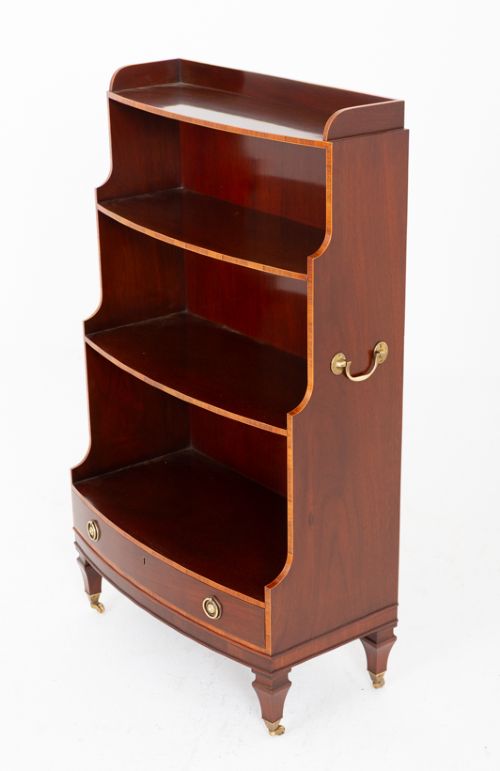
- A tiered bookshelf featuring graduated shelves that recede from bottom to top, creating a stepped profile. This style appears in various nineteenth-century and later iterations.
- Flame mahogany
- A highly figured veneer cut from where branches join the main tree trunk, producing a distinctive flickering flame pattern. Cabinet-makers reserved this timber for prominent surfaces.
- Astragal glazed
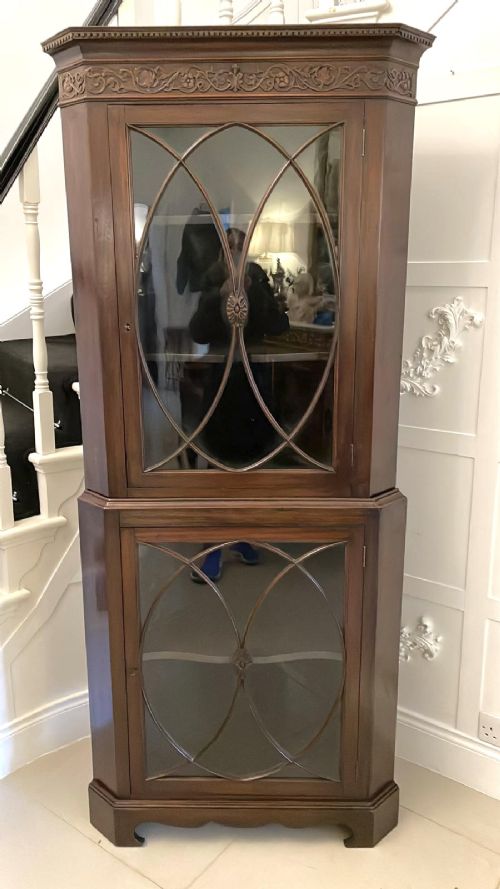
- A glass door or panel divided into small panes by wooden glazing bars, commonly seen on cabinets and bookcases. These bars create geometric patterns across the frontage.
Georgian Mahogany Tiered Stand: Frequently Asked Questions
What was a tiered stand used for?
Tiered stands served multiple domestic purposes depending on their specific form, from holding dishes in the dining room to displaying books and ornaments in the parlour. Dumb waiters held food and wine during meals, while what-nots and etageres provided vertical display space.
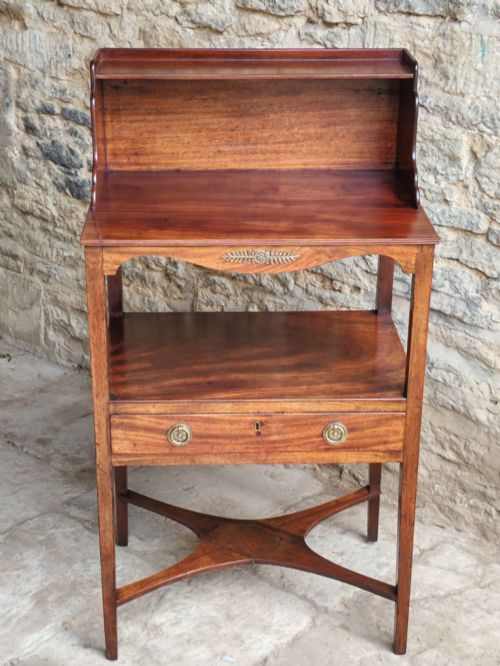
In bedrooms and dressing areas, smaller tiered tables held washbasins or personal items. The multi-level design allowed households to maximise floor space while keeping frequently used objects accessible.
How do I identify a Georgian tiered stand?
Identification relies on examining the timber species, construction methods, and overall proportions typical of the eighteenth and early nineteenth centuries. Genuine pieces frequently utilise solid mahogany, brass hardware, and hand-cut joinery rather than modern fasteners.
Stylistic cues such as turned central pillars, tripod base supports, and subtle boxwood stringing align with Georgian and Regency design vocabulary. Comparing the piece to documented forms helps confirm its period origin.
Where should I place a tiered stand at home?
These versatile pieces suit corners, hallways, and living spaces where vertical storage or display is required without occupying a large footprint. A revolving dumb waiter functions well beside seating or as a central feature in a dining area.
Smaller tiered bookcases and etageres fit against empty wall spaces or beside armchairs to hold books and decorative objects. The open structure of these stands ensures they maintain an airy visual presence in a room.
Are revolving stands stable?
Revolving tiered stands rely on a central pivot mechanism that allows the shelves to turn smoothly while maintaining overall balance. Heavier items belong on the wider lower tier to keep the centre of gravity low.
Well-constructed examples feature sturdy tripod or cross-form base supports that prevent tipping during use. Regular maintenance of the central pivot ensures the tiers turn without wobbling.