



Folding Tier Side Stand
A folding tier side stand combines useful surface space with clever mechanics, offering a practical solution for flexible serving and display.
Folding Tier Side Stand
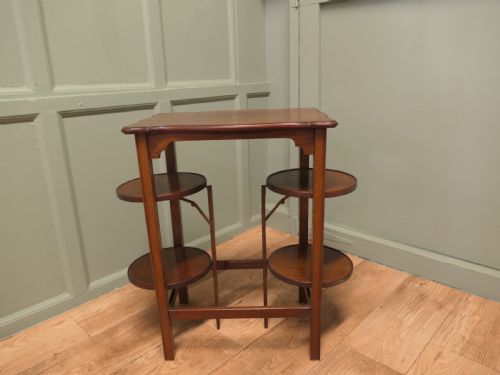
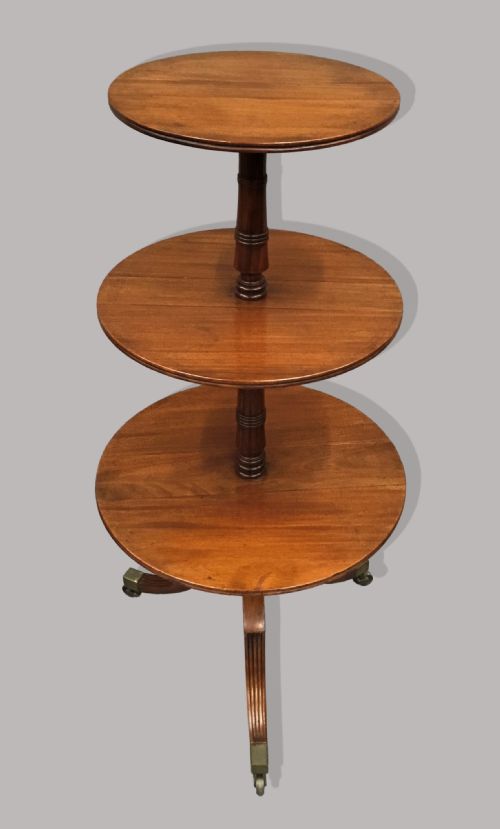
A folding tier side stand, frequently referred to in period terms as a dumb waiter or serving stand, provides multiple levels of surface area designed to collapse or fold away when not in use. These pieces serve as versatile companions in dining rooms and drawing rooms, historically utilised for holding dishes, drinks, or books without requiring permanent floor space.
The selections available on this page span several distinct eras, notably featuring Georgian, Regency, and Edwardian examples alongside early twentieth-century interpretations. Buyers will frequently encounter two-tier and three-tier formats, constructed with circular or octagonal revolving and dropping leaves supported on central pillars or folding frames.
Originating primarily from the eighteenth and nineteenth centuries, these stands reflect a period of ingenious domestic furniture design focused on adaptability and entertaining. The emphasis remains firmly on multi-level utility, allowing hosts to present courses or hold items within arm's reach before packing the stand flat against a wall.
How they were made
Cabinet makers relied heavily on dense hardwoods such as mahogany and rosewood, chosen for their strength and stability when supporting multiple pivoting tiers. Mixed hardwoods also appear in framing and internal mechanisms, providing the necessary resilience for joints that must withstand regular folding and unfolding.
Metal components play a crucial role in the construction, with brass hinges, pivots, and catches engineered to allow leaves to drop or tiers to collapse smoothly. The craftsmanship centres on precise joinery and hardware placement, ensuring the tiered structure remains balanced whether fully extended or folded down.
Folding Tier Side Stand Retail Price Guide 2026
Typical asking prices for folding tier side stand among the pieces listed under this phrase on Sellingantiques today, from the lower quarter to the upper quarter. They describe what is for sale here now, not the wider market.
Listings feature mahogany, rosewood, and brass, spanning periods from the Georgian era through to the early twentieth century.
What varies in quality
Quality in a folding tier side stand rests upon the precision of the folding mechanism and the rigidity of the tiers when locked into position. Finer examples exhibit seamless movement in their drop-leaves and hinges, maintaining absolute stability without sagging or wobbling across the multiple levels.
The selection of timber and the execution of secondary details, such as figured mahogany veneers and turned central pillars, distinguish standard utility pieces from exceptional cabinet work. Superior items retain crisp moulding, well-fitted brass hardware, and harmonious proportions when viewed in both the open and closed positions.
The Folding Tier Side Stand Glossary
- Dumb waiter
- A multi-tiered freestanding piece of furniture used for holding food, glassware, or serving items without the need for a dedicated attendant. These typically feature two or three graduating circular or octagonal shelves.
- Drop-leaf
- A hinged section of a table top that can be raised to provide a larger surface or lowered to save space. In these stands, the folding leaves allow the tiers to collapse neatly.
- Campaign style
- Furniture designed for easy transport and storage, often incorporating folding frames, brass corners, and removable components. This influence appears in pieces built for portability and flexible domestic use.
- Tiered table
- A piece featuring multiple stacked surfaces supported by a central column or upright frame. This design maximises vertical display and storage space within a compact footprint.
Folding Tier Side Stand: Frequently Asked Questions
What is a folding tier side stand used for?
These stands were traditionally used in dining rooms and parlours to hold extra dishes, wine bottles, or tea services during meals and gatherings. The multiple tiers allowed hosts to keep serving items close at hand while saving valuable table space.
Today, they function well as decorative display surfaces or practical occasional tables in living areas. Their ability to fold down makes them particularly useful for homes needing flexible furniture arrangements.
How do the folding mechanisms work?
The mechanism typically involves hinged drop-leaves on the outer edges of the circular or octagonal tiers, supported by pivoting wooden brackets or brass arms. When the brackets are swung inward, the leaves drop vertically to rest flat against the central pillar.
Some variations feature collapsible frameworks or nesting tiers that allow the entire structure to compress. This clever engineering enables the stand to be stored against a wall when not in active use.
How do I tell a Georgian stand from a later piece?
Georgian and Regency stands generally showcase dense, richly patinated mahogany timber, hand-turned central columns, and traditional joinery techniques. The proportions tend to be robust yet elegant, reflecting the high standards of eighteenth-century cabinet making.
Later Edwardian and twentieth-century examples often incorporate lighter construction, alternative hardwoods like rosewood, or more utilitarian metal hardware. Examining the interior pivot points and the grain of the wood helps clarify the period of manufacture.
Are these stands stable when loaded with items?
When placed on a level floor and fully extended, well-made multi-tiered stands provide a secure platform for everyday objects. The weight distribution across the central pillar helps keep the base grounded.
However, because the outer leaves rely on hinged brackets, heavier items should be placed toward the centre of the fixed tiers rather than on the very edge of a dropped leaf. Checking the tightness of the central fittings ensures maximum stability during use.