




Tripod Base Centre Table
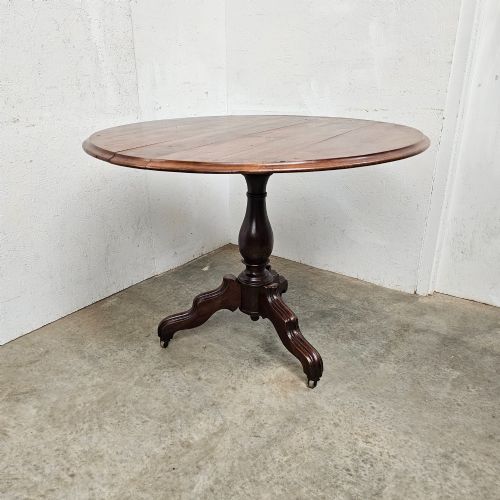
A tripod base centre table brings a distinct circular focal point to a room, resting on a single central support.
Tripod Base Centre Table
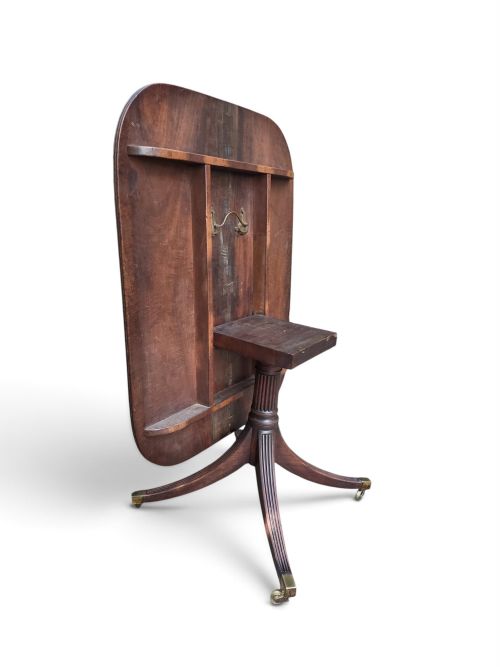
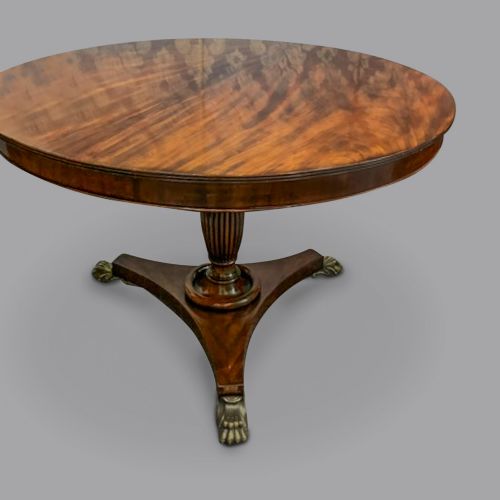
A tripod base centre table stands independently in a room, designed to be viewed from all sides rather than pushed against a wall. The form relies on a central pillar supported by three feet, frequently taking the circular shape seen in Victorian, Georgian, and Edwardian examples.
Most pieces encountered on this page date from the nineteenth century, including Victorian and Georgian periods. Alongside standard room-sized formats, the selection includes miniature furniture and specialised variants such as the French guéridon and Anglo-Indian carved tables.
Makers utilised various formats, from tilt-top dining tables to smaller occasional and side tables. Woods such as mahogany, rosewood, walnut, and satinwood dominate the selection, occasionally paired with marble tops and brass mounts.
Materials and Construction
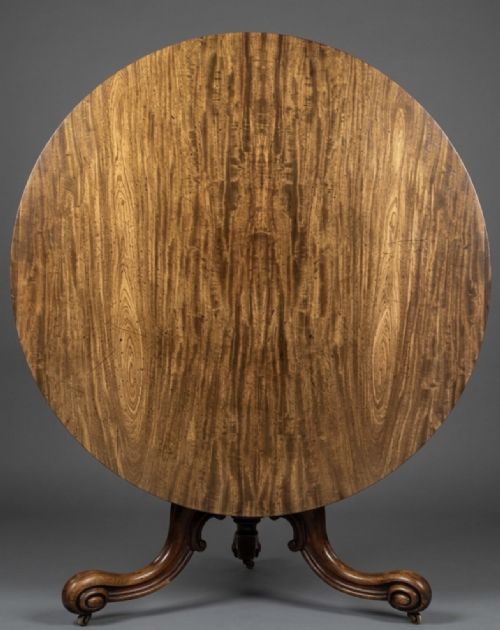
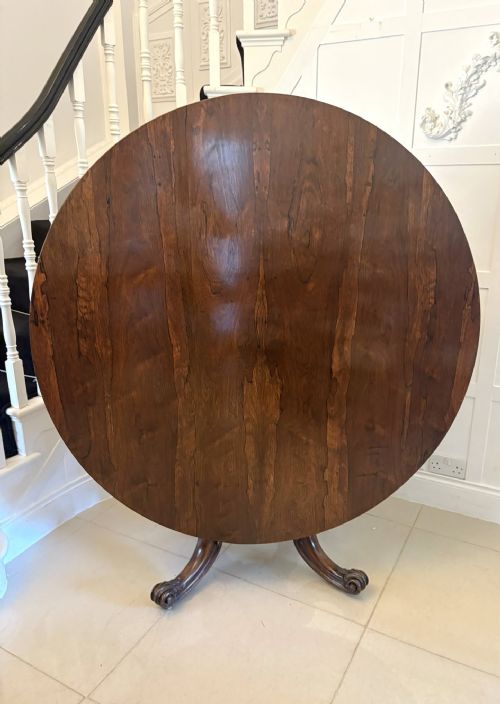
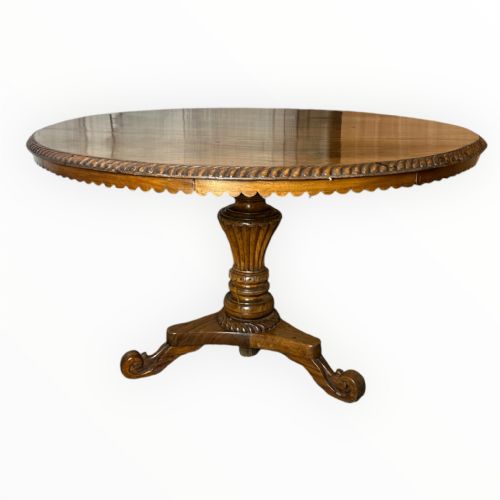
Cabinetmakers worked with dense hardwoods like mahogany, walnut, and rosewood, often applying figured veneers to the circular top surfaces. Carved details appear on the pillars and legs, while specific regional pieces utilise exotic timbers such as satinwood, padauk, and teak.
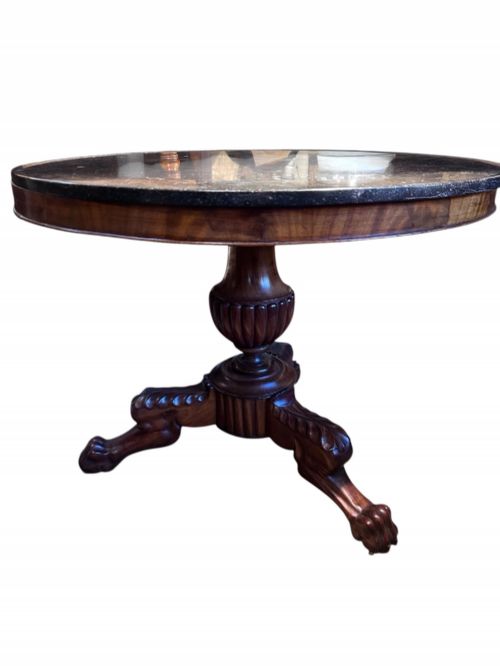
Advanced examples incorporate inset marble slabs paired with giltwood or brass-mounted bases. Structural stability on these three-legged supports required precise joinery where the central pillar meets the tripartite base.
Listings feature nineteenth-century and Victorian periods predominantly, constructed from mahogany, rosewood, walnut, and marble.
Judging Quality and Execution
The sophistication of the timber figure and the crispness of the carved ornament distinguish finer examples from standard production. Superior execution shows in the seamless matching of wood veneers across large circular tops and the balanced proportions of the central pillar.
The Tripod Base Centre Table Glossary
- Tripod base
- A table support comprising a central pillar resting on three legs or feet. This configuration allows the table to stand firmly on uneven floors.
- Guéridon
- A small French table, often circular and supported by a single column or figures. The form became popular during the nineteenth century.
- Tilt-top
- A hinged table top that can be pivoted to a vertical position when not in use. This mechanism saved space in period interiors.
- Padauk
- A heavy tropical hardwood with a reddish hue used in regional cabinetmaking. It is durable and takes intricate carving well.
- Giltwood
- Wood that has been coated with gold leaf or gold paint. It appears on decorative frames and mounts of high-status tables.
Tripod Base Centre Table: Frequently Asked Questions
What is a tripod base centre table used for?
These tables served various domestic purposes, from serving tea and displaying decorative objects to acting as a central dining or breakfast surface.
Because they stand on a single pillar rather than four corner legs, they allowed chairs to be tucked neatly around the circumference without obstruction.
How do I place a centre table in a room?
A centre table is designed to sit in the middle of a space rather than against a perimeter wall. It works well beneath a central ceiling light fixture or as an anchor for conversation groupings.
Ensure there is adequate clearance around the perimeter for movement, particularly with larger circular formats.
How do I tell a Victorian table from a Georgian one?
Georgian tables, dating from the eighteenth and early nineteenth centuries, often exhibit restrained classical proportions and simpler mahogany or satinwood surfaces. Victorian pieces from the mid-nineteenth century onward tend to feature heavier proportions, darker rosewood or walnut veneers, and deeper carving.
Regional variations and later revivals can sometimes blur these stylistic distinctions.
What is a guéridon table?
A guéridon is a French style of small circular table supported by a central column. Nineteenth-century versions frequently incorporated marble tops and brass mounts.
They function well as occasional surfaces in drawing rooms or halls.