

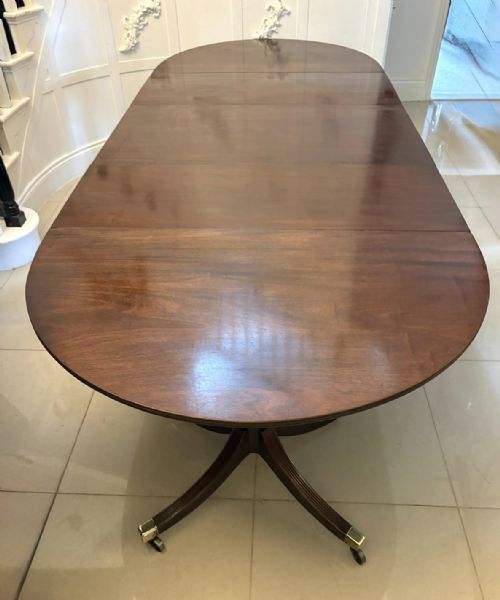


Triple Pillar Table
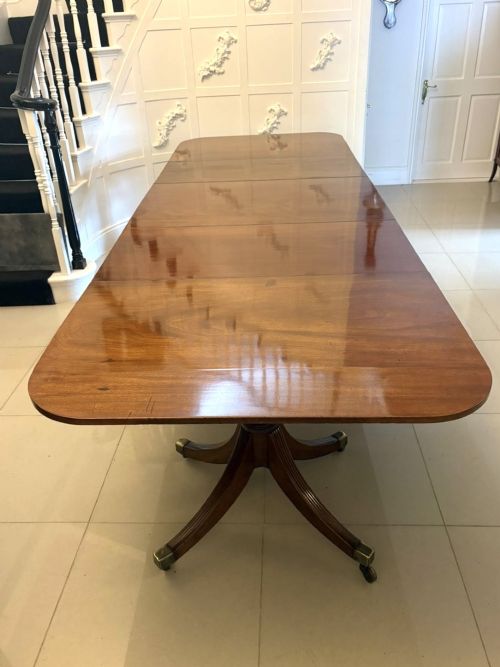
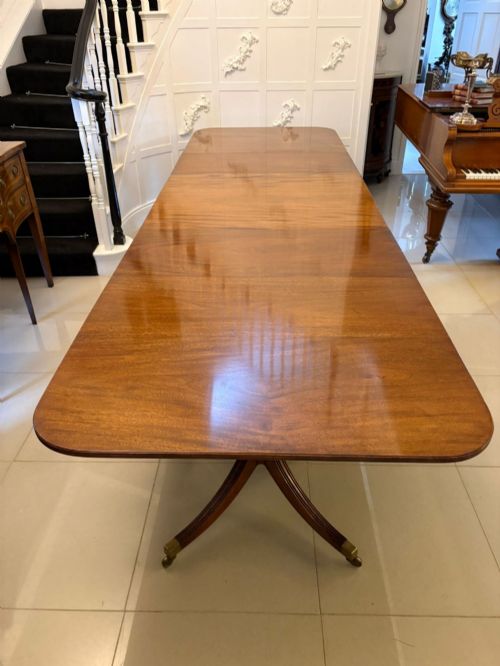
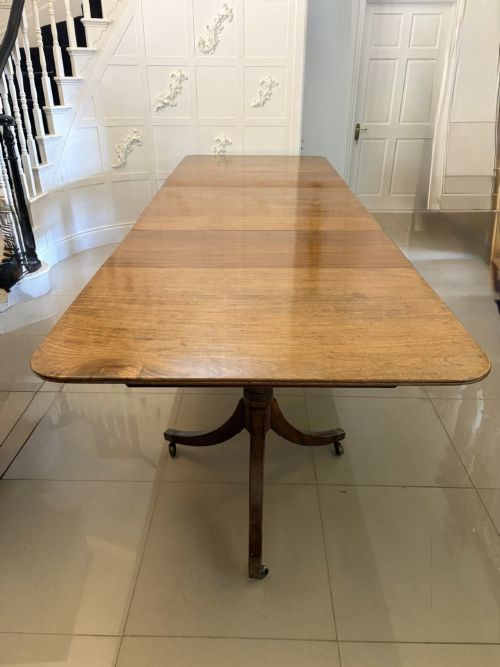
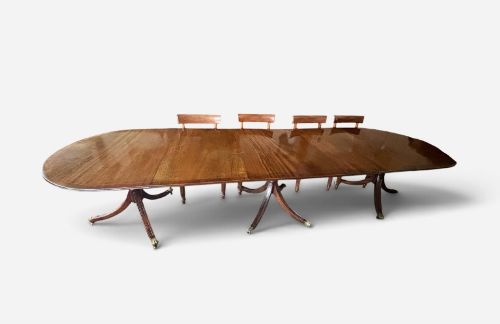
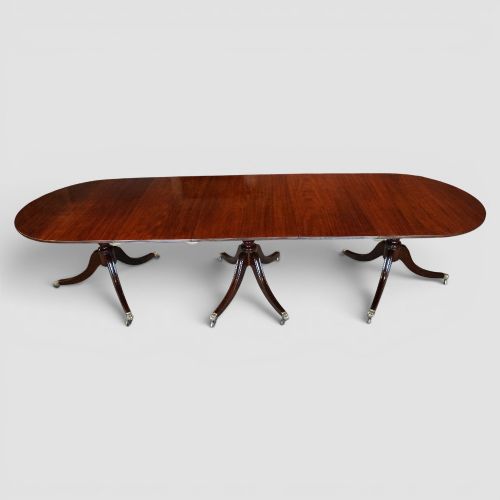
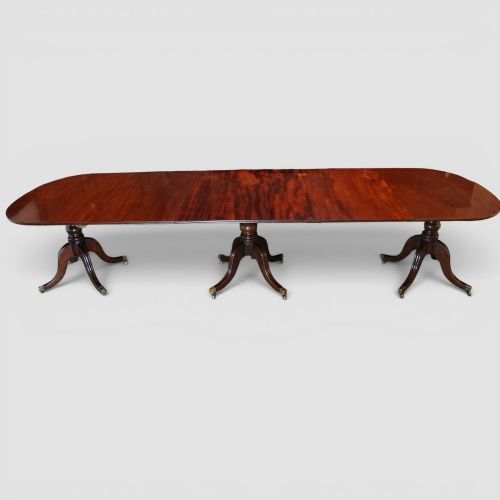
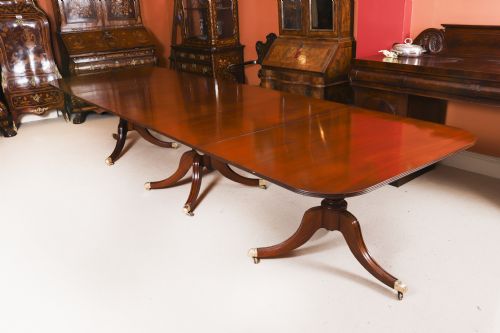
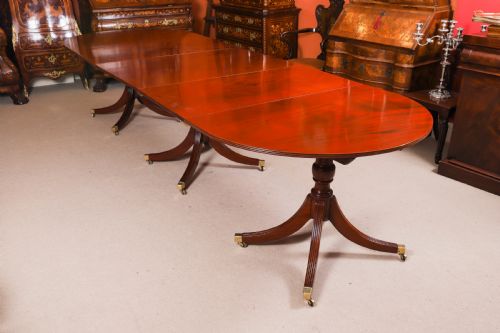
A triple pillar table offers substantial seating for dining rooms, constructed with three sturdy pedestals supporting long mahogany leaves.
Triple Pillar Table
A triple pillar table provides extensive dining space through an extending design supported by three distinct pedestals. These large tables routinely accommodate twelve to eighteen diners by incorporating removable leaves.
Most examples encountered here date from the Georgian and Regency periods, or appear in later revival styles from the nineteenth and early twentieth centuries. The form serves primarily as a grand dining table for large households.
What varies in quality
The refinement of the timber and the crispness of the pedestal carving distinguish superior examples from standard ones. Figured or flame mahogany tops with consistent grain matching across the inserted leaves indicate higher craftsmanship.
Proportion and stability during extension also define better pieces, ensuring the three pillars distribute weight evenly without sagging along the joins. Original brass hardware and well-fitted leaf mechanisms further elevate the standard of construction.
Listings feature mahogany timber predominantly, occasionally paired with brass fittings across nineteenth-century and revival periods.
Whytock and Reid
The Triple Pillar Table Glossary
- Triple pillar table
- A dining table supported by three separate vertical pedestals, usually fitted with extending leaves. This configuration allows for substantial length while maintaining clearance for chairs.
- Pedestal
- The central vertical column or pillar that supports the table top, typically dividing into three or four carved legs at the base. It provides structural stability for large extending formats.
- Extending table
- A table designed to increase in length through the addition of removable central leaves. The supporting pillars adjust or remain stationary as the frame opens.
- Flame mahogany
- A decorative veneer cut from timber where the branch junctions create a distinct flame-like pattern. It appears frequently on the surface boards of formal dining tables.
- Brass castor
- A small wheel fitted to the foot of a table leg to ease movement, often cast in brass. These frequently accompany the heavy pedestals of nineteenth-century dining furniture.
Triple Pillar Table: Frequently Asked Questions
How many people can sit at a triple pillar table?
These tables typically seat between twelve and eighteen guests depending on the length of the inserted leaves. Their expansive surface area accommodates large gatherings easily.
Buyers often select them specifically for hosting dinner parties where flexible seating capacity is required.
Are these tables difficult to extend?
The extending mechanism uses internal runners that slide apart to accept one or more removable leaves between the pedestals. Properly maintained runners glide smoothly.
Lifting and storing the heavy mahogany leaves requires care, but the process is straightforward for two people.
How do I distinguish an original Georgian table from a revival piece?
Original tables from the Georgian and Regency eras show construction methods, timber patination, and wear consistent with late eighteenth and early nineteenth-century workshops. Revival versions from the Edwardian or later periods often exhibit machine-cut components and different internal timber framing.
Examining the underside of the top boards and the joinery of the pillars helps clarify the period of manufacture.
What maintenance does a mahogany dining surface need?
Regular dusting and occasional application of appropriate furniture wax preserve the polished finish of the mahogany timber. Avoiding direct sunlight prevents uneven fading of the wood.
Using heat mats and coasters protects the polished surface from moisture and hot serving dishes during meals.