
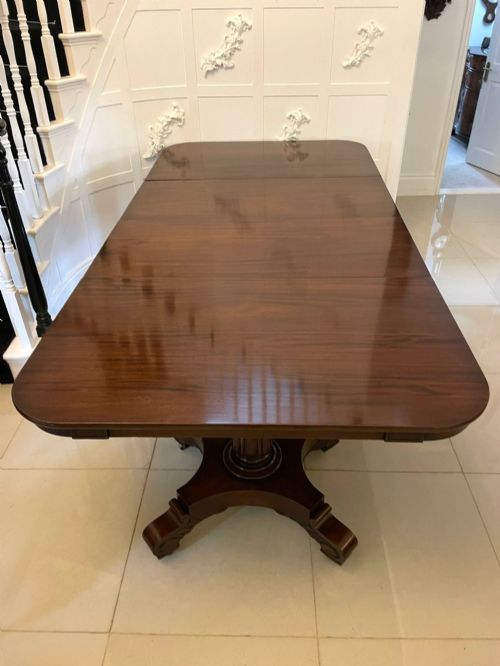
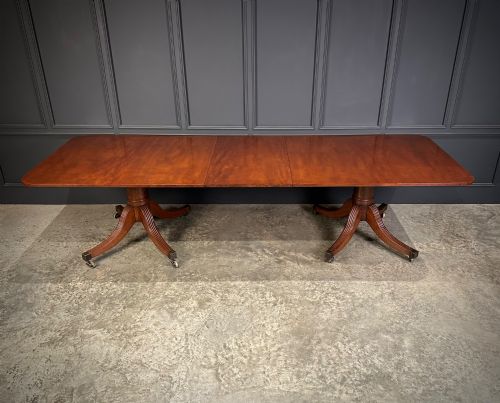
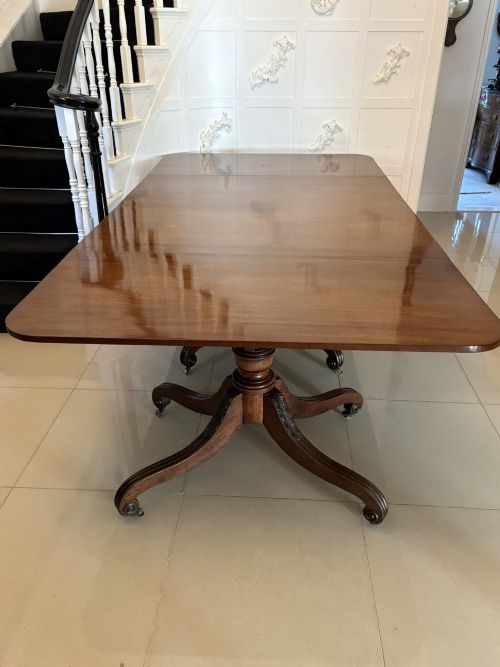
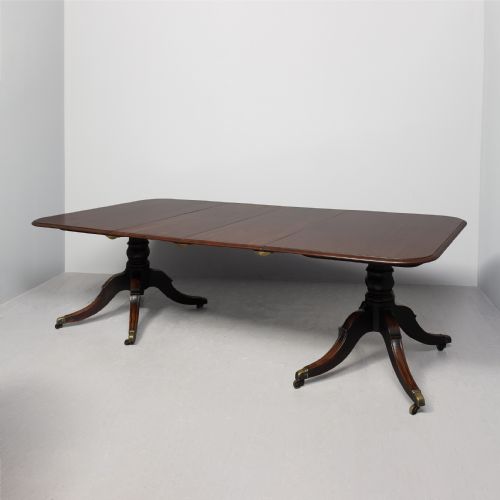
Regency Extension Dining Table
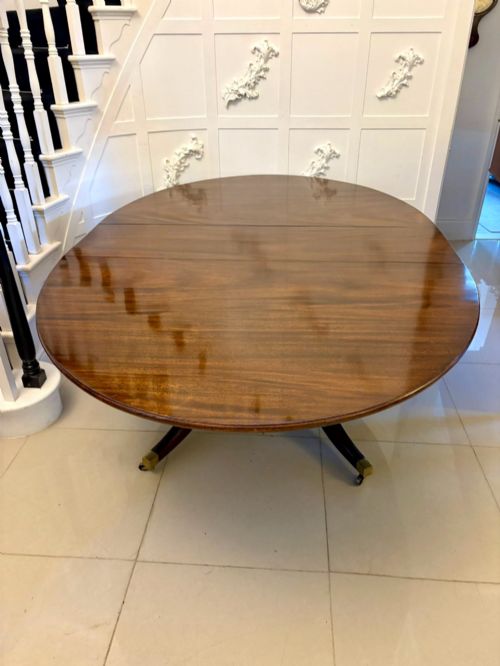
A regency extension dining table brings adaptable scale and rich timber grain to a dining room, seating large dinner parties or small households with equal grace.
Regency Extension Dining Table
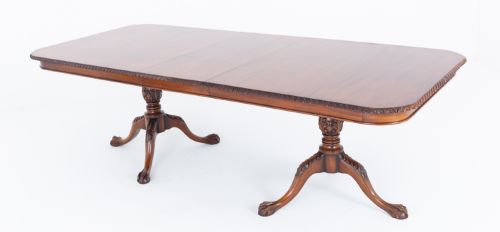
A regency extension dining table is a dining surface designed to expand with removable leaves or drop flaps, accommodating gatherings from intimate meals to grand feasts. The pieces met here span the nineteenth century, including the Regency period itself alongside George III, George IV, William IV, and later revival periods.
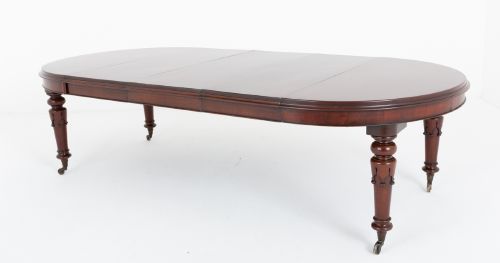
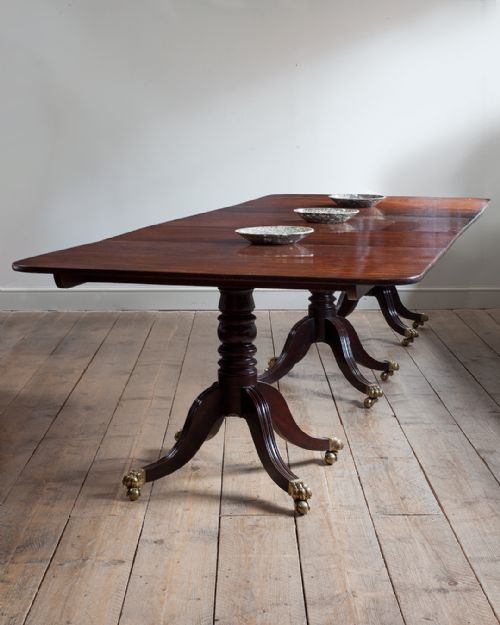
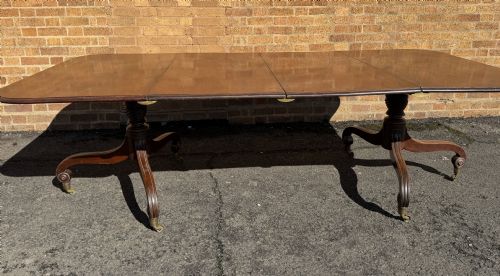
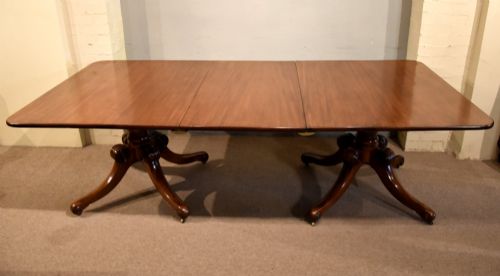
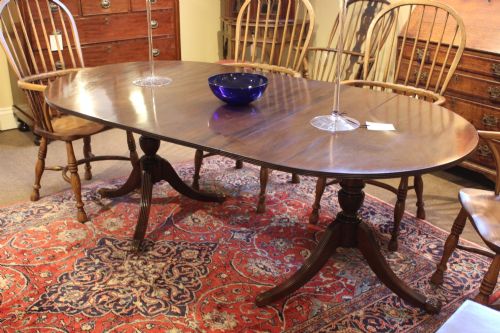
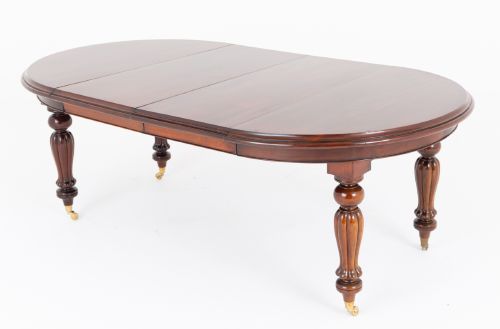
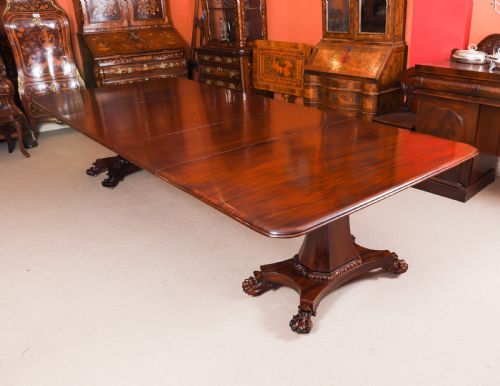
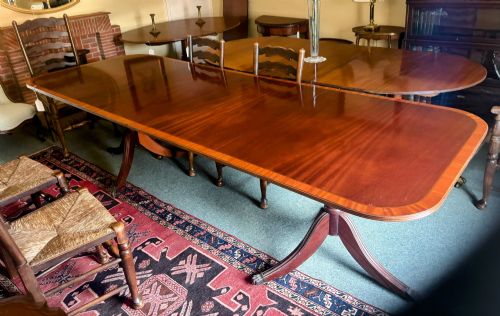
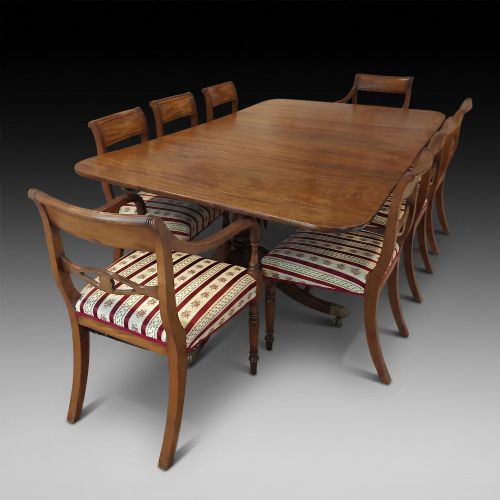
Most examples rely on pillar and pedestal formats, featuring twin, triple, or four-pillar configurations that support long mahogany boards. Alongside standard dining tables, variations include circular models, breakfast tables, and sofa tables utilised for dining.
Makers of these tables constructed them to serve practical domestic needs while projecting status through timber choice and scale. Buyers encounter formats ranging from compact four-seater versions to monumental dining tables seating over twenty guests.
Materials and construction
Cabinet makers relied principally on mahogany, selected for its stability, deep colour, and capacity to take a fine polish. Figured mahogany surfaces and occasional satinwood or rosewood inlays added decorative contrast to the tops and borders.
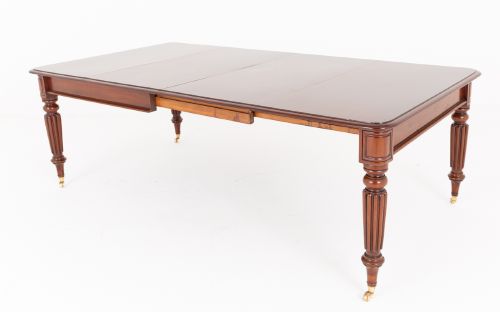
Pedestal bases incorporated brass castors to allow these heavy tables to move smoothly across floors when extended or repositioned. Leaves were secured with specialised clips and alignment pins to keep the extended surface level during use.
Listings feature mahogany predominantly, alongside rosewood and satinwood, spanning the Georgian, Regency, and William IV eras.
Markers of quality
Quality rests in the choice of timber and the handling of grain, where highly figured mahogany boards display deep chatoyancy across the main leaves and pedestals. Superior tables maintain visual harmony between the original top sections and added leaves, ensuring the timber matches in tone and figure.
The engineering of the pedestal base and the turning of the pillars dictate the structural integrity of the piece under heavy loads. Heavier brass fittings, precise joints, and well-cast brass castors indicate a workshop of higher standing.
Gillows
The Regency Extension Dining Table Glossary
- Pedestal
- A central column support rising from splayed legs, commonly used in multiple numbers to hold long dining surfaces.
- Extending dining table
- A table designed with removable leaves or folding mechanisms to alter its length for different occasions.
- Figured mahogany
- Timber showing distinctive grain patterns such as flame or fiddleback, prized for decorative surfaces.
- Drop leaf
- A table top configuration featuring hinged flaps that lower when not in use.
- Satinwood
- A pale, hard exotic timber used for contrasting inlay and banding on formal furniture.
Regency Extension Dining Table: Frequently Asked Questions
How do I seat more guests?
These tables adapt through removable leaves that slot into the centre, supported by expanding frames or pull-out runners.
Extra leaves allow a compact daily table to expand for dinner parties.
Are these tables sturdy when extended?
Multiple pedestals distribute weight evenly along the length of the extended timber top.
Solid pillar bases and brass castors keep large tables stable during meals.
How do I care for the mahogany surface?
Regular polishing with traditional wax maintains the moisture and deep lustre of the timber.
Using heat mats and coasters protects the polished finish from marks.
How do I distinguish original periods from revivals?
Construction methods, timber seasoning, and wear patterns on the underside reveal the age of the piece.
Revival pieces from later periods mimic earlier styles while showing different interior joinery.