


Two Pillar Dining Table
These two pillar dining table examples offer the classic architectural presence and expandable dining capacity that serious hosts seek for traditional interiors.
Two Pillar Dining Table
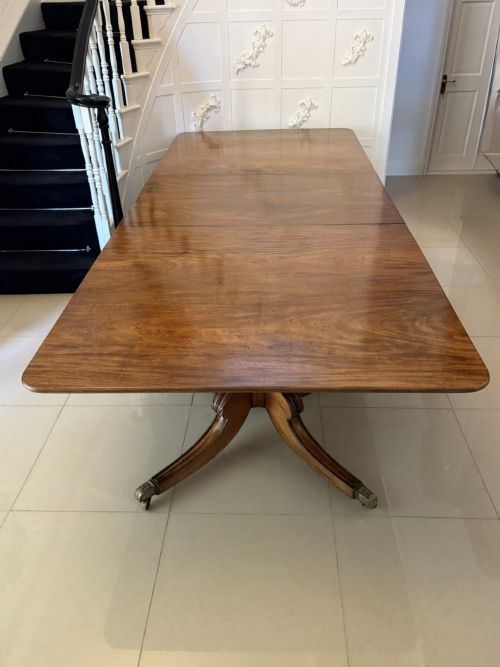
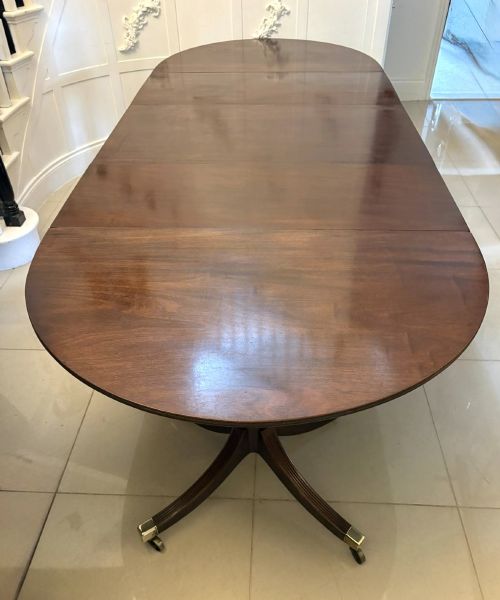
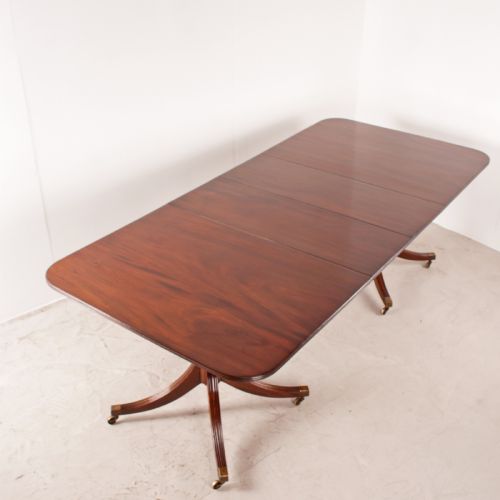
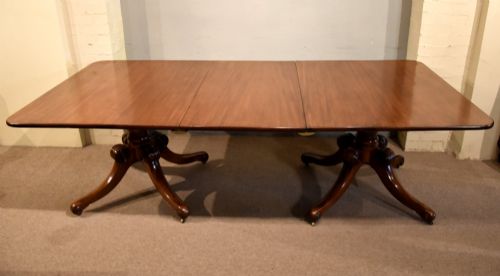
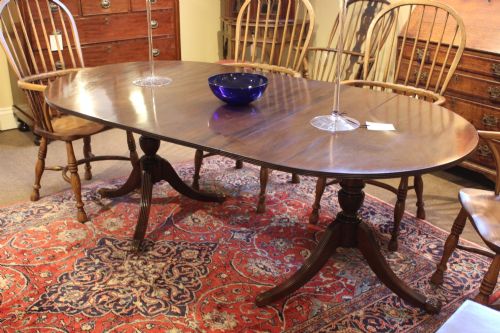
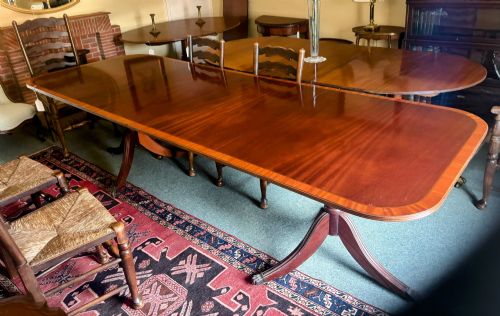
A two pillar dining table typically rests on a pair of central pedestals rather than traditional corner legs, allowing maximum legroom for seated guests. Most examples on this page date from the Regency period or the nineteenth century, reflecting the enduring popularity of this architectural format.
Buyers frequently encounter variations that include extra leaves to extend the overall length for larger gatherings. The form adapts readily from intimate settings to grand dining rooms through the insertion of these removable panels.
Stylistic influences range from authentic George III and George IV designs through to later Regency revival interpretations made around nineteen-thirty. Each version maintains the characteristic twin pedestal arrangement beneath a polished timber surface.
Materials and construction methods
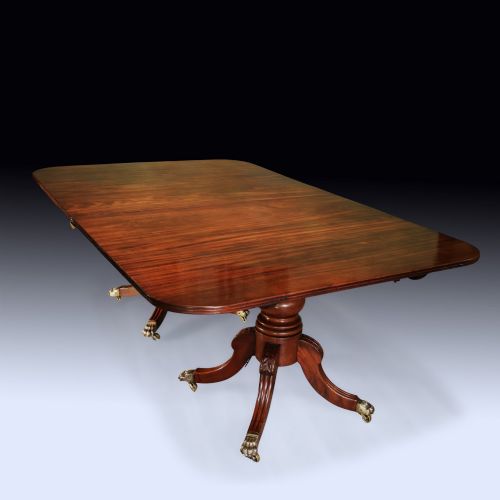
Mahogany serves as the primary timber across the vast majority of pieces, selected for its rich grain and structural stability. Cabinet makers frequently utilised figured mahogany or plum pudding mahogany for the top surfaces to create visual depth and decorative contrast.
Brass fittings appear regularly on the pedestal feet, often taking the form of castors that allow these heavy tables to move smoothly across the floor. The pedestals themselves balance central turned columns atop splayed legs that distribute weight evenly.
Some tabletops display plum pudding grain so dense it resembles scattered currants in a baked confection.
Judging the quality of a two pillar dining table
The choice of timber veneer sets finer tables apart, particularly where figured mahogany displays a lively, symmetrical grain across every added leaf. Expert matching of the wood panels ensures the surface appears unified even when fully extended.
The casting and finish of the brass hardware indicate the original workshop's standard, with crisp detailing on toe caps and castors. Furthermore, the stability of the central pedestals and the smoothness of the extending mechanism demonstrate superior cabinet work.
The Two Pillar Dining Table Glossary
- Twin pillar
- A dining table construction featuring two central pedestals supporting the top. This layout provides structural strength whilst eliminating awkward corner legs.
- D end
- A table end shaped in the semi-circular profile of a capital letter D. These rounded ends separate from the main body when leaves are inserted.
- Pedestal
- The central upright support pillar of the table. It usually terminates in splayed wooden legs fitted with brass castors.
Two Pillar Dining Table: Frequently Asked Questions
How do I add leaves to a two pillar dining table?
Extra leaves drop into the centre of the table once the two main pedestals are pulled apart along their extending mechanism. Metal clips or wooden alignment pins underneath secure the sections tightly together.
Storing the leaves flat in a dry environment prevents warping and ensures the timber grain aligns correctly when the table is next extended.
Can I fit twelve people around a two pillar dining table?
Seating capacity depends entirely on the presence of extra leaves and the overall length of the timber top. Standard two pillar formats comfortably accommodate eight to ten diners, whilst longer configurations with multiple leaves extend capacity further.
Reviewing the dimensions and leaf count helps determine whether a specific table suits your dining room seating requirements.
How do I tell a Regency table from a revival piece?
Authentic Regency period tables exhibit the timber patination, construction joints, and hand-cut fixings characteristic of the early nineteenth century. Revival pieces made around nineteen-thirty often show twentieth-century workshop practices underneath whilst emulating the earlier aesthetic.
Examining the underside and the wear patterns on the mahogany provides clear clues to the age of the piece.
How do I care for a mahogany dining table top?
Regular polishing with traditional beeswax maintains the lustre of the mahogany and protects the timber surface from daily wear. Avoiding direct sunlight prevents the rich reddish-brown tones from fading over time.
Using protective mats for hot dishes and promptly wiping up spills preserves the finish of both the main top and any additional leaves.