
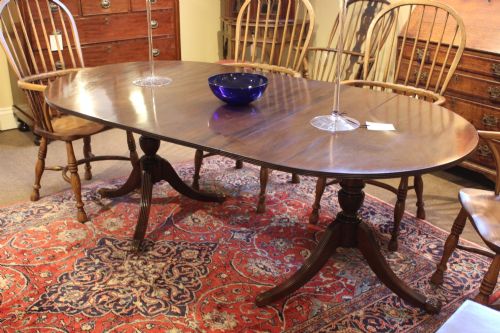
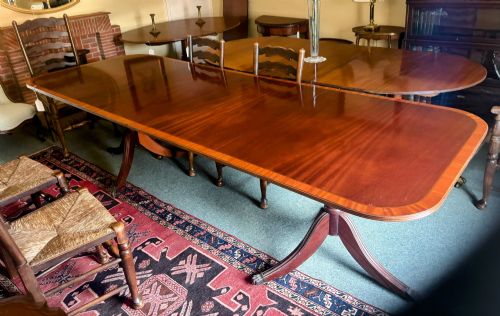
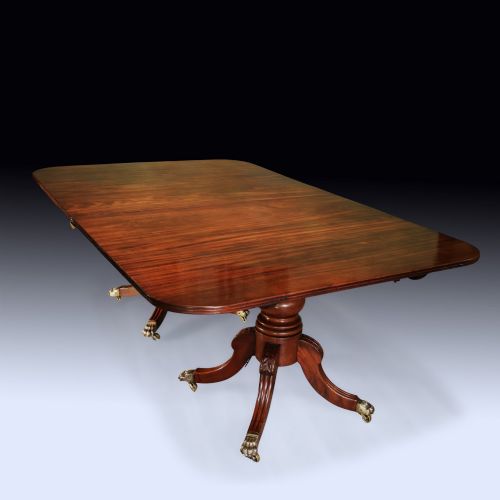


Two Pillar Table
A two pillar table offers an extending dining surface supported by twin pedestals, bringing classic proportion and flexibility to formal rooms.
Two Pillar Table
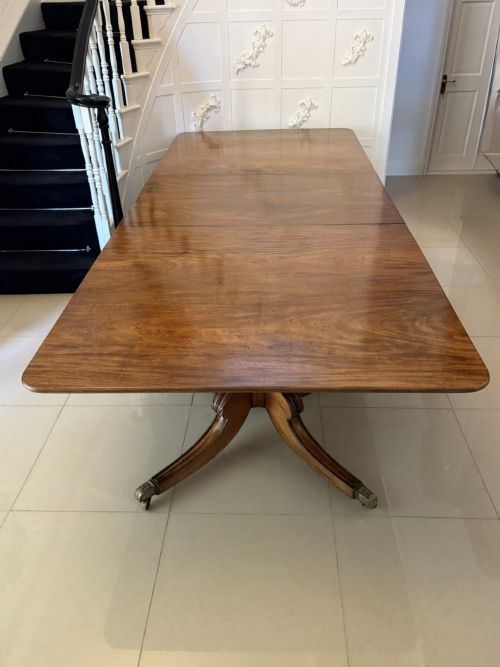
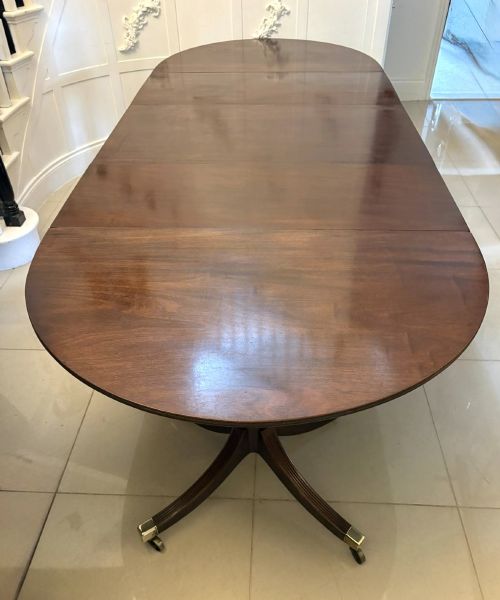
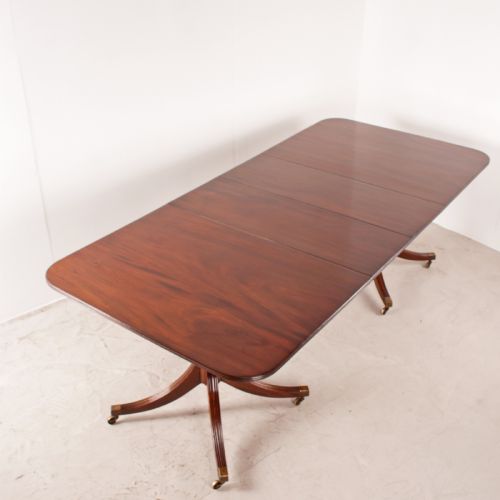
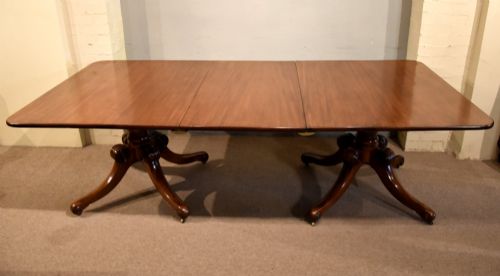
A two pillar table typically takes the form of a dining table supported by two central pedestals, often designed to take extra leaves for extension. The pieces seen on this page span the Regency, Georgian, and nineteenth-century periods, with later revivals appearing from nineteen thirty.
Most examples function as dining tables, though the record also includes sofa tables and console tables built on a two-pillar or twin-pedestal format. Mahogany forms the primary timber across the inventory, accompanied by occasional rosewood, oak, and fruitwood.
Buyers meet period originals alongside revival pieces, offering varying lengths and leaf configurations to suit different dining spaces. The structural layout consistently balances a central tabletop upon two heavy columns, frequently raised on splayed legs.
What varies in quality
Quality rests in the choice of timber and the depth of figuring within the mahogany, where highly figured surfaces distinguish finer examples. The crispness of the turning on the pillars and the refinement of the brass castors further separate standard utility pieces from more ambitious workshops.
Proportion and the integration of extending leaves dictate the architectural success of the design. Tables showing careful timber matching across added leaves demonstrate higher skill in the original cabinet-making.
Listings span the Regency, George III, George IV, and nineteenth-century periods, alongside nineteen-thirty revival pieces.
The Two Pillar Table Glossary
- Twin pillar
- An alternative descriptive term for a table supported by two central pedestals rather than four corner legs. This configuration allows greater freedom for seating placement around the perimeter.
- D end
- A tabletop configuration where the ends form semicircles, resembling the letter D. When separated or used with leaves, these sections create rounded terminals.
- Regency revival
- A later nineteenth-century or twentieth-century design movement mimicking the Regency style of the early eighteen hundreds. Pieces from nineteen thirty often reflect this historical revival aesthetic.
Two Pillar Table: Frequently Asked Questions
How do I know if a two pillar table extends?
Many two pillar tables incorporate a mechanism for inserting removable leaves to lengthen the surface. Listings frequently specify whether extra leaves are included with the table.
Evidence shows pieces ranging from standard dining formats up to sixteen-seater extending variants. Examining the underside reveals the runners and clips used to secure the leaves in place.
What is the difference between Regency and revival tables?
Period Regency tables date from the early nineteenth century and reflect the original neoclassical tastes of that era. Revival pieces, such as those dated nineteen thirty, recreate these earlier stylistic traits.
Both categories utilise mahogany and twin pedestals, but material age and construction ticks help distinguish the original period pieces from later interpretations.
What timber is most common on these tables?
Mahogany forms the overwhelming majority of timber seen across these dining and sofa tables. Selected examples showcase figured mahogany and plum pudding mahogany for enhanced visual depth.
Alternative materials like rosewood, brass inlay, oak, and fruitwood appear occasionally in specific sofa tables or pillar formats.
How were two pillar tables used historically?
These tables served primarily as dining room furniture designed to accommodate gatherings of various sizes. The twin pillar format removed obstructive corner legs to improve seating comfort.
Smaller sofa tables with two drawers fulfilled domestic tasks in reception rooms, functioning alongside the larger dining variations.