

Triform Base Pedestal Table
A triform base pedestal table is a sturdy, three-footed centrepiece designed to anchor a room while offering practical surface space.
Triform Base Pedestal Table
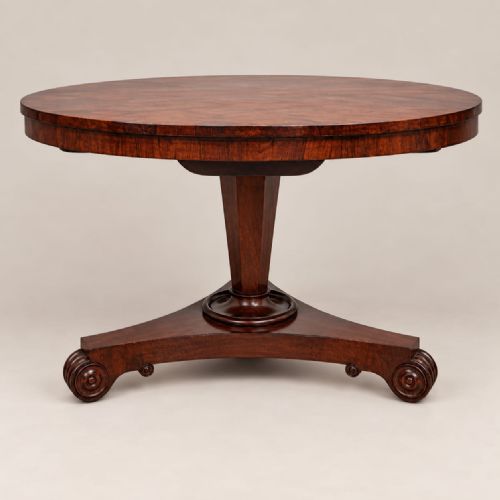
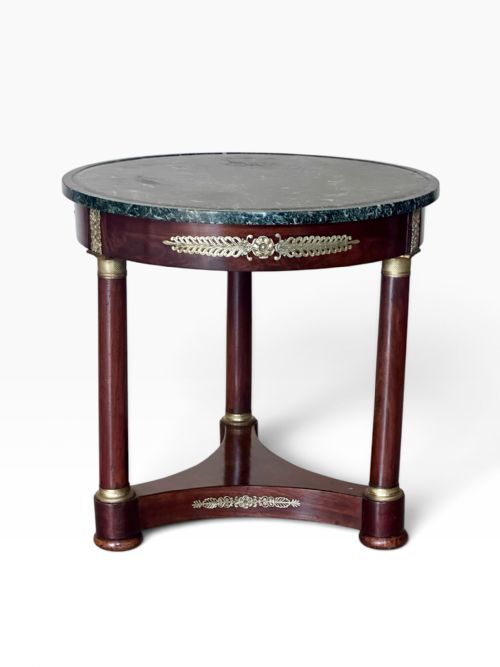
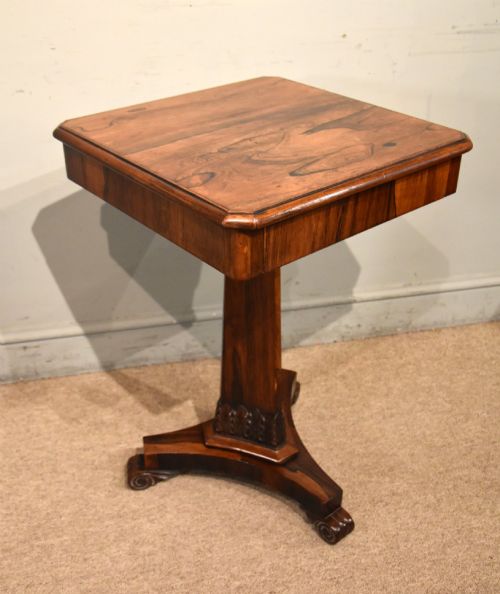
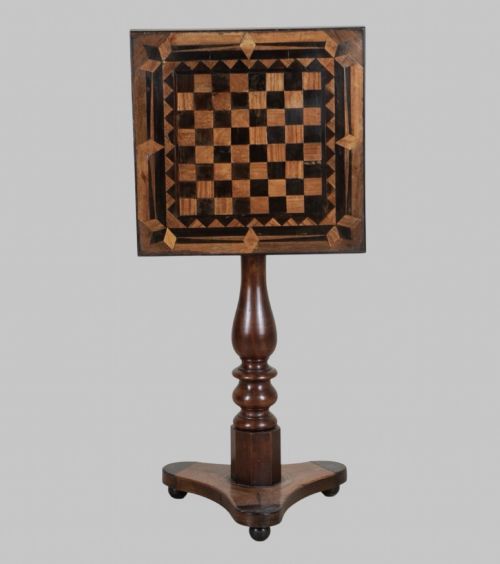
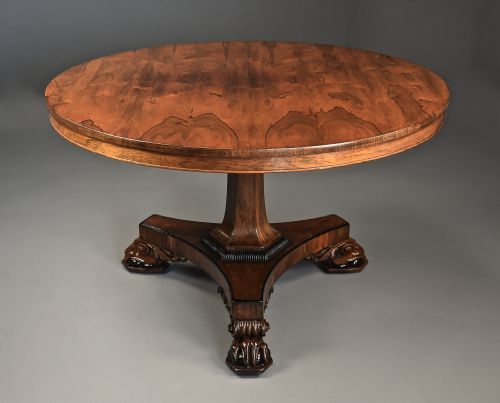
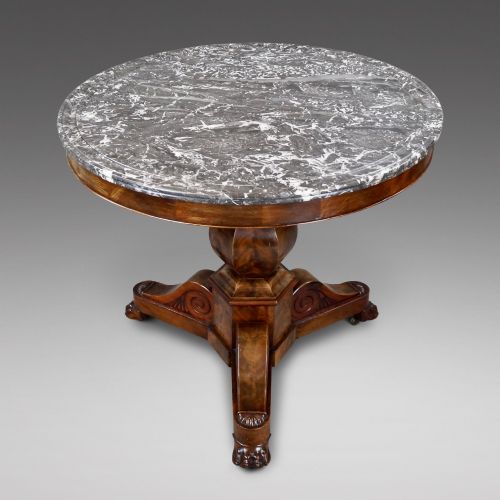
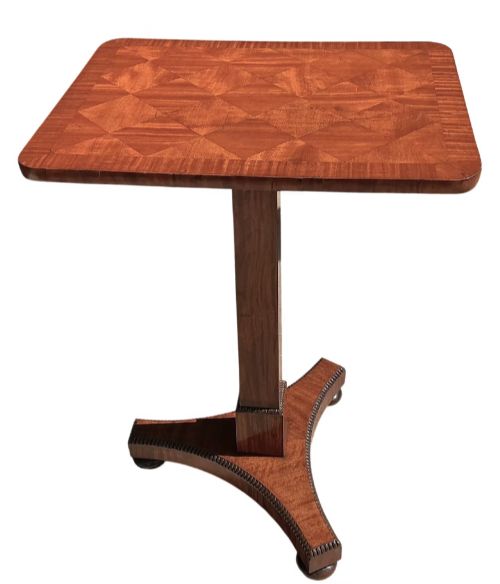
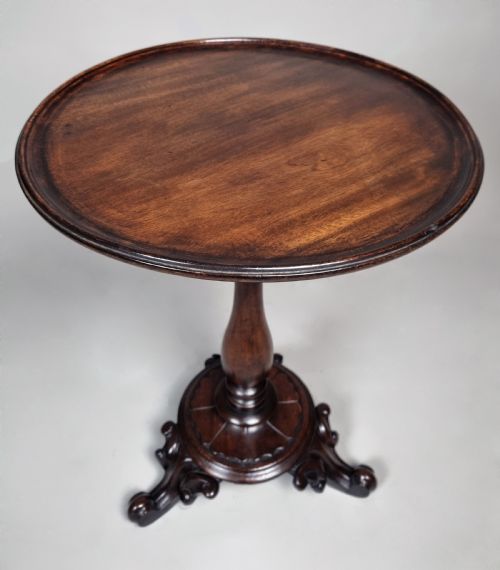
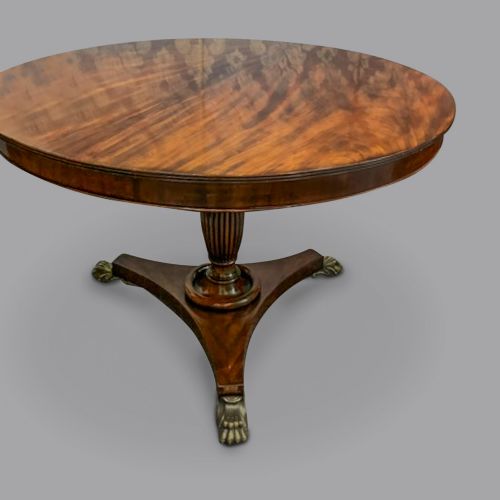
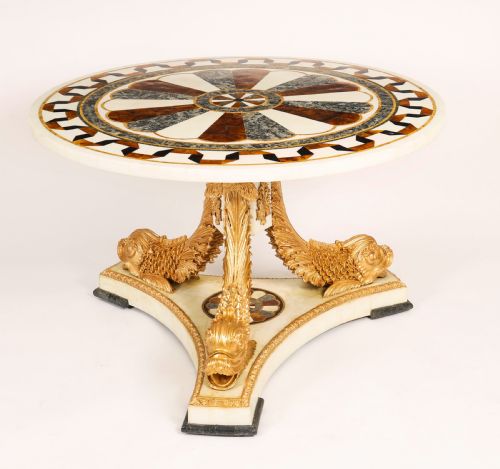
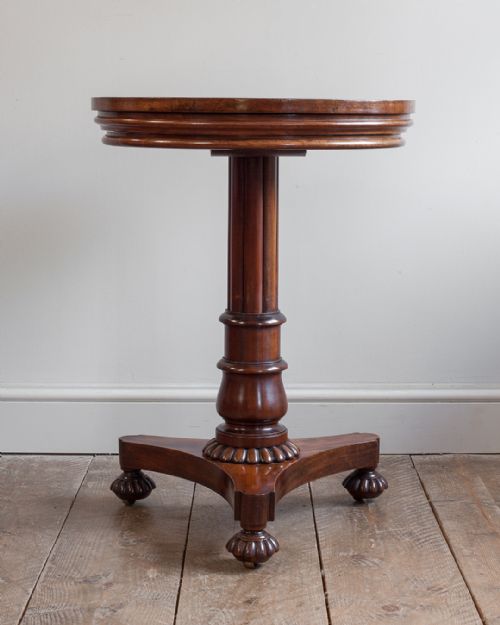
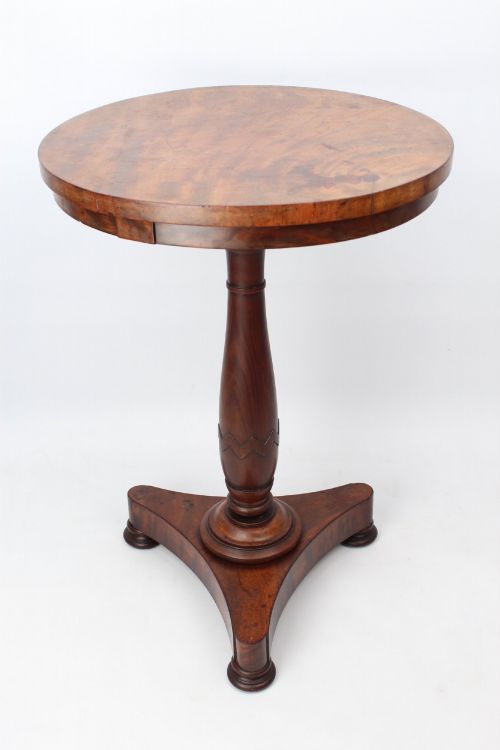
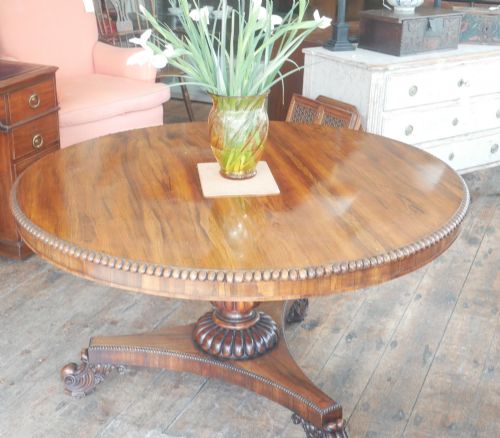
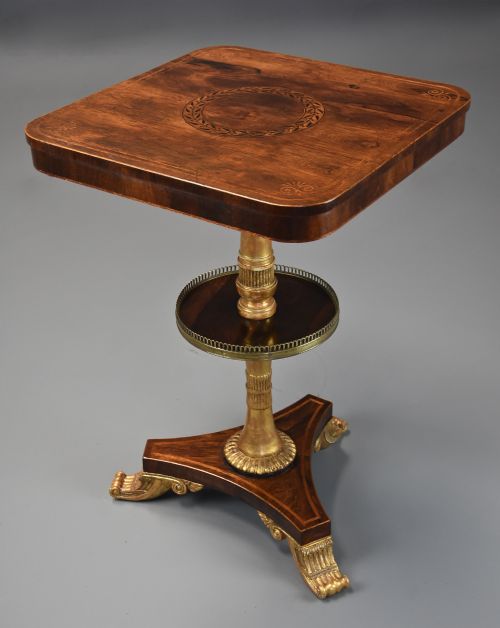
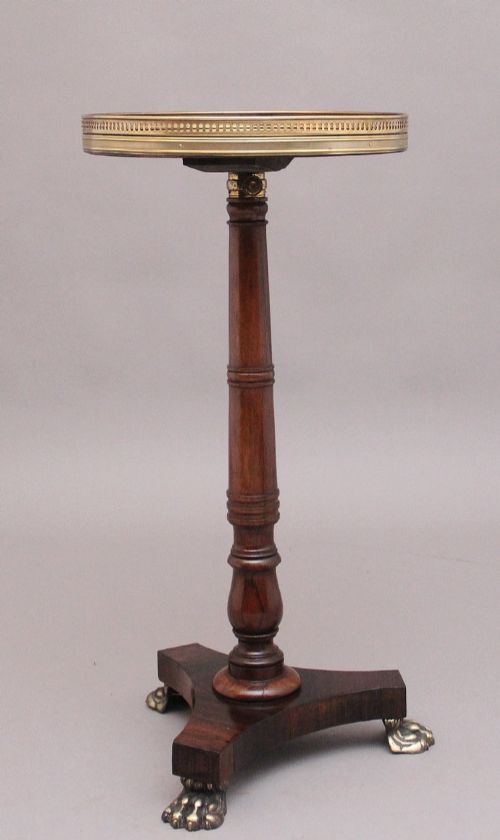
When buyers search for a triform base pedestal table, they encounter a range of circular and square surfaces supported by a central column resting on a three-sided or three-legged plinth. The examples seen here span breakfast tables, games tables, wine tables, and centre tables originating from the Georgian, Regency, and Victorian eras.
William IV and Regency pieces in rich rosewood or mahogany dominate the selection, often featuring tilt-top mechanisms or substantial carved scroll feet. French gueridon forms with marble tops also appear frequently, bringing continental neoclassical flair to the central pedestal format.
Materials and Construction Methods
Cabinetmakers constructed these tables using dense timbers such as mahogany and rosewood, frequently applying flame mahogany or burr elm veneers to circular tabletops for visual depth. Structural stability relied on a solid central pillar secured to a tripartite base, distributing weight evenly across three distinct feet.
Decorative details involved fine brass inlays, parcel gilt accents, and boxwood stringing. Heavier iterations incorporated inset white or specimen marble tops, requiring reinforced internal framing to support the stone.
Listings feature mahogany, rosewood, walnut, and exotic veneers paired with marble, brass, and giltwood across nineteenth-century periods.
Markers of Quality and Craftsmanship
The distinction between standard production and superior craftsmanship lies in the selection of timber veneers and the crispness of the pedestal carving. Finer pieces exhibit continuous grain matching across tilt-tops and deeply undercut scrolls or paw feet on the triform base rather than cast plaster ornaments.
Engineering also separates the tiers of quality, particularly in mechanisms like tilt-top catches and telescopic actions that operate smoothly without lateral play in the central column.
Gillows·Walker Lancaster·George Bullock
The Triform Base Pedestal Table Glossary
- Triform base
- A three-sided or three-pronged floor support that underpins the central pedestal column. This configuration provides a stable footprint while allowing legroom around the table.
- Gueridon
- A small French occasional table supported by a single central pillar. These frequently feature circular marble tops and classical tripod or triform underframes.
- Tilt-top
- A hinged tabletop mechanism that allows the surface to fold vertical when not in use. This clever design enabled tables to be stored flat against a wall.
- Parcel gilt
- Woodwork embellished with partial applications of gold leaf. It highlights carved mouldings and architectural details on Regency and Empire furniture.
- Specimen marble
- A tabletop composed of various geometric or pictorial inserts of coloured marbles. It demonstrates high levels of stonemasonry skill.
Triform Base Pedestal Table: Frequently Asked Questions
What is a triform base?
A triform base is a three-sided or three-legged architectural support that anchors the central column of a table to the floor.
This design provides steady balance while creating a distinct silhouette characteristic of Regency and William IV furniture.
How were these tables used?
These tables served multiple domestic functions depending on their scale, acting as breakfast tables, chess playing surfaces, or grand centrepieces in reception rooms.
Smaller wine tables and plant stands were easily repositioned around the room for holding drinks or decorative items.
What periods do these pieces date from?
The pieces available range primarily from the Georgian, Regency, and William IV eras into the mid and late Victorian period.
Design motifs evolved from neoclassical restraint into heavier, richly carved scrollwork as the nineteenth century progressed.