


Biedermeier Style Table
These Biedermeier style table examples offer clean architectural lines and striking figured veneers, bringing restrained nineteenth-century elegance straight into a modern interior.
Biedermeier Style Table
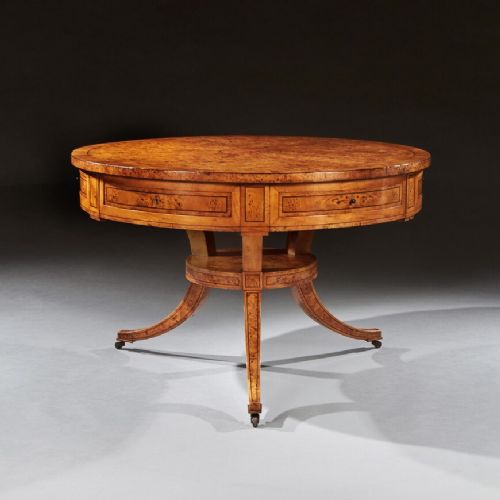
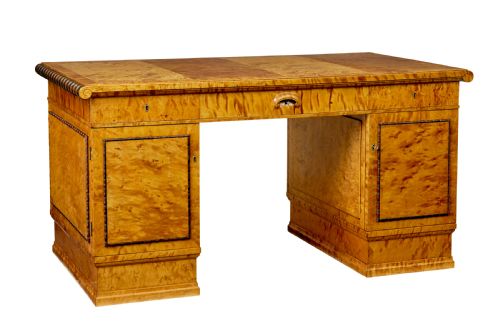
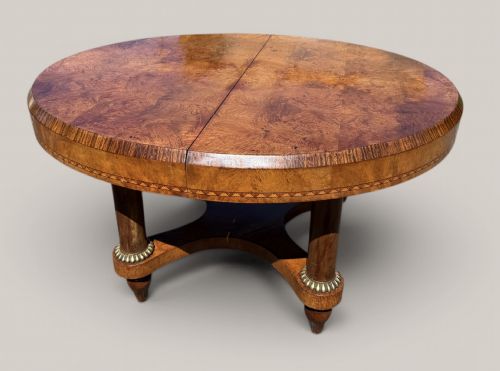
A biedermeier style table delivers the characteristic domestic warmth of nineteenth-century continental design through uncluttered surfaces and balanced proportions. When searching for a biedermeier style table, buyers encounter forms ranging from compact occasional and drum tables to larger sofa, centre, and extending dining pieces. The selection includes nineteenth-century originals alongside later revivals from the early twentieth century.
The prevalent formats on this page rely on geometric clarity rather than heavy carved ornamentation. Drum tables, console tables, and occasional tables dominate the current offerings, often standing on central pedestals or swept supports. These practical forms suit contemporary placement just as effectively as their original nineteenth-century settings.
Materials and construction
Cabinetmakers utilised pale northern hardwoods like birch, maple, and elm, frequently selecting highly figured burr veneers to cover primary surfaces. The natural grain patterns serve as the main visual decoration, laid out in symmetrical book-matched panels across table tops and drawer fronts. Darker contrasting timbers such as ebonised wood or ebony provide sharp outlines to the lighter fields.
Structural carcasses relied on solid secondary woods beneath the decorative veneers, joined with traditional cabinetmaking techniques. Marble tops appear on specific round forms like guéridons, while cast brass mounts and ormolu occasionally accent key joints or aprons.
Burr root maple creates swirling patterns that occasionally resemble small landscapes captured within the wood.
Distinguishing quality
Quality rests upon the selection and preservation of the timber veneers across the top surface. Superior examples display intensely active burr figuring that remains stable without lifting or severe cracking from the substrate. The coherence of the grain matching across seams distinguishes finer workshop production from simpler commercial output.
Proportion and structural integrity define the remaining differences across the range. Better pieces maintain precise geometric balance in pedestals and lyre supports, whereas lesser items rely on heavy finishes that obscure the natural warmth of the underlying birch or maple.
The Biedermeier Style Table Glossary
- Burr veneer
- A thin slice of wood cut from a tree growth irregularity, yielding dense, swirling patterns. This figured material forms the primary visual focus on many tabletops.
- Drum table
- A circular freestanding table supported by a central pillar, often fitted with drawers around the perimeter. These pieces originated in the early nineteenth century for library and parlour use.
- Guéridon
- A small French round table, typically supported by a single central column or tripod base. Examples frequently feature inset marble tops.
- Ormolu
- Gilt bronze mounts applied to furniture for decorative accent. The technique adds metallic contrast against dark or figured wood surfaces.
- Lyre form
- A table base shaped in the outline of a classical stringed musical instrument. This profile supports the weight of the tabletop while providing visual lightness.
Biedermeier Style Table: Frequently Asked Questions
What is a biedermeier style table?
A biedermeier style table is a nineteenth-century or revival domestic form known for clean lines and figured wood veneers.
These pieces emphasise natural wood grain over heavy carved ornament, suiting functional household placement.
How do I clean the wood surface?
Dust the timber gently with a dry, soft cloth and avoid chemical sprays.
Periodic application of suitable furniture wax helps maintain the lustre of nineteenth-century veneers without harming the finish.
Where should I place a drum table?
A drum table works well freestanding in the centre of a room or beside a seating area.
The circular top and perimeter drawers provide practical surface space and concealed storage.
How can I date a table?
Dating relies on examining construction methods, secondary timber types, and the style of the veneer.
Nineteenth-century pieces often show hand-cut joinery and period-specific finishing techniques distinct from twentieth-century revivals.