


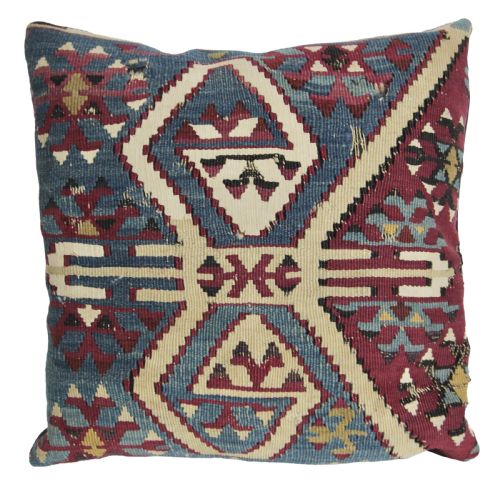
Tribal Wool Pillow Cover
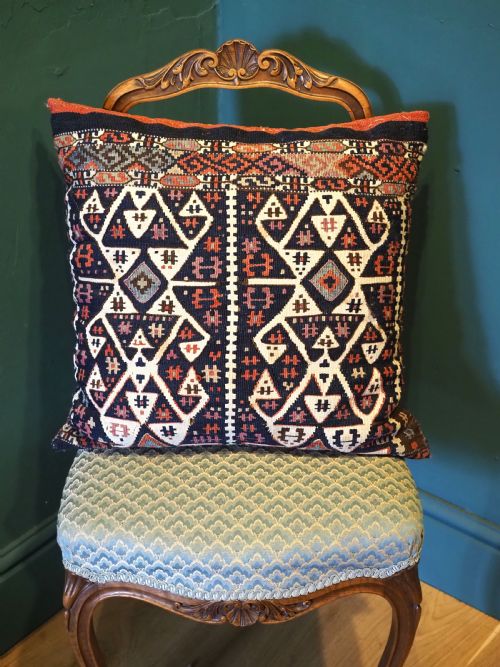
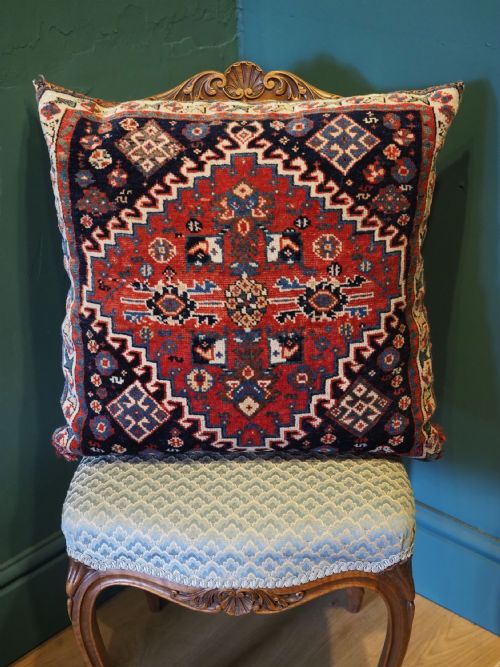
These tribal wool pillow cover examples transform utilitarian nomadic saddlebags and kilim fragments into durable floor cushions spanning the mid-nineteenth to early twentieth centuries.
Tribal Wool Pillow Cover
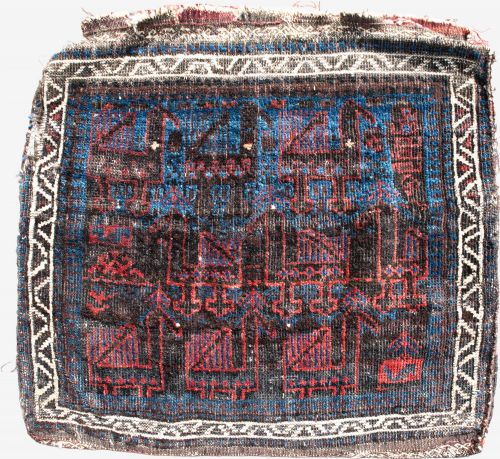
A tribal wool pillow cover utilises repurposed woven sections originating from nomadic communities across Anatolia, Persia, and Central Asia. Buyers encounter flatweaves and pile-woven textiles derived from older functional objects such as saddlebags, storage bags, and mafrash faces.
The material heritage spans distinct tribal groups including the Qashqai, Yomut Turkmen, Ersari Beshir, Baluch, Shahsevan, and Kurdish makers. These pieces date from the mid-nineteenth century through the early twentieth century, reflecting traditional regional weaving patterns.
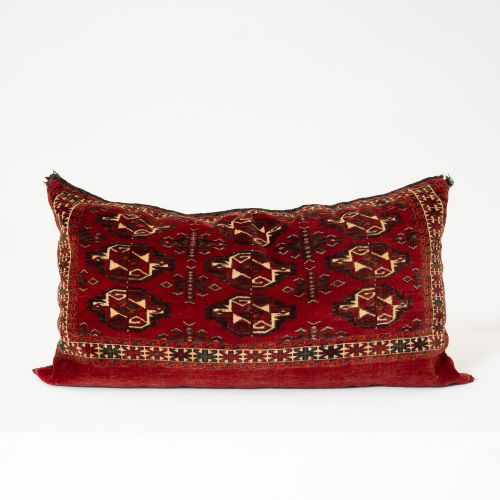
Most examples take the form of square or rectangular cushions constructed from antique bag faces paired with supportive fabric backs. The visual vocabulary relies on geometric motifs, traditional gul designs, and banded flatweave layouts.
Materials and construction
Makers utilised hand-spun wool combined with cotton foundations to create dense, hard-wearing textiles capable of withstanding daily nomadic use. Natural dyes provide the underlying palette, yielding characteristic saturated tones that age with visible depth.
Weaving techniques alternate between flatweave kilim structures and knotted pile surfaces depending on the specific tribal origin. Individual bag faces are subsequently adapted into cushion formats while retaining their original structural borders and motifs.
Listings feature wool and cotton materials worked in Anatolian, Persian, and Turkmen tribal styles dating between 1850 and 1920.
Judging quality and integrity
Quality rests on the integrity of the original tribal weaving, the tightness of the wool spin, and the stability of the natural dyes. Pieces retaining complete original bag faces or balanced pairs demonstrate greater adherence to historical form.
The clarity of the tribal motifs and the preservation of secondary details like original borders separate standard utility items from finer examples. Construction care during the conversion into a cushion also dictates the overall longevity of the piece.
The Tribal Wool Pillow Cover Glossary
- Kilim
- A flatweave textile produced by tightly interweaving warp and weft strands without creating a knotted pile. This technique produces a smooth, durable surface common in nomadic utility bags.
- Torba
- A small storage bag traditionally used inside a nomadic tent for household belongings. Surviving faces of these bags form the front panels of many decorative cushions.
- Chuval
- A large tent bag used by Turkmen tribes for storing bedding and clothing. Their characteristic guls frequently appear on decorative cushion formats.
- Gul
- A medallion motif repeated across Turkmen and tribal carpets to signify specific clan lineages. These octagonal or polygonal designs anchor the visual composition of many pieces.
- Mafrash
- A rectangular storage sack or bedding chest panel woven by nomadic groups in Azerbaijan and Persia. These flatwoven faces provide robust material for large floor cushions.
Tribal Wool Pillow Cover: Frequently Asked Questions
How old are these cushion covers?
The pieces originate from the mid-nineteenth century up to the early decades of the twentieth century. This period captures the active era of nomadic and tribal weaving before commercial dyes became widespread.
Dating relies on stylistic markers, wool preparation techniques, and structural formats associated with specific regional tribes from Anatolia to Central Asia.
Are these made from real antique rugs?
Yes, these items are constructed from authentic antique tribal textiles such as saddlebags, torbas, and flatwoven kilims. Artisans repurpose these historic bag faces into functional cushions while preserving the original hand-spun wool and natural dye work.
This method gives surviving fragments of nomadic weaving a practical use in modern interiors without discarding their historical integrity.
How do I clean a wool cushion?
Wool possesses natural lanolin that resists everyday dirt, meaning gentle surface care is usually sufficient for maintenance. Regular light vacuuming without a rotating brush helps remove embedded dust from the weave.
Professional specialist cleaning is recommended for heavier soils to protect the natural dyes and hand-spun fibres from damage.
What is a bag face?
A bag face is the decorative front panel of a utilitarian nomadic container, such as a saddlebag or storage sack. Because the backs of these bags sustained heavy wear against pack animals, often only the front panels survived.
These surviving faces display the primary geometric designs and represent the artistic output of the weavers.