
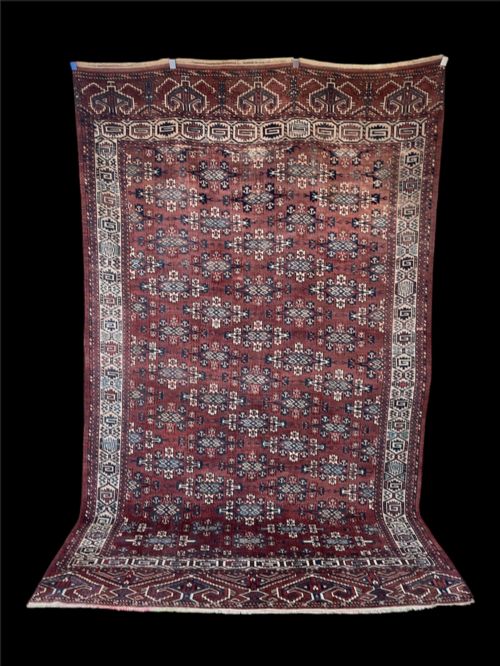


Tribal Main Carpet
A tribal main carpet is a substantial woven floor covering from Central Asian or Persian nomadic groups, sought after for bold geometric motifs and rich natural dyes.
Tribal Main Carpet
When searching for a tribal main carpet, buyers encounter large format floor coverings originating from nomadic and village weavers across Central Asia and Persia. These pieces date predominantly from the nineteenth century up to the early twentieth century, reflecting established regional weaving traditions.
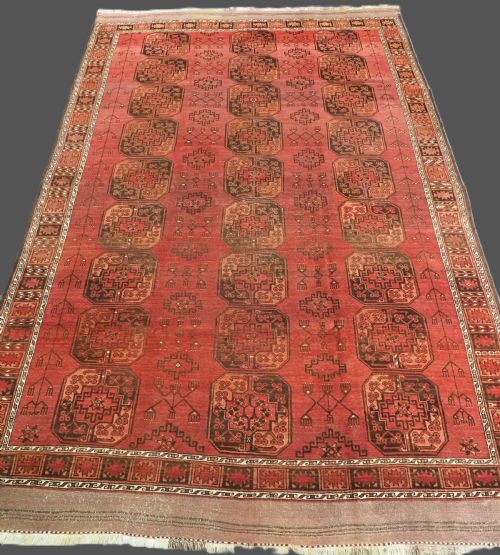
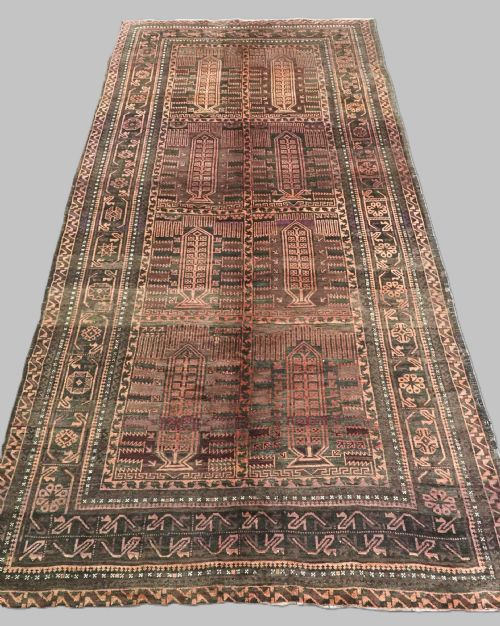
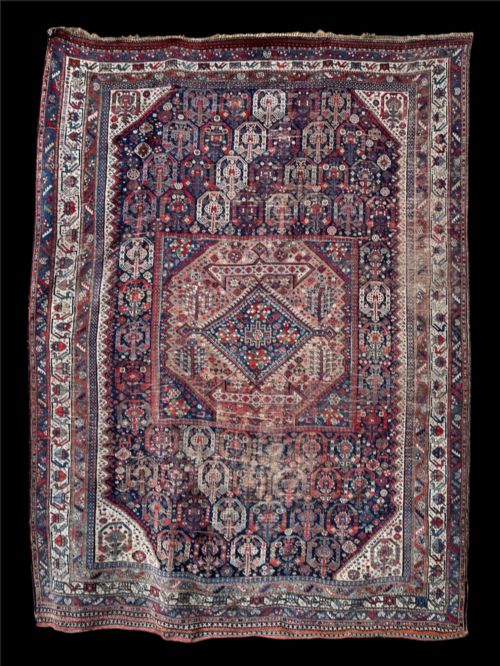
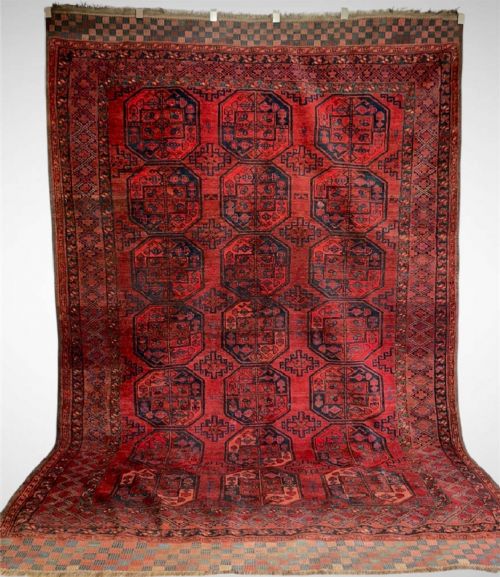
The selections on this page centre heavily on Turkmen groups such as the Ersari, Yomut, and Tekke, alongside Baluch, Timuri, and Khamseh confessional pieces. Formats vary from expansive floor carpets intended for daily domestic use down to specific wedding rugs and audience pieces.
Most examples display characteristic tribal motifs, including various gul medallions, pencil box patterns, and animal figures arranged across deep red or earthy grounds. They serve both as functional heavy-duty floor coverings and as expressions of distinct tribal identities.
How They Were Made
These carpets rely on hand-spun wool for the pile, chosen for its resilience and ability to absorb dye deeply. Foundations frequently incorporate goat hair or horsehair alongside wool, providing structural stability and longevity.
Weavers utilised natural dyes to achieve saturated palettes, with cochineal and various plant extracts producing deep reds, browns, and contrasting highlights. The resulting textiles withstand heavy foot traffic while maintaining structural integrity over generations of use.
Some tribal carpets secretly double as menagerie viewings, packed with tiny pecking chickens, stray peacocks, and hidden tribal khans.
What Varies in Quality
Quality depends upon the fineness of the knotting and the density of the wool foundation, which dictates how sharply the geometric patterns resolve. Tighter construction yields a heavier, more durable textile that retains its shape under stress.
The depth and brilliance of the natural dyes separate standard domestic examples from finer tribal works. Subtle variations in shade and the skilled placement of contrasting highlights demonstrate the weaver's command of colour.
The Tribal Main Carpet Glossary
- Gul
- A repeating primary octagonal medallion motif used extensively in Turkmen carpet design. These guls often denote specific tribal lineages and sub-groups.
- Pencil Box Design
- A linear repeating pattern featuring stacked compartments resembling traditional stationery containers. This layout appears frequently in Baluch and Timuri weaving.
- Cochineal
- A natural red dye derived from scale insects, prized for producing vivid crimson and pink highlights in nineteenth-century carpets.
- Foundation
- The underlying structure of warp and weft threads that supports the wool pile. Sturdy foundations often incorporate goat hair or horsehair for extra durability.
Tribal Main Carpet: Frequently Asked Questions
How were tribal main carpets used?
These large carpets served as heavy-duty floor coverings within nomadic tents, permanent dwellings, and community spaces. They provided insulation against cold earth floors while establishing the central decorative layout of the living area.
Certain formats also fulfilled ceremonial roles during weddings and communal gatherings. Their dense wool construction ensured they could endure constant domestic use.
How do I tell different tribal designs apart?
Design attribution relies heavily on the primary motifs, such as specific gul shapes used by Yomut or Ersari weavers. Colour palettes and border arrangements also point directly to particular regional workshops and nomadic confederacies.
Examining the choice of foundation materials helps distinguish between Baluch, Turkmen, and Persian tribal origins. Each group maintained distinct geometric vocabularies passed down through generations.
How do I care for an antique carpet?
Gentle vacuuming without a rotating brush prevents dust accumulation within the wool pile. Keeping the textile away from direct sunlight preserves the stability of natural dyes over time.
Professional specialist cleaning is recommended for deep maintenance rather than domestic washing. Proper rotation ensures even wear patterns across high-traffic areas.
What periods do these carpets come from?
The available pieces date primarily from the nineteenth century, stretching from the eighteen-fifties through to the nineteen-twenties. This era represents the peak period of traditional natural-dye tribal weaving before synthetic dyes became widespread.
Earlier examples generally display finer hand-spun wool and greater tonal depth. Dating is assessed through wool characteristics, structural wear, and traditional design markers.