



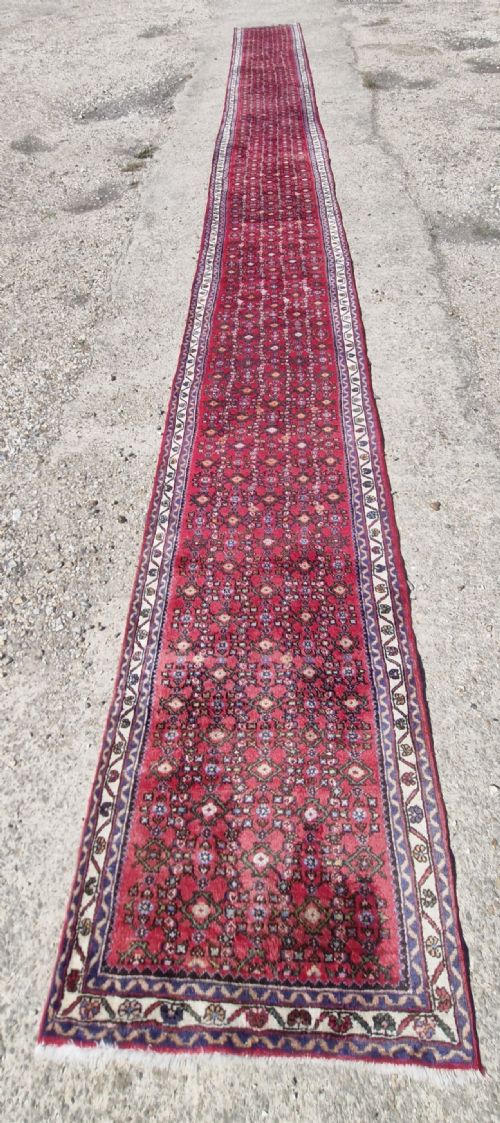
Tribal Long Carpet
A tribal long carpet brings grounded warmth to corridors and large rooms through centuries of village weaving traditions.
Tribal Long Carpet
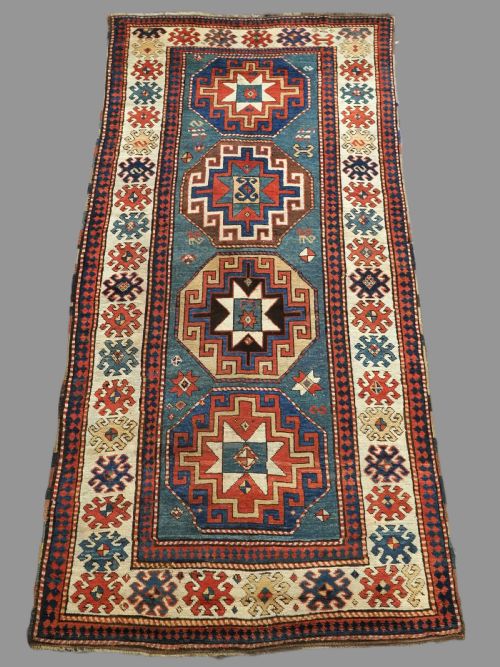
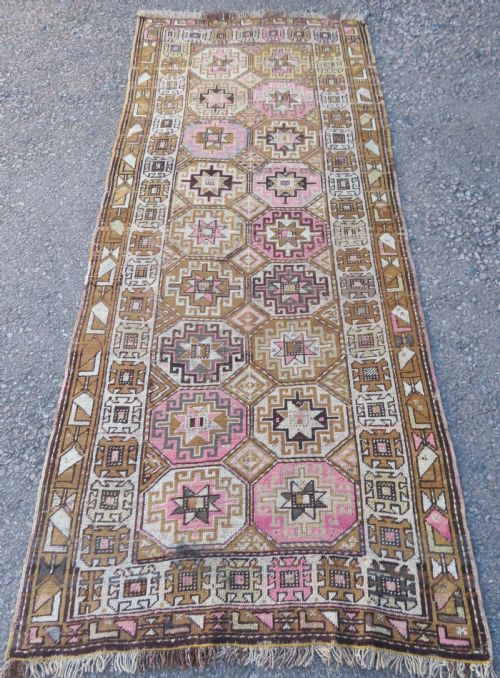
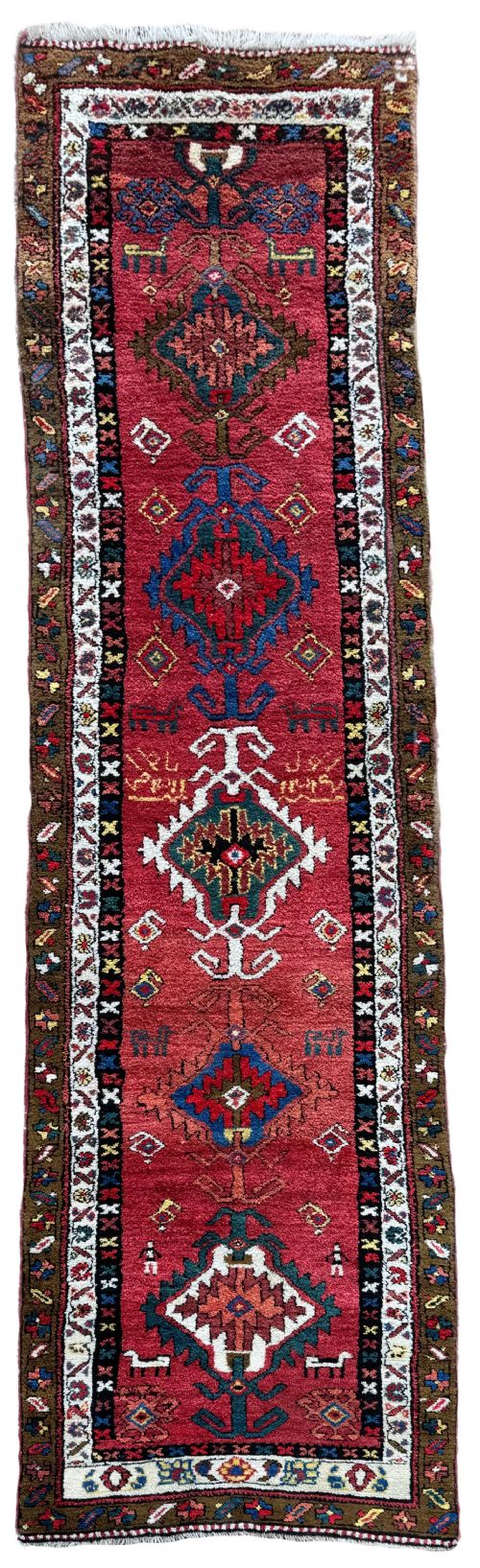
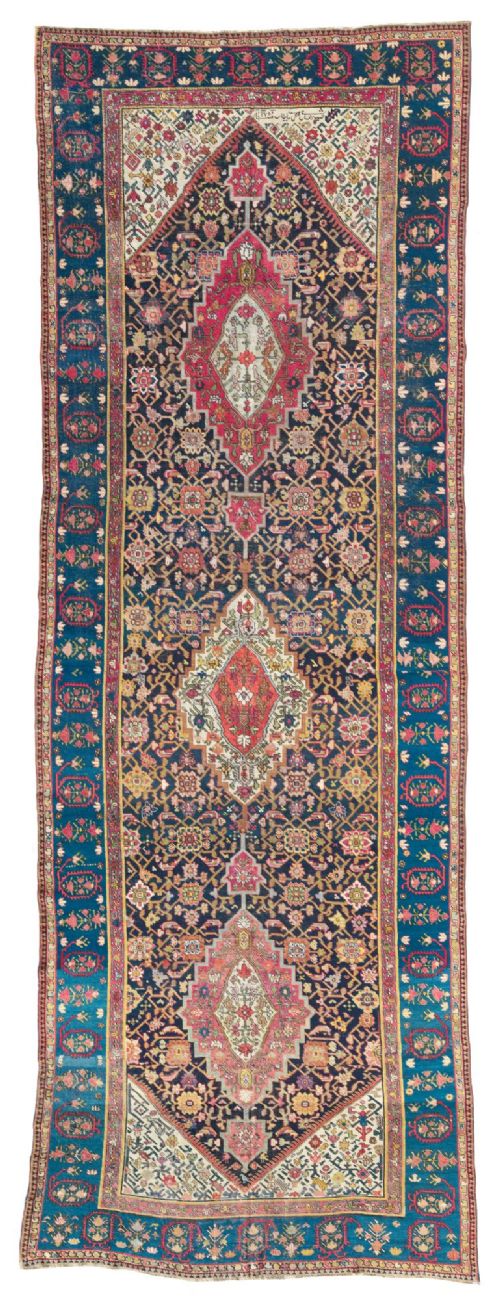
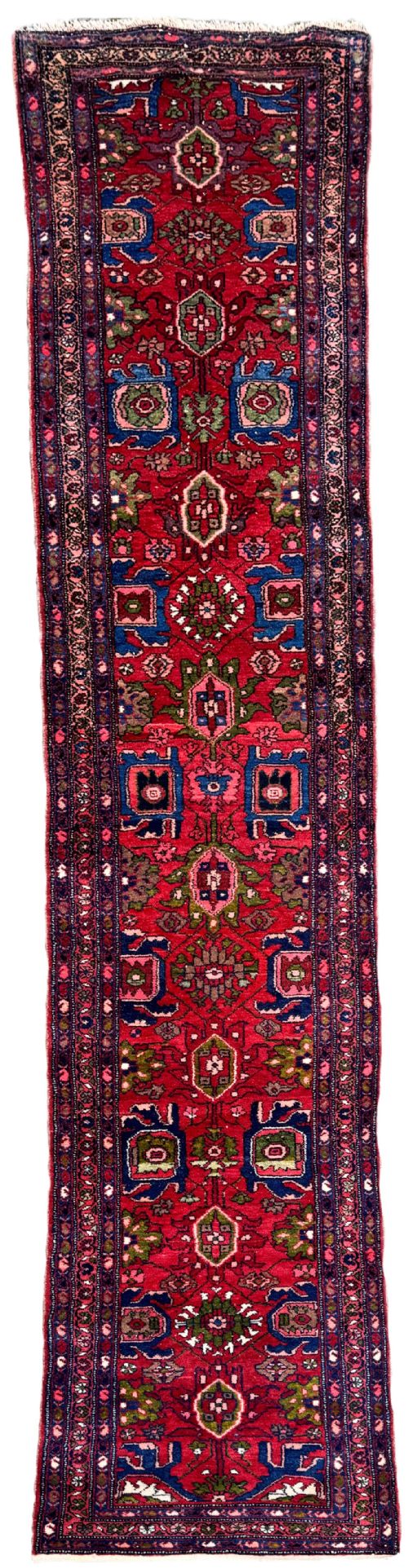
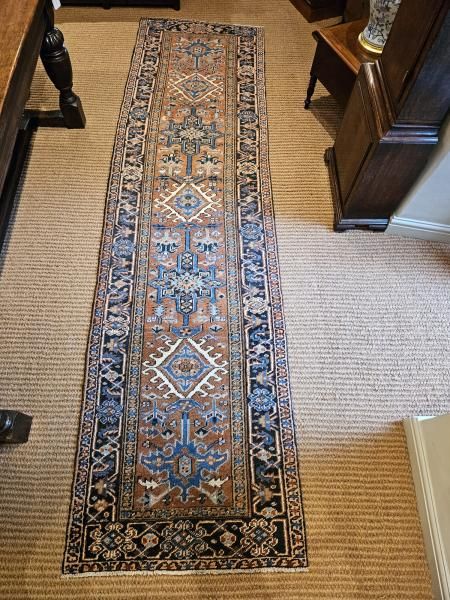
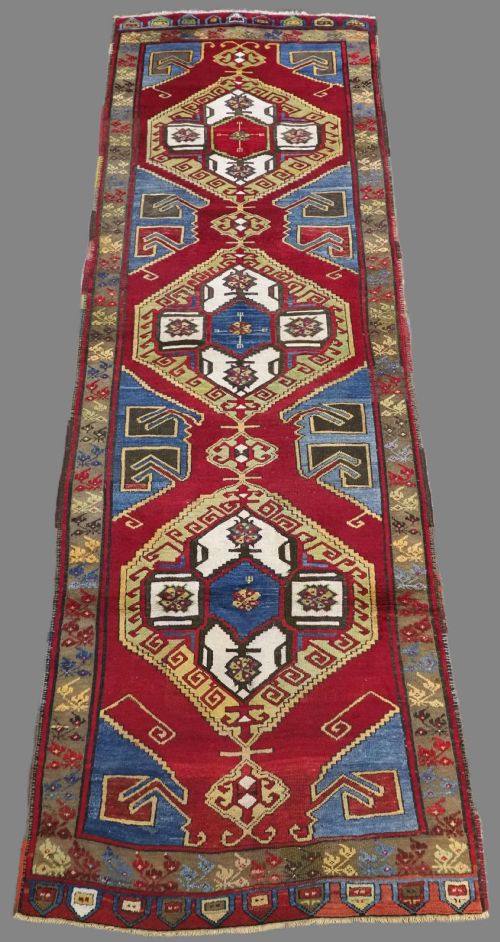
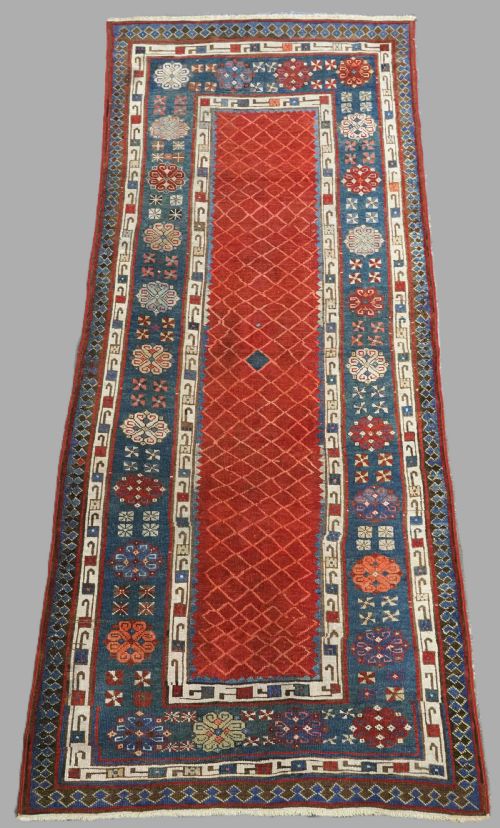
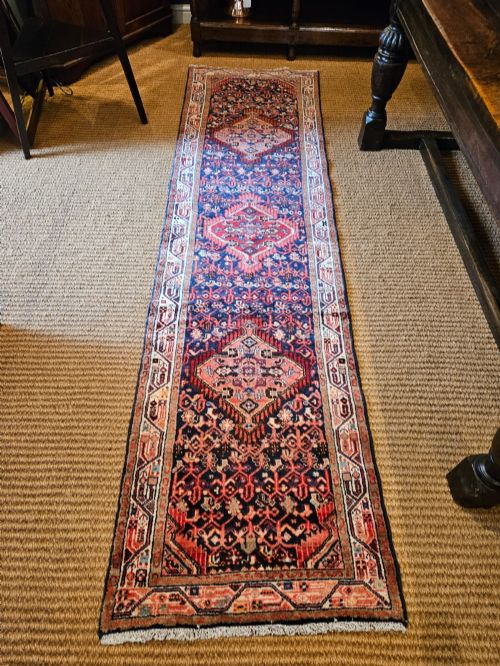
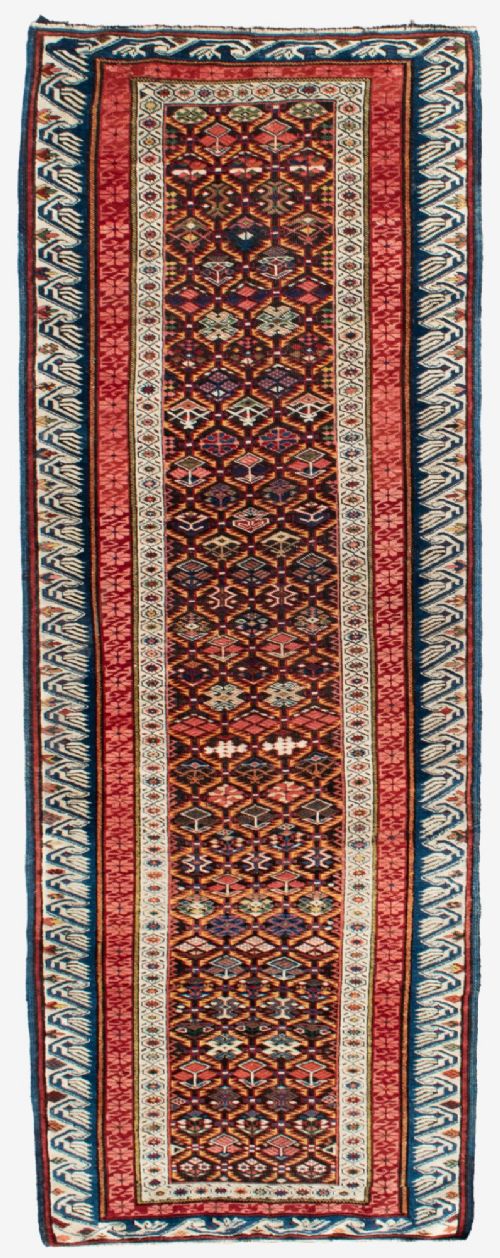
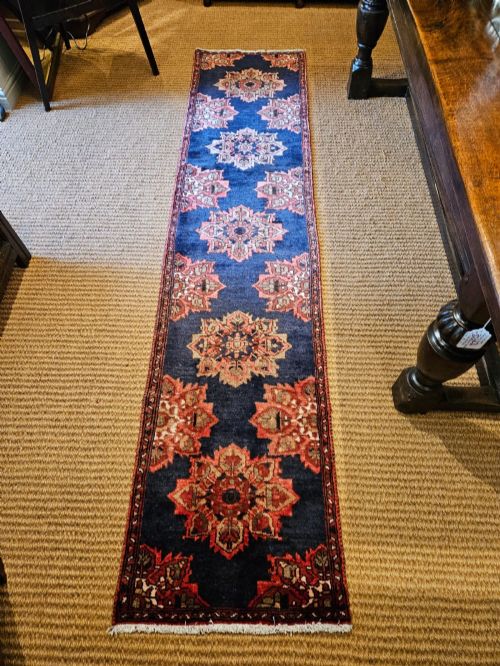
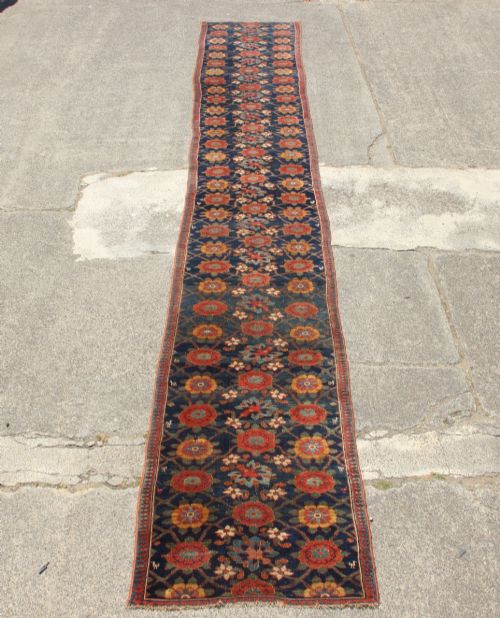
When you search for a tribal long carpet, you examine elongated floor coverings woven by nomadic and village communities across Persia, the Caucasus, Anatolia, and surrounding regions. These pieces span from the mid-nineteenth century through the early twentieth century, taking the form of runners, kellehs, and extended gallery carpets.
The examples on this page predominantly appear as runners and long rugs originating from Kurdish, Hamadan, Heriz, and Caucasian weaving centres. They utilise narrow proportions designed historically for halls, landings, and large country house interiors.
How they were made
The construction relies primarily on wool and hand-spun wool pile knotted onto sturdy cotton or wool foundations. Artisans employed traditional handwoven techniques, producing durable textiles suited to heavy domestic traffic.
Natural dye traditions provide the saturated palettes seen across these pieces, including deep navy blues, olive greens, and rich reds. The dense knotting and robust materials allow these carpets to endure for generations.
Listings feature pieces spanning from eighteen-fifty through nineteen-sixty, utilising wool, cotton, and hand-spun wool across multiple regional styles.
What varies in quality
The handling of wool also dictates standard, where hand-spun materials yielding subtle tonal variations score higher than uniform modern equivalents. Preservation of original wool edges and balanced proportions distinguish finer examples from standard village production.
The Tribal Long Carpet Glossary
- Runner
- A long, narrow carpet format traditionally utilised in hallways, corridors, and narrow landings. These rectangular floor coverings measure significantly longer than they are wide.
- Kelleh
- A large, room-sized format that is longer than a standard carpet while remaining narrower than a full hall carpet. These substantial pieces often originate from Persian and Caucasian weaving traditions.
- Gul
- A medallion or repeating octagonal motif frequently found in Turkmen and tribal carpets. Each motif serves as a primary decorative element within the field design.
- Mina Khani
- An all-over repeating pattern composed of stylised flowers connected by a delicate lattice network. This traditional Persian design appears frequently on Kurdish and regional long runners.
- Foundation
- The underlying structural grid of warp and weft threads that supports the knotted wool pile. The tightness of this foundational weave determines the overall rigidity and durability of the carpet.
Tribal Long Carpet: Frequently Asked Questions
Where should I place a long carpet?
These elongated formats suit narrow architectural spaces such as entrance halls, long corridors, and gallery landings. They provide durable floor protection while introducing rich colour and pattern to transitional areas.
In larger rooms, you can position them alongside furniture groupings or use them to define walkways through open spaces. Their narrow proportions make them versatile for grounding linear layouts.
Are these carpets made with natural dyes?
Many pieces from the nineteenth and early twentieth centuries utilise traditional natural dyes derived from plants, roots, and minerals. These colourants produce rich, saturated tones that age gracefully over decades.
Subtle tonal shifts within a single colour field often indicate traditional dyeing methods and hand-spun wool variations. These natural irregularities contribute to the depth and character of antique village weaving.
How do I identify different regional styles?
Regional identification relies on observing specific geometric motifs, border arrangements, and palette choices. Caucasian pieces often display sharp rectilinear lattices, whereas Persian Kurdish examples frequently incorporate softer floral or Mina Khani layouts.
Examining the weave structure, fringe finish, and side-cord construction provides further clues to origin. Comparing piece proportions helps distinguish Anatolian and Caucasian runners from Persian workshops.