


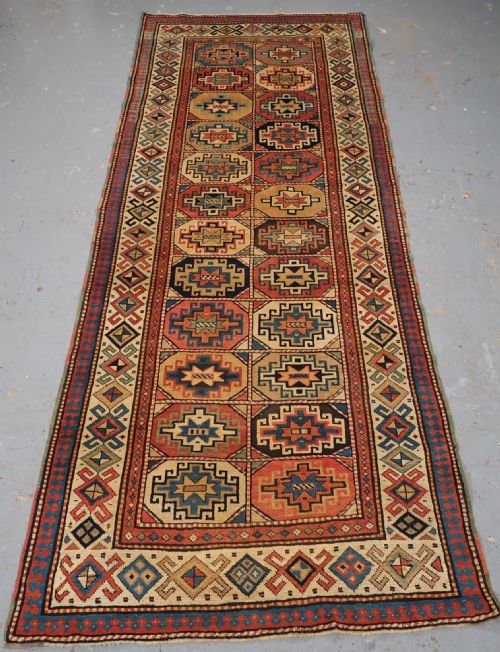

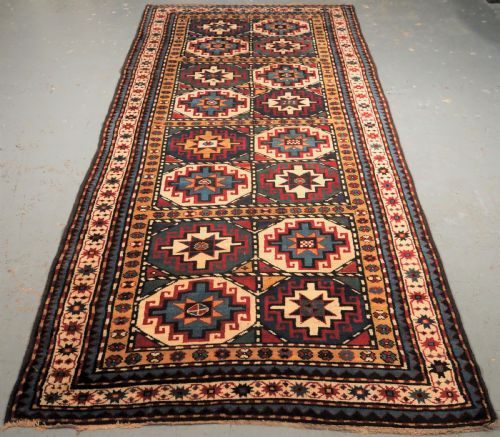
Moghan Kazak Rug
These moghan kazak rug pieces are tribal Caucasian wool floor coverings from the late nineteenth century, prized for geometric medallions and soft colours.
Moghan Kazak Rug
A moghan kazak rug belongs to the Caucasian tribal group originating from the south-western Caucasus and the Moghan region. These antique floor coverings present distinct regional aesthetics created by traditional weavers working towards the end of the nineteenth century.
The most common formats found here are rugs, long rugs, and runners. Each piece displays characteristic motifs such as hooked medallions and Memling guls across formats ranging from square proportions to elongated runner shapes.
Dating across these listings spans the decades from 1870 to 1900. Buyers encounter classic designs rendered in soft colours that reflect the natural dyeing traditions of the nineteenth-century Caucasus.
How they were made
Production relies entirely on wool, utilised for both the pile and the foundation structure of the weave. Weavers knotted the wool by hand to build dense, durable surfaces intended for practical domestic use.
The distinct appearance relies on traditional Caucasian tribal weaving techniques passed down through generations. Natural dye stuffs produced the soft colours recorded across the nineteenth-century examples.
Wool is the exclusive material recorded across all surviving pieces and archive records.
What varies in quality
Quality differences lie in the crispness of the geometric drawing and the subtlety of the soft colours. Weavers achieved varying degrees of precision in executing hooked medallions and Memling guls.
The handling of wool pile and the preservation of original borders determine the integrity of each piece. Surviving examples demonstrate distinct levels of wear across the nineteenth-century timeline.
The Moghan Kazak Rug Glossary
- Kazak
- A term applied to rugs woven in the northern and western regions of the Caucasus. These pieces are recognised by bold geometric patterns and saturated or soft colour palettes.
- Moghan
- A specific geographical region in the southern Caucasus associated with distinct tribal weaving traditions. Rugs from this area often incorporate specific medallion layouts.
- Memling Gul
- An octagonal tribal motif featuring hooked appendages, named after the fifteenth-century painter who depicted similar carpets. This design appears frequently in Caucasian weaving.
- Hooked Medallion
- A central geometric shape adorned with small hook-like protrusions. Weavers utilised this motif to create dynamic visual movement within the field.
Moghan Kazak Rug: Frequently Asked Questions
How do I date a moghan kazak rug?
Dating relies on stylistic analysis of the geometric motifs, structural examination of the wool foundation, and comparison with documented nineteenth-century examples.
The pieces recorded here sit within a specific timeframe from 1870 to 1900, showing characteristic soft colours and tribal designs.
Where were these rugs made?
These floor coverings originate from the Caucasus, specifically the Moghan region in the south-western part of the territory.
Local tribal weavers produced these items using traditional wool materials and regional design vocabularies.
What designs appear on these rugs?
The primary patterns include hooked medallions and Memling guls set against traditional Caucasian fields.
Runners and long rugs adapt these classic motifs to narrower formats while maintaining the same tribal aesthetic.
How should I care for wool rugs?
Protect the wool pile by placing the rug in low-traffic areas or using appropriate underlays to prevent sliding and excessive friction.
Regular gentle vacuuming without rotary brushes helps maintain the fibre structure of these antique pieces.