






Tribal Fringe Wall Textile
A tribal fringe wall textile brings the rich textiles of Central Asia and Persia into a room.
Tribal Fringe Wall Textile
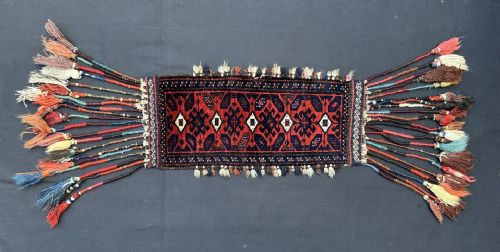
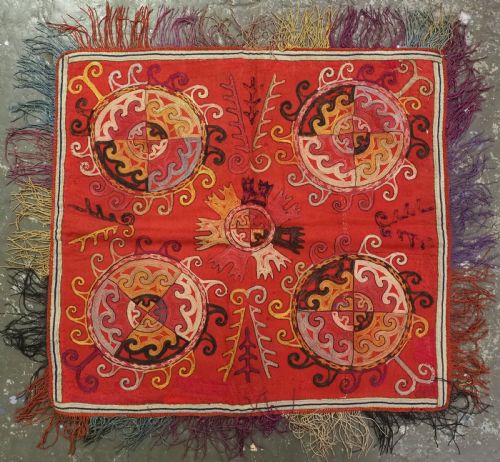
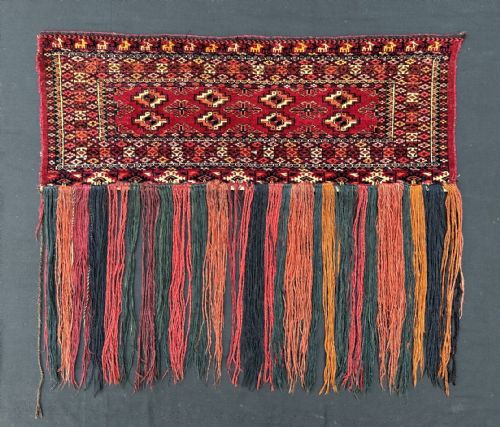
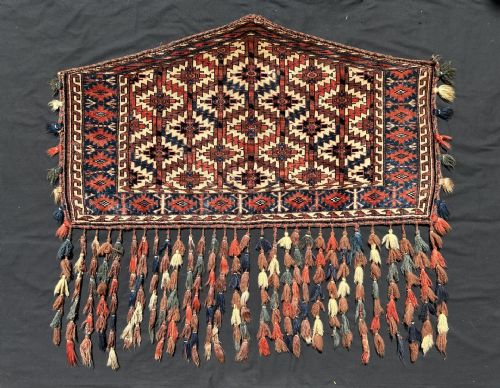
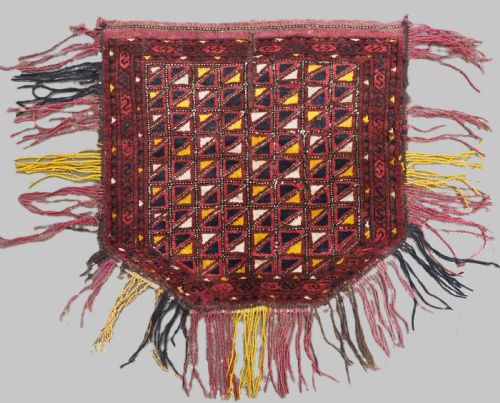
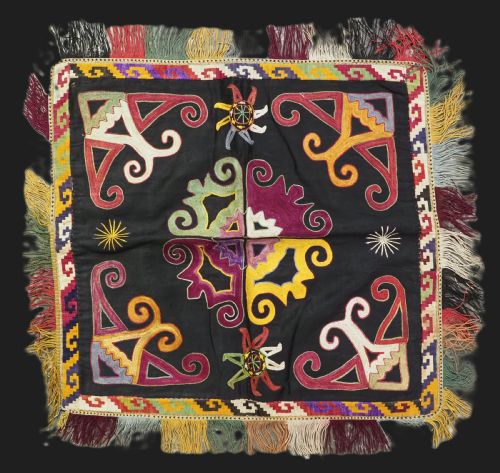
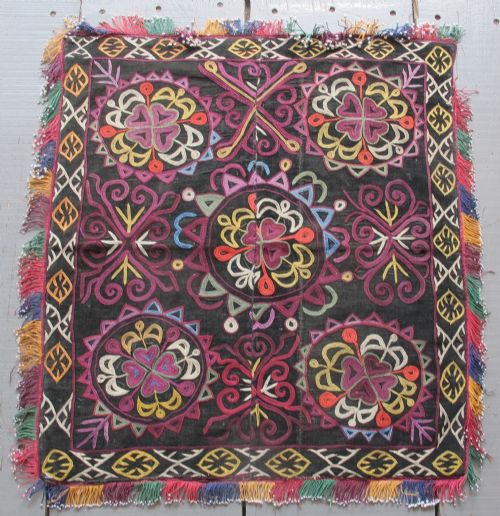
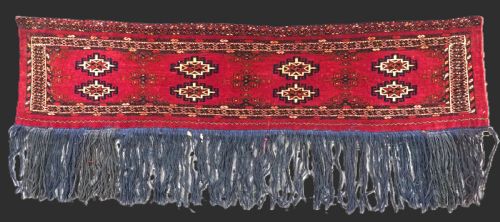
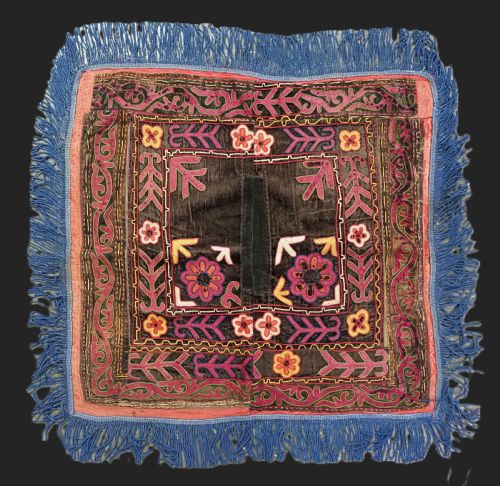
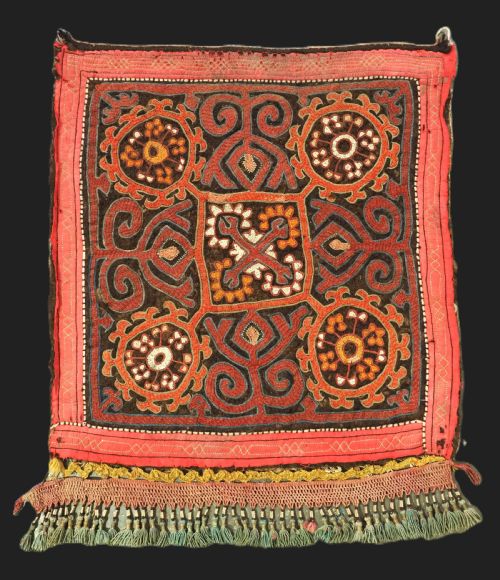
A tribal fringe wall textile encompasses wall hangings, dowry embroideries, saddle covers, torbas, and tent trappings originating from Central Asia and Persia. When buyers search for this phrase, they encounter pieces that served nomadic domestic or ceremonial functions before finding a place as interior decoration. The listings on this page consist primarily of nineteenth-century and early twentieth-century examples from tribes such as the Tekke, Yomut, Ersari, Saryk, and Lakai.
The forms vary from small torbas and vanity bags to large asmalyks and door hangings. Many of these items incorporate fringes, tassels, or applied borders that originally decorated camel trappings, tent entrances, or dowry beds. The materials reflect nomadic resourcefulness, combining wool, cotton, silk, and felt with decorative embellishments like glass beads and cowrie shells.
How they were made
Makers utilised natural dyes to colour wool, cotton, and silk yarns, creating deep reds, ivory grounds, and contrasting tones. Textile construction involved pile weaving, flat weaving, or intricate silk embroidery applied to wool and felt foundations.
Finishing details frequently included original tassels, braided fringes, and applied borders. Artisans stitched embroidery onto felt panels or assembled complex tent bags with plain weave backs, using techniques passed down within specific tribal groups.
Tribal Fringe Wall Textile Retail Price Guide 2026
Typical asking prices for tribal fringe wall textile among the pieces listed under this phrase on Sellingantiques today, from the lower quarter to the upper quarter. They describe what is for sale here now, not the wider market.
Some dowry bags still contain traces of desert dust and camel hair from their journeys across the Trans-Caspian steppes.
What varies in quality
Quality depends on the precision of the drawing, the vibrancy and saturation of the natural dyes, and the survival of original elements like tassels and plain weave backs. Pieces with tighter knotting or finer silk embroidery demonstrate greater technical skill.
Condition and completeness separate standard examples from finer ones. The presence of scarce design variations, intact fringe, and well-preserved structural grounds elevate a textile.
The Tribal Fringe Wall Textile Glossary
- Torba
- A small storage bag used in Turkmen tents. These pieces typically hung against the lattice walls.
- Asmalyk
- A pentagonal trapping hung on the flanks of camels during wedding processions. They display elaborate geometric or stepped designs.
- Ilgich
- An embroidered dowry hanging produced by the Lakai tribe of Uzbekistan. These textiles feature dynamic silk needlework on wool or cotton foundations.
- Gul
- A medallion motif repeated across Turkmen carpets and trappings. Different tribes used distinct gul patterns for identification.
- Kapunuk
- A decorative tent hanging placed around the wooden frame of a yurt doorway. They often incorporate fringes and elongated panels.
Tribal Fringe Wall Textile: Frequently Asked Questions
What is a tribal fringe wall textile?
A tribal fringe wall textile is a nomadic weaving or embroidery repurposed for interior display. These items include torbas, asmalyks, and dowry hangings.
They originate from Central Asian and Persian groups, featuring natural dyes, wool, silk, and applied fringes.
How were these textiles used originally?
Nomadic tribes utilised these pieces inside tents for storage, decoration, and ceremonial purposes. Items functioned as tent door surrounds, bedding bags, and camel trappings during weddings.
Over time, many functional objects transitioned into decorative wall hangings within domestic interiors.
How do I hang a textile safely?
Mounting requires weight distribution to protect the fabric fibres. Using a cotton-faced Velcro strip or a padded sleeve prevents distortion along the top edge.
Direct sunlight and high humidity cause fading and fibre degradation over extended periods.
How do I identify different tribal groups?
Tribal attribution relies on specific design motifs, colour palettes, and structural techniques. Turkmen subgroups like the Tekke, Yomut, and Ersari employ distinct gul medallions and border arrangements.
Lakai embroideries utilise fluid silk stitching styles that differ from Turkmen pile-woven trappings.