


Tribal Flatweave Tapestry
When searching for tribal flatweave tapestry, collectors encounter woven floor coverings and utility panels made by nomadic and village makers across the Near East and Central Asia.
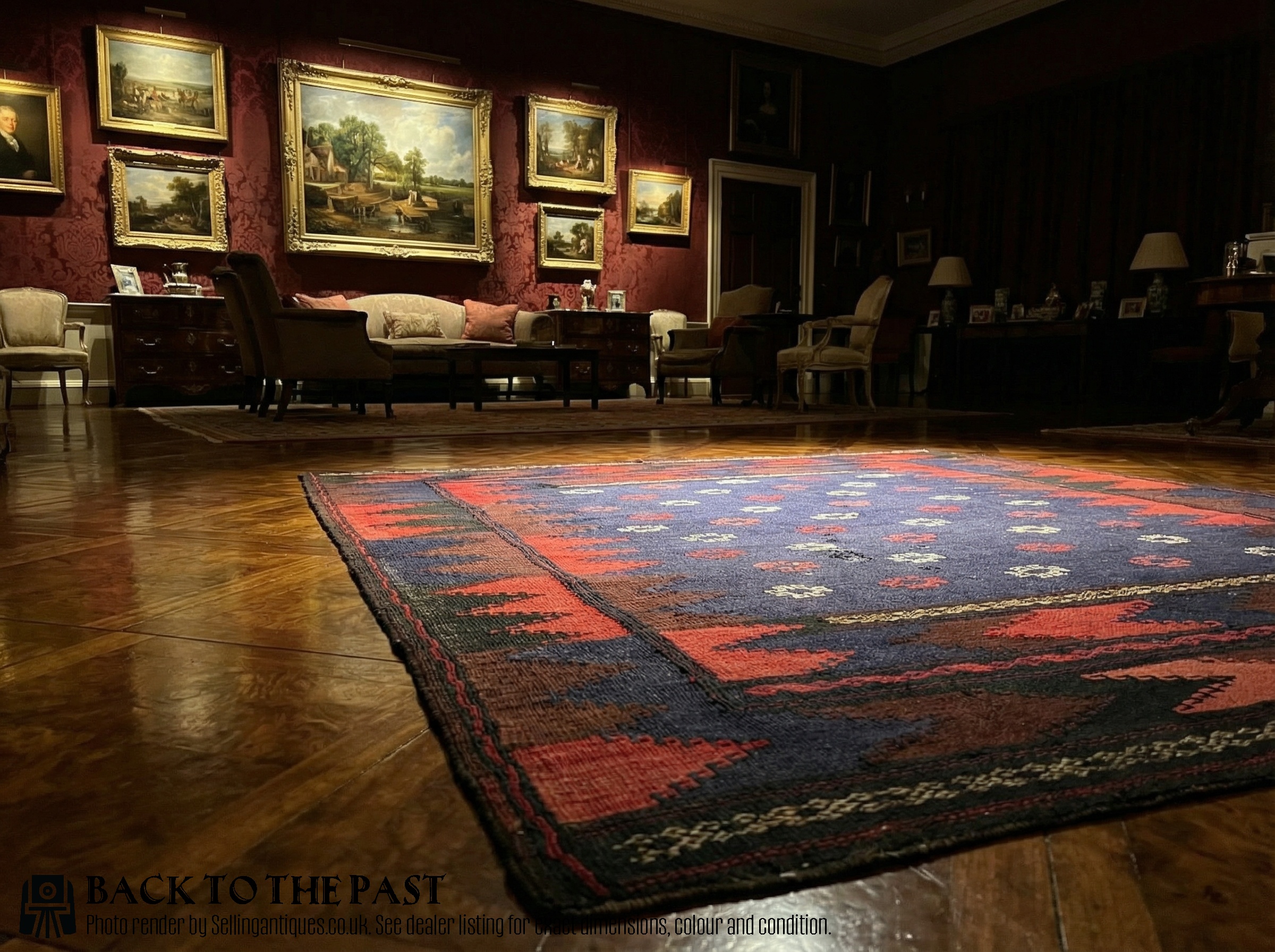
Tribal Flatweave Tapestry
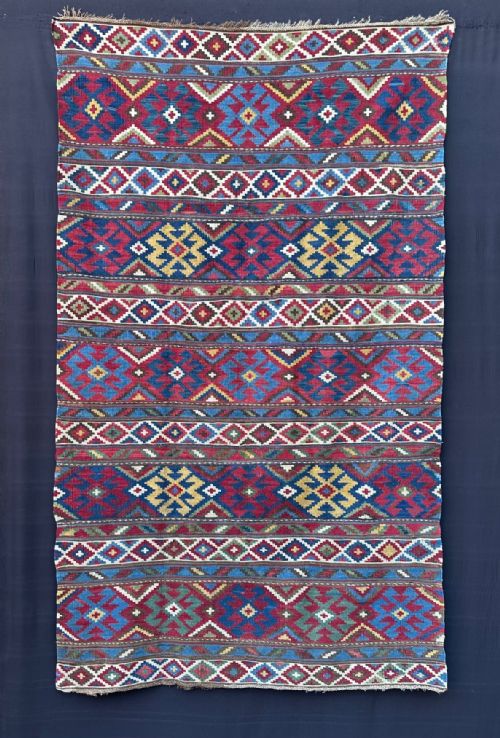
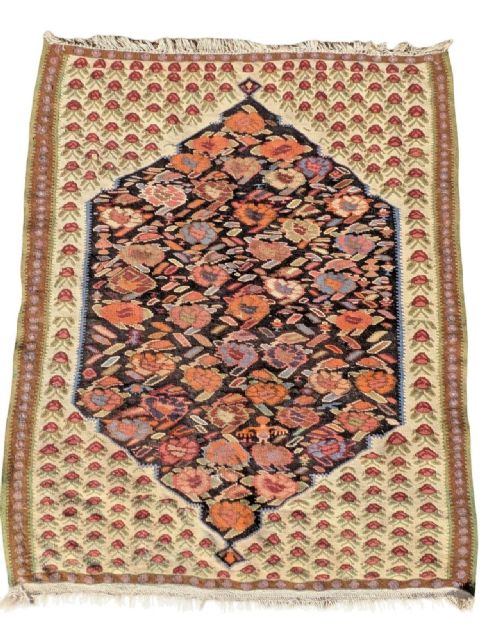
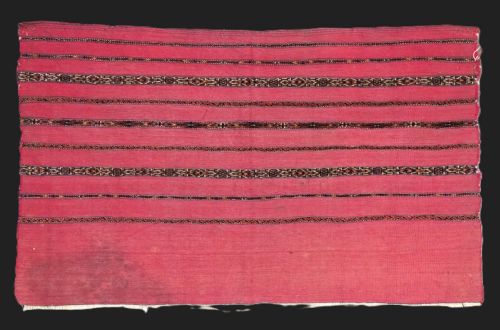
The pieces grouped under the term tribal flatweave tapestry encompass utilitarian items produced by nomadic and village groups, including floor rugs, storage bag faces, tent bands, and eating cloths.
Originating from regions such as Persia, the Caucasus, Anatolia, and Central Asia, these textiles date primarily from the late nineteenth century through to the early decades of the twentieth century.
Buyers frequently encounter regional variants like Pirot or Sarkoy kilims, Qashqai panel pieces, and Turkmen chuval faces, each displaying distinct structural traits linked to their specific weaving communities.
Materials and construction methods
The construction relies heavily on wool and hand-spun wool, often paired with cotton foundations or structured upon camel hair grounds to build durable, pileless textiles.
Weavers utilised natural dyes to achieve deep and varied palettes, integrating supplementary techniques like the Soumak wrapping method alongside standard flatweave structures.
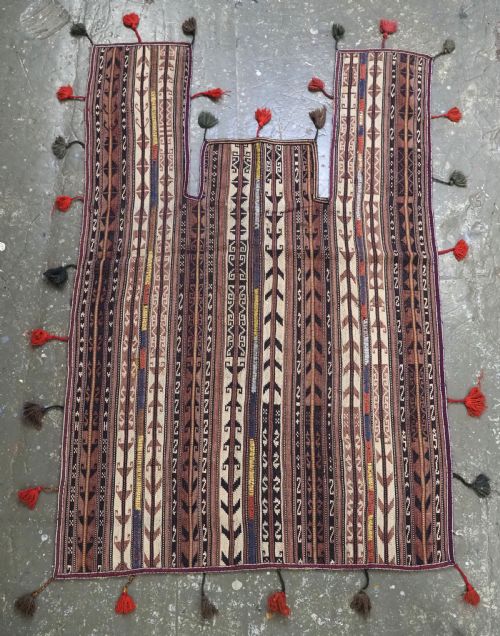
Several textiles served as ceremonial horse blankets and eating cloths, proving that nomadic sheep led remarkably civilised lives.
Factors determining overall standard
Quality rests upon the tightness of the weave and the precision of the geometric design, where finer knots and panels indicate greater maker skill.
The preservation of the original natural dye palette and the integrity of the structural format separate standard utility pieces from exceptional historic examples.
The Tribal Flatweave Tapestry Glossary
- Kilim
- A flat-woven carpet or rug produced without a pile. These pieces form the foundation of many regional textile traditions.
- Soumak
- A technique of wrap-faced patterning where coloured weft threads are wrapped over and under the warp threads. This creates a textured surface that resembles embroidery.
- Mafrash
- A large rectangular storage bag used by nomadic groups for bedding and household goods. Panels from these items are frequently preserved as flatweaves.
- Sofreh
- A woven spread or cloth utilised for dining or food preparation. They often feature austere geometric layouts suited to their domestic function.
- Chuval
- A large tent bag produced by Turkmen weavers. Faces of these bags are collected for their complex repeat medallions.
Tribal Flatweave Tapestry: Frequently Asked Questions
What is a tribal flatweave tapestry?
These items are non-pile woven textiles created by nomadic and village communities for daily utility, shelter, and storage.
They include functional objects such as floor coverings, tent bands, saddlebags, and eating cloths produced across Central Asia and the Near East.
How were these textiles used originally?
Nomadic families utilised them as practical furnishings inside tents and houses, ranging from floor rugs to heavy storage containers.
Items like horse blankets, tent bands, and sofreh cloths served specific domestic and transport functions within daily tribal life.
How should I care for a flatweave?
Protect the textile by placing it out of direct sunlight to prevent natural dye fading.
Vacuum gently without a beater bar and use a breathable underlay to keep the weave stable on floors.
How do I identify regional styles?
Look to the specific geometric motifs, colour combinations, and structural layouts characteristic of known weaving groups.
Peculiarities such as Pirot strip arrangements or Qashqai diamond medallions point directly to distinct geographic origins.