


Tribal Embroidered Panel
When you search for a tribal embroidered panel, you are looking at vibrant Central Asian textiles created for domestic and ceremonial use.
Tribal Embroidered Panel
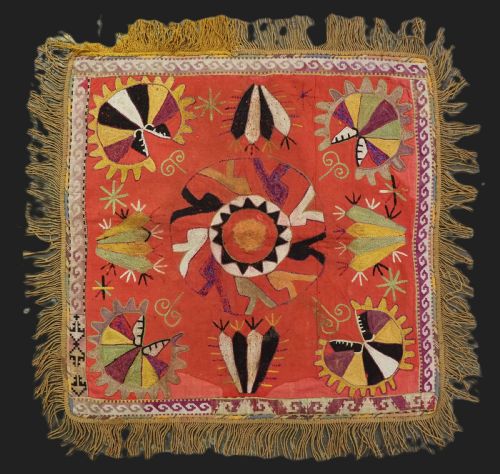
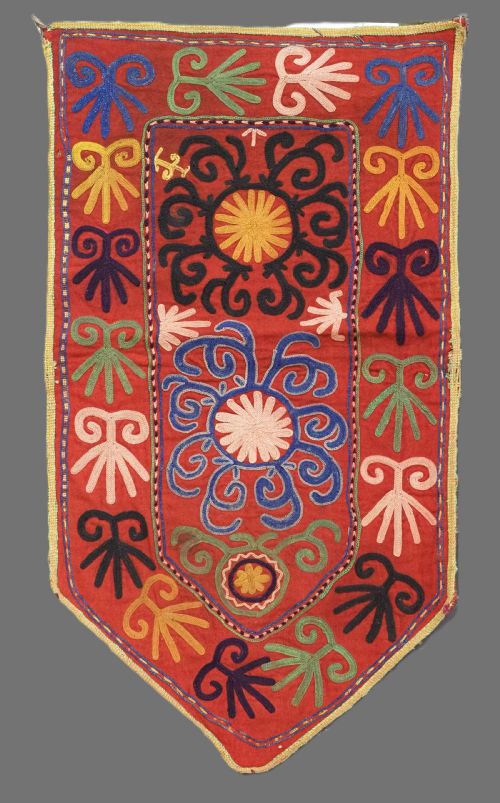
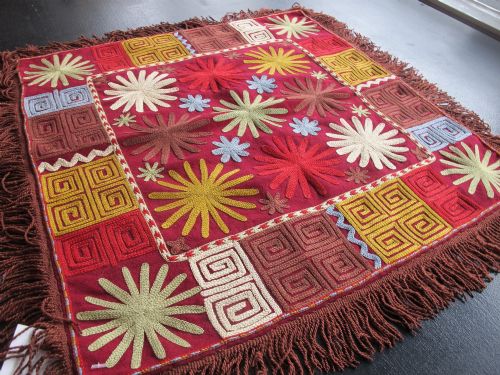
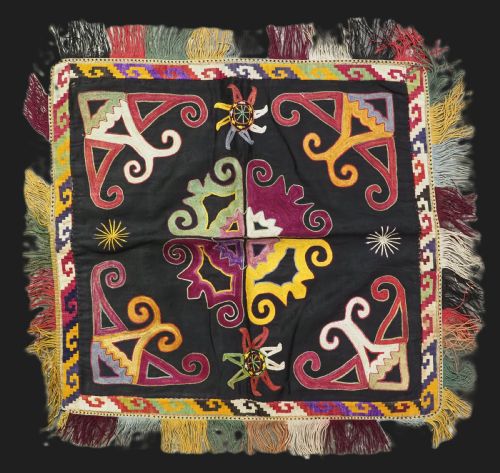
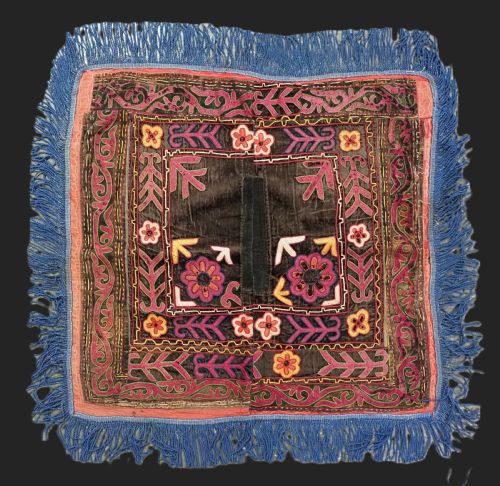
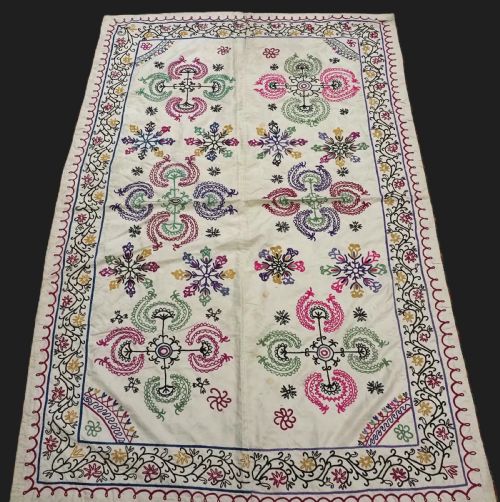
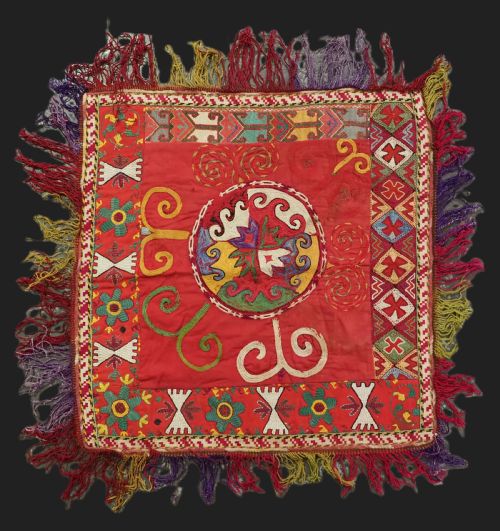
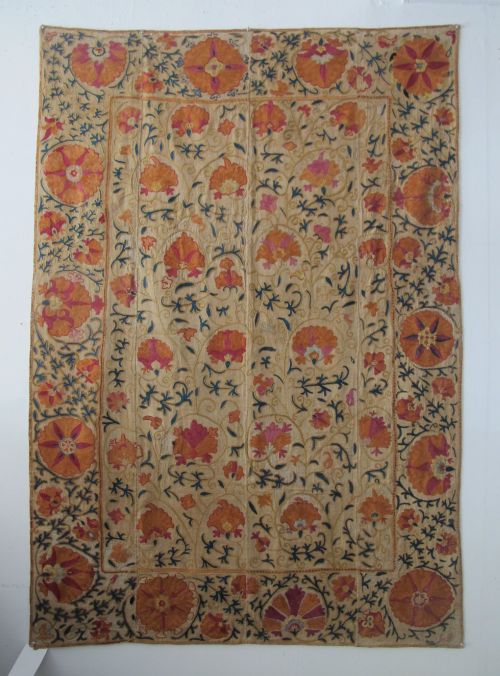
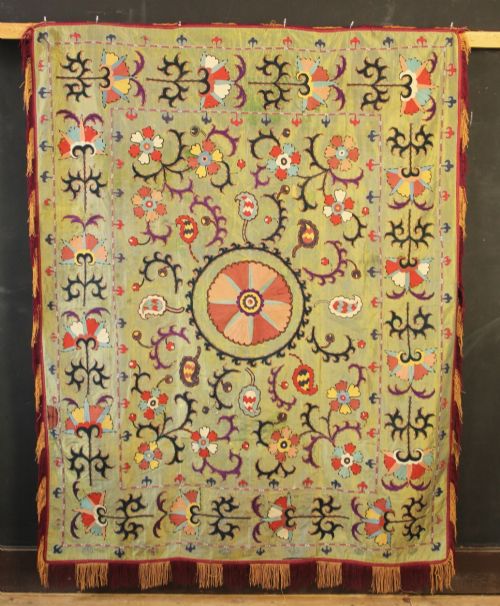
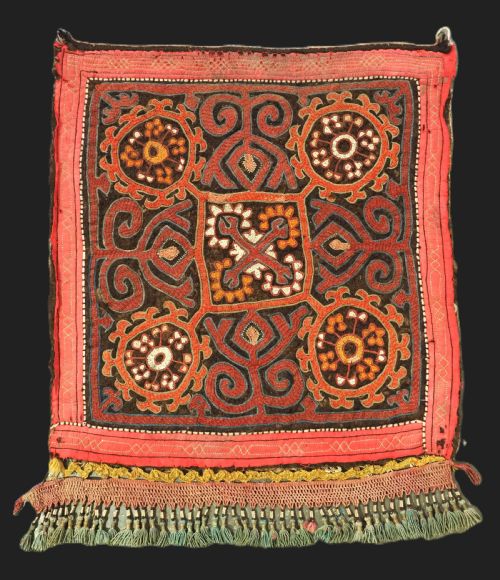
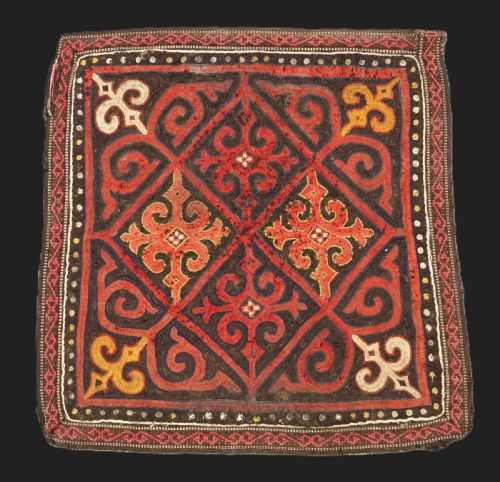
A tribal embroidered panel encompasses several traditional Central Asian forms, including decorative wall hangings, dowry pieces, mirror covers, and yurt furnishings. The versions most frequently encountered here originate from Uzbek, Lakai, and Kyrgyz communities, dating from the mid-nineteenth century to the early twentieth century.
Makers produced these textiles primarily as functional items of status and personal heritage, such as the ilgich used for wall decoration or the tush kyiz designed for yurt interiors. Many examples display regional characteristics tied to centres like Bukhara, Shakrisabz, and Tashkent, reflecting nomadic and traditional folk art styles.
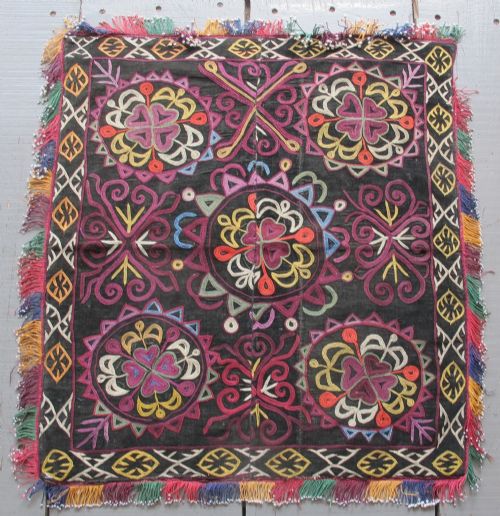
Surviving examples function principally as textile wall hangings, capturing the domestic artistry of Central Asian nomadic groups. Buyers will find both compact dowry embroideries and larger format suzanis featuring dense needlework.
Materials and Technique
Artisans executed these textiles using fine silk threads stitched onto woven grounds of cotton, wool, or felt. Certain pieces incorporate additional media such as glass beads, velvet elements, and applied fringe to enrich the surface texture.
Needlework techniques include detailed surface embroidery and applied felt work, often mounted on supportive foundations like Mogul red wool or black cotton grounds. The interaction between glossy silk thread and matte wool or cotton creates the characteristic visual depth of these panels.
The listings span from the mid-nineteenth century through the early twentieth century, utilising silk, cotton, wool, and felt.
Factors of Quality
Quality rests upon the density and precision of the needlework, alongside the integrity of the base fabric and the preservation of original materials. Panels that retain a fully covered surface or meticulous execution demonstrate superior handwork.
The choice of ground fabric, such as robust wool or fine cotton, combined with the vibrancy of the silk threads, dictates the visual impact of the piece. Provenance relating to specific tribal groups like the Lakai also influences the standing of an individual textile.
The Tribal Embroidered Panel Glossary
- Suzani
- An embroidered textile panel originating from Central Asia, traditionally worked in silk on a cotton or linen foundation.
- Ilgich
- A specific form of dowry embroidery created by the Lakai tribe for use as a wall hanging.
- Palak
- A large suzani variety fully embroidered with a central star motif, commonly associated with Tashkent.
- Torba
- A utilitarian storage bag or hanging panel produced by nomadic groups in Central Asia.
Tribal Embroidered Panel: Frequently Asked Questions
How were these panels used?
Nomadic and settled communities utilised these textiles as wall hangings, dowry furnishings, mirror covers, and yurt decorations. They brought colour and status to domestic interiors.
Larger formats decorated living spaces, while smaller items served specific protective or ceremonial purposes within the household and during transit.
How do I care for an antique textile?
Protect antique embroidery from direct sunlight to prevent fading of the silk threads and dyed grounds. Gentle framing or hanging away from heat sources preserves the fabric.
Avoid washing historic textiles with water, relying instead on professional textile conservators for any necessary cleaning or stabilization.
How can I identify a Lakai embroidery?
Lakai embroideries often feature distinct nomadic designs, including hooked motifs, geometric arrangements, and energetic use of silk on wool or cotton grounds. Their format frequently includes smaller dowry pieces and horse covers.
These panels display a unique folk art aesthetic that separates them from the larger, court-influenced suzanis of urban centres.