


Cotton Needlework Hanging
A cotton needlework hanging brings vibrant Central Asian textiles into a room, offering rich embroidered panels from regional traditions.
Cotton Needlework Hanging
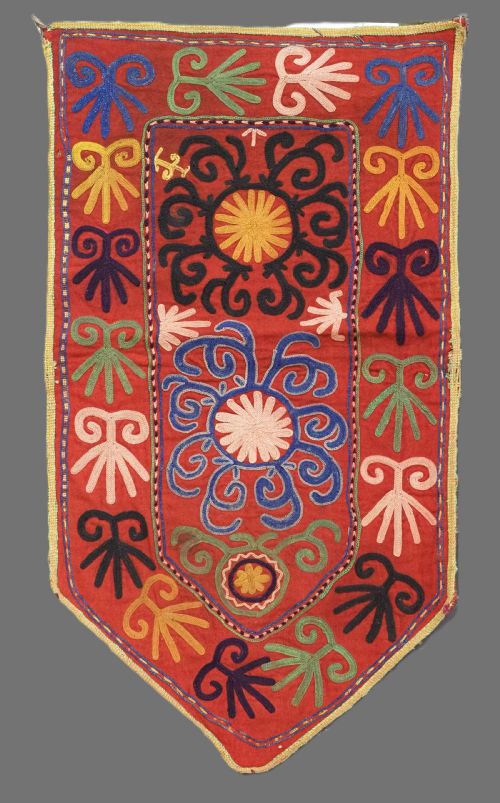
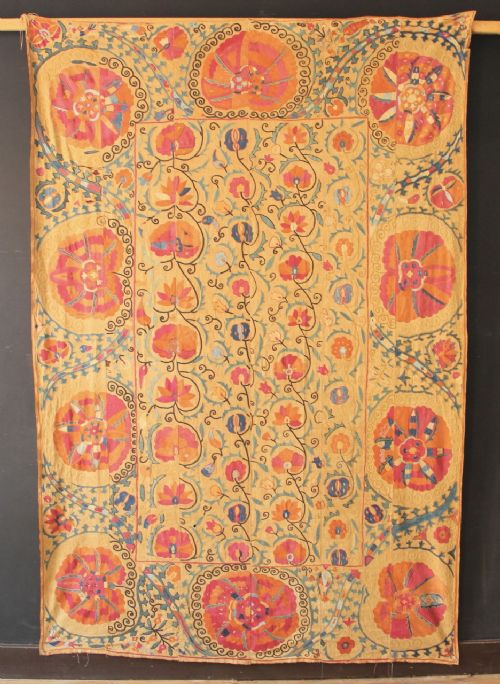
When you search for a cotton needlework hanging, you encounter traditional textile works originating primarily from Central Asian regions such as Uzbekistan. These decorative items include suzanis, smaller uut kap ilgich bags, and panel variants spanning from the nineteenth century into the early twentieth century.
The pieces on this page encompass various formats including full suzanis, smaller nim suzanis, prayer designs, and framed embroidered fragments. Most examples reflect regional styles from centres like Bukhara, Shakhrisabz, Nurata, and Tashkent, displaying distinctive floral motifs, central medallions, or star patterns.
Materials and construction methods
These textiles rely on a foundation of woven cotton or linen cloth, which serves as the base for extensive surface embroidery. Artisans applied vibrant threads of silk and occasionally wool to build up dense, colourful decorative schemes across the ground fabric.
Stitching techniques vary from delicate outlines to fully embroidered fields that completely cover the underlying cotton support. Finished pieces were frequently mounted for display or utilised as functional decorative covers within domestic spaces.
The documented pieces span stylistic traditions from Bukhara, Tashkent, Shakhrisabz, and Nurata.
Evaluating textile quality and execution
The division between standard and superior pieces rests upon the density of the embroidery and the complexity of the needlework. Fully covered palak designs or finely executed medallion layouts demand significantly greater labour than simpler compositions.
Condition and visual impact also govern the standing of an individual textile, including the vibrancy of the remaining silk threads against the cotton ground. Original scale and format integrity further distinguish masterworks from fragmentary survivals.
The Cotton Needlework Hanging Glossary
- Suzani
- An embroidered Central Asian textile panel traditionally worked in silk thread on a cotton or linen ground. These large decorative hangings often feature bold floral and medallion motifs.
- Nim suzani
- A smaller variant of the standard suzani wall hanging, typically half the scale of a full-sized textile. They were used for specific domestic purposes.
- Palak
- A fully embroidered suzani design where the needlework covers almost the entire cotton ground cloth. This dense style frequently incorporates a central star or medallion.
- Uut kap ilgich
- A specific form of Central Asian hanging or bag associated with nomadic tribal groups such as the Lakai. These pieces utilise distinctive geometric and curvilinear embroidery.
- Prayer format
- A textile design incorporating a mihrab or arch motif oriented in a specific directional manner. Such pieces reference sacred architectural traditions in their layout.
Cotton Needlework Hanging: Frequently Asked Questions
How were suzanis used originally?
These textiles served primarily as domestic furnishings within traditional Central Asian homes, functioning as wall decorations, hangings, or ceremonial covers. Wealthy families displayed them to mark important life events.
Over time, many of these embroidered panels transitioned into decorative wall art for Western interiors, where their scale and colour became appreciated as distinct visual focal points.
How do I care for an antique textile?
Keep embroidered wall hangings away from direct sunlight to prevent the natural silk and wool threads from fading against the cotton ground. Gentle dusting or professional textile conservation is recommended for maintenance.
Avoid hanging heavy textiles by isolated points that strain the fabric. Proper mounting distributes the weight evenly across the entire cotton support.
What is the difference between full and nim suzanis?
A full suzani is a large embroidered panel designed to cover substantial wall areas or serve as a major domestic hanging. Their expansive dimensions allowed for complex medallion and floral compositions.
A nim suzani represents the smaller counterpart to these large formats, offering a more compact scale while retaining the same traditional needlework techniques and regional motifs.
Where did these embroideries originate?
The pieces recorded here stem primarily from Central Asian centres including Bukhara, Tashkent, Shakhrisabz, and Nurata within modern-day Uzbekistan. Each region developed distinct palettes and botanical motifs.
Nomadic groups such as the Lakai contributed their own specific aesthetic, focusing on compact geometric configurations and distinct tribal layouts distinct from urban workshop output.