
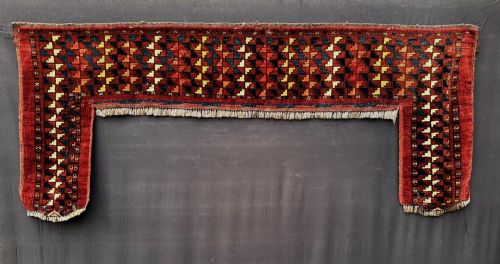
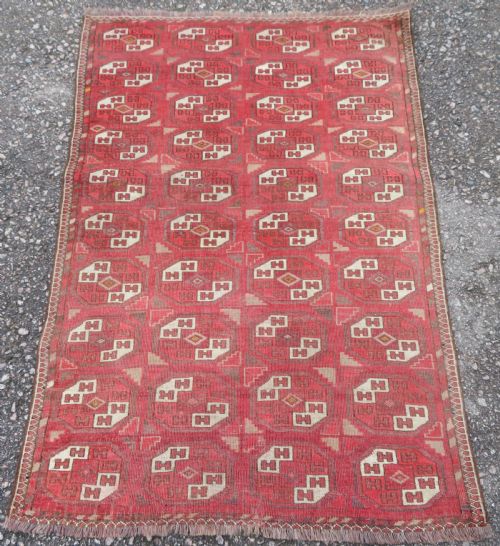
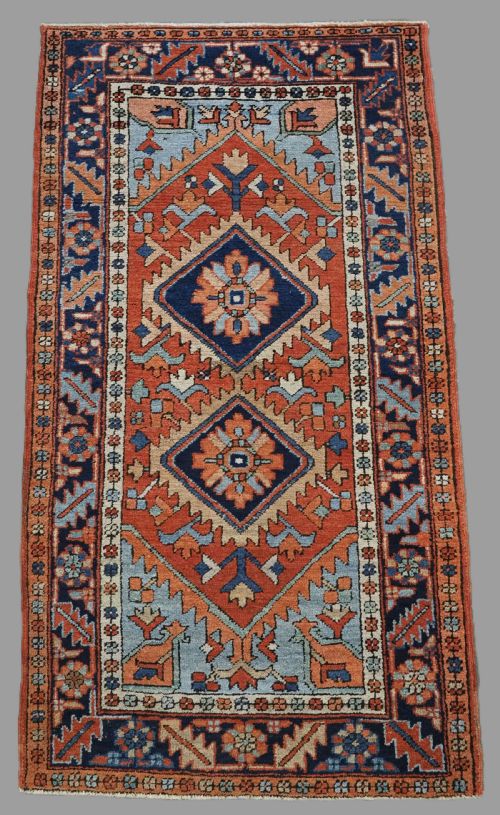


Tribal Door Rug
A tribal door rug brings tactile history into a room, offering rich central Asian weaving traditions through antique ensi and kapunuk tent hangings.
Tribal Door Rug
A tribal door rug is a textile traditionally used as a tent hanging or portiere, specifically designed for the entrances of nomadic dwellings in Central Asia. When searching for a tribal door rug, you encounter pieces originating from Turkmen tribes such as the Ersary, Yomut, Tekke, Saryk, and Karadashli, alongside Persian regional pieces.
The dominant form on this page is the ensi or kapunuk, a specialised carpet layout divided into quarters by a central candelabra or cross motif. These textiles date from the nineteenth and early twentieth centuries, spanning periods from the eighteen-fifties to nineteen-thirty.
Woven as functional architectural elements rather than floor coverings, these pieces served practical insulation purposes within nomadic tents. Their distinct iconography and format separate them from standard area rugs and carpets.
How they were made
These textiles rely on hand-spun wool foundations and pile, yielding a dense, durable surface designed to withstand heavy daily use at tent entrances. Artisans incorporate cotton details for white highlights to create sharp contrast against darker field colours.
Certain examples integrate glass beads into their construction, adding tactile and visual texture to the woven structure. Natural dyeing traditions produce the deep, saturated tones seen across the Ersary, Yomut, and Tekke pieces.
Nomadic weavers built protective magic directly into the wool, ensuring nobody tripped over the threshold while admiring the doorway.
What varies in quality
Quality in these textiles rests upon the precision of the drawing within the elem panels and the overall balance of the classic design layout. Fineness of knotting and the handling of secondary motifs determine the visual depth of the weaving.
The vibrancy and saturation of the palette separate standard examples from superior ones, particularly in the rendering of whites and contrasting field hues. Preserved structural integrity across wool and cotton elements maintains the strength of the hanging.
The Tribal Door Rug Glossary
- Kapunk
- A tent door hanging, often comprising three sides designed to frame an entranceway. These pieces share weaving techniques with standard ensis.
- Elem
- The lower horizontal panel at the base of a Turkmen rug or door hanging, often decorated with elaborate tree or shrub motifs.
- Portiere
- A curtain hung over a doorway to prevent drafts, corresponding to the functional use of these tribal door rugs in nomadic architecture.
Tribal Door Rug: Frequently Asked Questions
Where were tribal door rugs used?
These textiles hung over the entrances of felt tents used by nomadic and semi-nomadic tribes across Central Asia. They acted as functional barriers against wind and cold.
Over time, collectors adapted them for interior decoration as wall hangings and portieres in modern homes.
What is an ensi rug?
An ensi is a specialised Turkmen tent door hanging characterised by a cross motif that divides the field into four distinct panels. This layout distinguishes them from floor rugs.
They carry symbolic protective designs intended to guard the household.
How do I hang a door rug?
Mounting a textile of this weight requires a secure wooden batten or a concealed sleeve sewn to the reverse top edge. This distributes the tension evenly across the wool foundation.
Keep them away from direct sunlight to protect the natural dyes in the wool and cotton.
How are different tribes identified?
Tribal attribution relies on specific structural characteristics, border patterns, and elem panel designs associated with weavers like the Yomut, Ersary, and Tekke. Colour palettes also provide key indicators of origin.
Comparing knot direction and wool preparation helps confirm the specific Central Asian region.