


Hatchli Door Rug
A hatchli door rug brings the geometric discipline and tribal heritage of Central Asia directly into a modern interior.
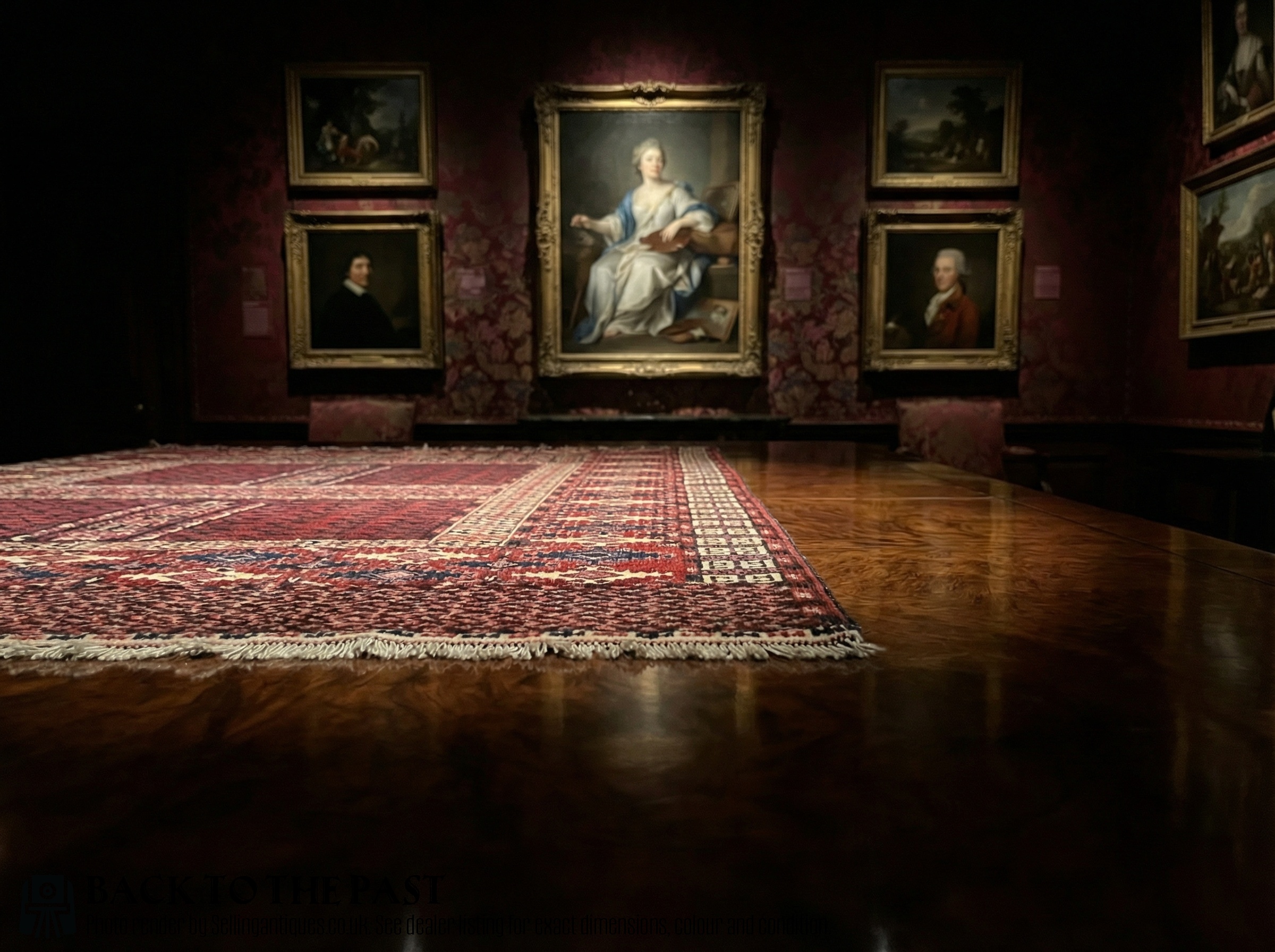
Hatchli Door Rug
When you search for a hatchli door rug, you are looking at tribal Turkmen weaving traditionally used as a tent door hanging rather than a floor covering. These distinctive pieces typically present a quartered field divided by a central candelabra motif, reflecting the nomadic architecture of Central Asian tribes.
The examples available here span from the mid-nineteenth century to the early twentieth century, taking the form of specific tribal pieces such as Yomut, Tekke, Ersari, and Saryk ensis. Most specimens you will encounter on this page date from the later nineteenth century, representing the mature weaving traditions of these distinct groups.
Materials and construction
These textiles are constructed primarily from wool and hand-spun wool, providing a dense and durable foundation characteristic of nomadic production. The pile is tightly knotted to withstand the practical demands of daily use at the entrance of a dwelling.
Cotton is frequently utilised for specific structural highlights, such as the white details that punctuate the darker field. Natural dyeing traditions ensure the rich colour palette remains deep and saturated across the surviving pieces.
The selections available here span tribal weaving traditions from the mid-nineteenth century through to the early decades of the twentieth century.
What separates the fine examples
Quality in these door rugs rests upon the precision of the drawing within the quartered panels and the crispness of the central candelabra motif. Finer examples display a rhythm and balance in the geometric repetition that weaker pieces lack.
The handling of the elem panels at the base of the hanging further distinguishes the superior weaving. Depth and clarity of colour saturation provide another key marker of distinction among these tribal pieces.
The Hatchli Door Rug Glossary
- Ensi
- The traditional Turkmen term for a tent door hanging, structurally distinct from standard floor carpets by its cross-shaped division. This format is the defining characteristic of the hatchli door rug.
- Elem
- The decorative lower panel situated beneath the main field of a rug or door hanging. In better pieces, this panel contains well-drawn geometric or tree motifs.
- Tekke
- A prominent Turkmen tribe celebrated for finely knotted and meticulously proportioned domestic textiles. Their door hangings frequently demonstrate exceptional precision in the quartered field.
- Ersari
- A Turkmen tribe inhabiting regions along the Amu Darya river, recognised for broader proportions and varied palette choices in their carpets. Their work often incorporates expressive use of colour.
- Saryk
- A Turkmen tribe whose surviving textile output is relatively scarce compared to other groups. Their pieces are noted for deep saturated grounds and meticulous execution.
Hatchli Door Rug: Frequently Asked Questions
How do I identify a Yomut ensi?
Yomut ensis are generally distinguished by their more robust drawing style and specific tribal border motifs. They often feature diamond-patterned elem panels at the base rather than the more architectural candelabra variations found in other groups.
The overall palette tends towards deep madder reds combined with dark browns and ivory accents. The structural proportions are typically broader than those of Tekke counterparts.
What does the central cross design mean?
The vertical and horizontal bars divide the field into four distinct quadrants, a layout intrinsic to the ensi form. This division is often interpreted as a symbolic representation of the nomadic tent's interior or a protective talisman.
A central candelabra or tree motif usually rises through the vertical axis. This iconography connects the domestic threshold with traditional nomadic beliefs.
How can I tell the different tribes apart?
Tribal attribution relies on examining the minor border ornaments, the structure of the central cross, and the treatment of the lower elem panel. Tekke pieces tend to be finely knotted with repeating tree-pot motifs, while Ersari examples often show more relaxed proportions and varied palettes.
Familiarity with the distinct wool quality and secondary colours of each group helps clarify attribution. Comparing the minor guls along the borders provides the most reliable guide for separation.
Where should I hang an ensi?
An ensi suits a wall where its architectural layout and symmetry can be fully appreciated without physical wear. Hanging it flat preserves the structure of the foundation and protects the hand-spun wool pile from foot traffic.
Ensure the hanging method distributes the weight evenly across the upper edge using a proper textile sleeve or clips. Avoid placement in direct, harsh sunlight to maintain the integrity of the natural dyes.