


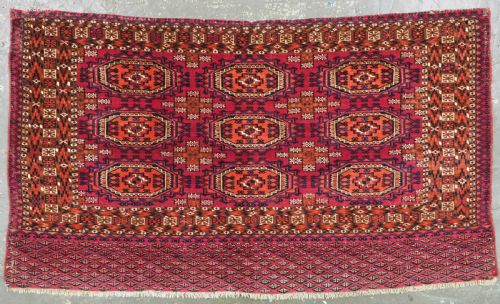


Tribal Camel Bag
A tribal camel bag brings heavy nomad textiles into a room, offering strong wool structures and geometric patterns made for transport.
Tribal Camel Bag
A tribal camel bag takes the form of utilitarian storage sacks and saddle bags created by nomadic groups, which buyers encounter here in nineteenth century formats. These textiles include specific storage shapes such as chuvals and torbas, alongside smaller saddle bags made for animal transport. Most examples originate from Turkmen, Shahsavan, and other Central Asian weaving traditions.
The selection ranges from complete pieces retaining original plain weave backs and hanging loops to individual fragments that display specific gul motifs. Yomut, Ersari, Tekke, and Saryk groups appear frequently in the inventory, often identified by distinctive tribal guls and banded flatweave designs. These items serve today as wall hangings or floor textiles rather than animal equipment.
Materials and construction
Weavers constructed these pieces primarily from hand-spun wool and cotton foundations, utilising natural dyes to achieve deep red and brown colour palettes. Silk highlights occasionally appear on specific faces, adding texture to the geometric designs.
Techniques combine pile weaving with flatweave structures, incorporating supplementary weft-wrapping and embroidery. Many surviving examples retain leather and metal attachments used originally for fastening the bags to pack animals.
Listings feature nineteenth-century Turkmen and Shahsavan weavings, combining wool, cotton, and natural dyes in functional storage forms.
Evaluating quality in nomadic weavings
Quality depends on the density of the knotting and the clarity of the natural dyes, which determine how sharply the tribal guls stand out against the field. Tighter structures and better-preserved wool pile elevate certain torbas and chuvals above simpler utilitarian pieces.
Completeness alters the character of a piece, as examples retaining original backs, tassels, and hanging loops offer a more intact historical record than isolated bag faces. The precision of the flatweave details and the presence of silk accents also distinguish finer nomadic work.
Shahsevan Nomads·Ersari Turkmen·Yomut Turkmen·Tekke Turkmen·Saryk Turkmen
The Tribal Camel Bag Glossary
- Chuval
- A large tent storage bag produced by Turkmen nomads. These rectangular sacks held household goods inside the yurt.
- Torba
- A smaller storage bag used by nomadic tribes, typically wider than it is tall. They hung inside tents for personal items.
- Gul
- A repeating medallion or octagonal motif used by Central Asian carpet-weaving tribes. Each tribal group favoured distinct gul variations.
- Mafrash
- A rectangular storage bag or panel often woven in flatweave technique. They served as bedding bags in nomad households.
- Flatweave
- A textile made without pile by interlacing warp and weft threads. This technique forms sturdy, non-pile sections on bags.
Tribal Camel Bag: Frequently Asked Questions
How were these bags used originally?
Nomads utilised these large sacks and saddle bags on pack animals during seasonal migrations and inside circular tents for domestic storage. They held bedding, clothing, and household provisions.
Because they faced hard daily use, surviving examples often show structural repairs or adaptations made during their working life.
How do I hang a bag face?
Bag faces and fragments mount successfully on walls using custom fabric sleeves or discreet conservation-grade display clips that distribute weight evenly across the wool. This approach protects the structure from tension.
Ensure the display wall avoids direct sunlight to protect the natural dyes from fading over time.
How do I distinguish different tribal designs?
Tribal attribution relies on specific gul patterns, colour choices, and weaving techniques characteristic of groups like the Yomut, Tekke, or Ersari. Each tradition used distinct arrangements of octagonal medallions and border structures.
Comparing the specific flatweave details and palette helps identify the likely regional origin of an antique piece.