
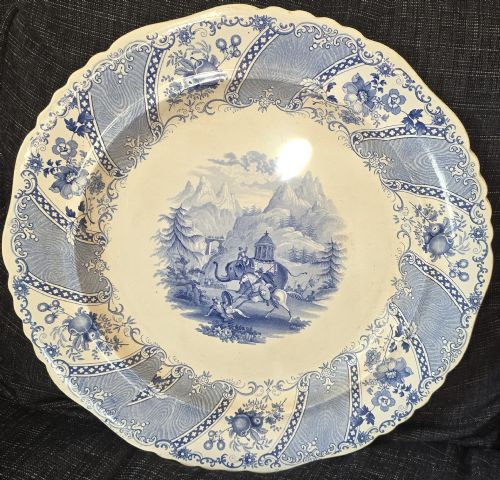
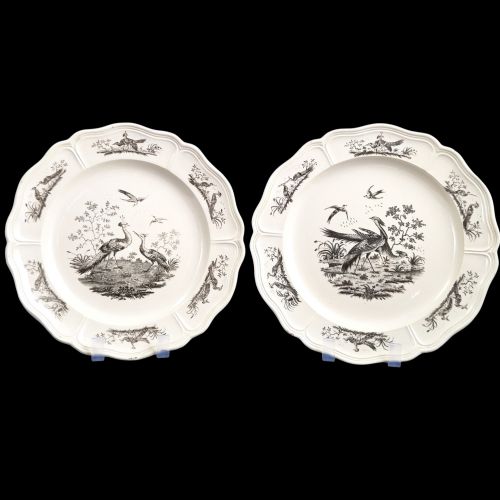
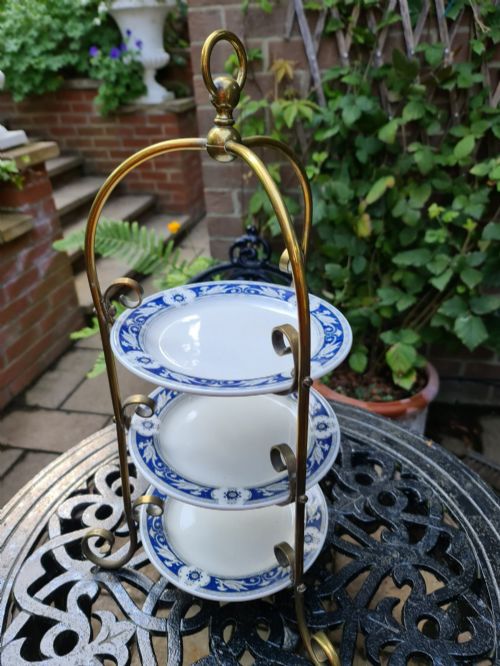

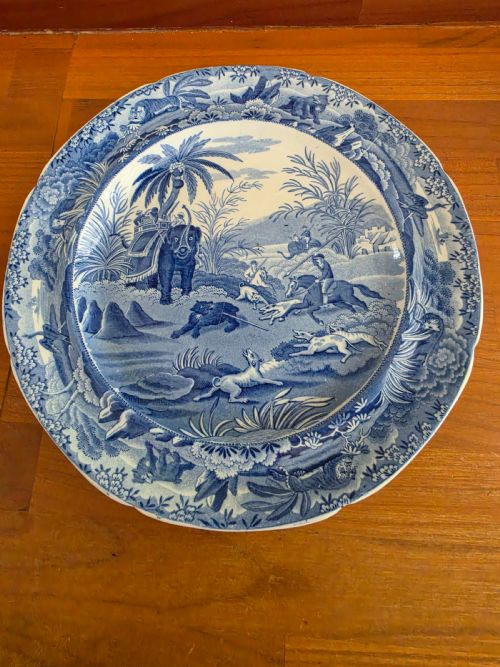


Transferware Display Plates
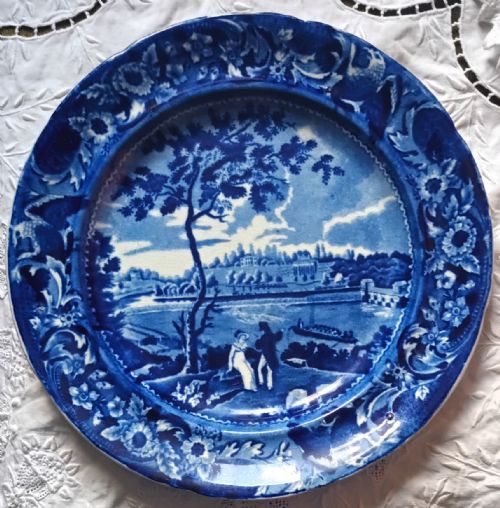
Transferware display plates bring together pictorial blue and white ceramic design and historic scenes for decorative wall or cabinet display.

Transferware Display Plates
When you search for transferware display plates, you find earthenware, ironstone, and stoneware plates decorated using copperplate printing techniques. These decorative items range from Georgian and Victorian examples to Edwardian pieces.
The forms span individual dessert and tea plates alongside large chargers, serving platters, cake stands, and cheese dishes. Pictorial patterns such as India Temple, Fair Mount near Philadelphia, and botanical motifs appear across the 19th century.
Buyers most frequently encounter blue and white earthenware pieces from Staffordshire makers. These items served both practical dining functions originally and purely decorative purposes today.
How they were made
Potters made these wares using earthenware, ironstone, and stoneware bodies shaped into plates, chargers, and dishes. Manufacturers then applied printed paper tissue transferred from engraved copperplates onto the ceramic surface.
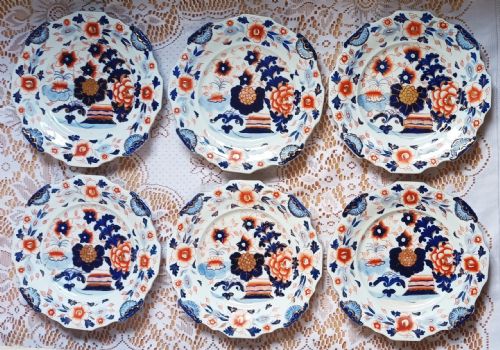
Workers sealed the printed design beneath a transparent glaze before firing the ceramic in kilns. Some pieces incorporate additional details in enamel or gilt applied over the glaze.
Listings feature 19th-century periods alongside Victorian and Edwardian items made from earthenware, ironstone, and stoneware.
What varies in quality
The clarity and crispness of the transfer print separate finer pieces from softer impressions. Sharp lines in pictorial scenes indicate a well-maintained copperplate and skilled transfer work.
The weight, density, and finish of the ceramic body also differ, with dense ironstone and stoneware offering greater durability than standard earthenware. The richness of the blue glaze and the accuracy of pattern alignment contribute to the overall visual strength of the plate.
Spode·Stubbs·John Ridgway·William Adams·Minton·Elkin And Newbon·Mason
The Transferware Display Plates Glossary
- Transferware
- Pottery decorated by pulling an engraved copperplate impression onto paper tissue and transferring it onto the ceramic body before glazing. This method allowed intricate pictorial scenes to be produced in volume.
- Charger
- A large ornamental plate intended for display rather than everyday dining use. These substantial pieces frequently measure significantly wider than standard dinner plates.
- Ironstone
- A heavy, durable type of feldspathic stoneware patented in the 19th century. It resists chipping better than standard earthenware while providing a smooth white surface for printing.
- Earthenware
- Porous ceramic fired at lower temperatures, commonly used for historical plates and dishes. It requires a complete glaze layer to achieve a waterproof surface.
Transferware Display Plates: Frequently Asked Questions
How do I hang transferware plates?
Use wire spring hangers with rubber-tipped prongs that grip the rim securely without scratching the ceramic body. Ensure the wall fixing is secure enough to support the weight of ironstone chargers.
Alternatively, display them upright on plate stands inside cabinets or on mantelpieces. This avoids stressing the rim and allows easy removal for cleaning.
Are these plates safe for food use?
Historical transferware often contains lead in the early glaze compositions, making modern food use inadvisable. These pieces suit display and decorative purposes best.
Wash them gently by hand in lukewarm water when cleaning is necessary. Avoid soaking or abrasive scrubbing to protect the historic glaze.
How do I date a transferware plate?
Examine the back of the plate for impressed maker marks, registry diamonds, or pattern names. Stylistic clues in the pictorial scene and the shade of blue also indicate the period of production.
Earthenware pieces from the early 19th century typically feature different foot rim characteristics compared to later Victorian ironstone wares. Cross-referencing known pattern names helps narrow down the decade.
What is the difference between earthenware and ironstone?
Earthenware is a softer, more porous ceramic body fired at lower temperatures. It forms the base of many early 19th-century blue and white plates.
Ironstone is a much denser, harder ceramic developed to withstand heavy use. It rings slightly when struck and provides a heavier feel in the hand.