




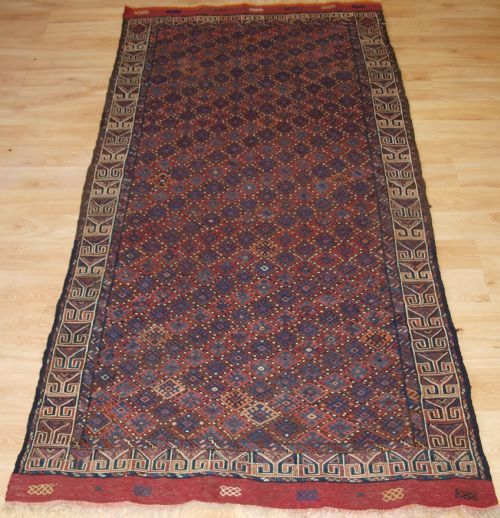
Traditional Wool Soumak Flatweave
These traditional wool soumak flatweave textiles are hand-knotted tribal weavings prized for their crisp geometric designs and enduring structure.
Traditional Wool Soumak Flatweave
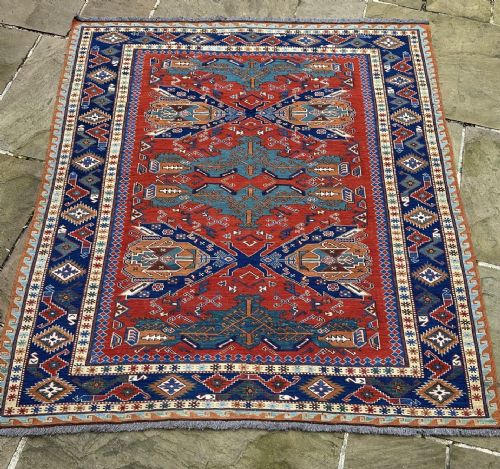
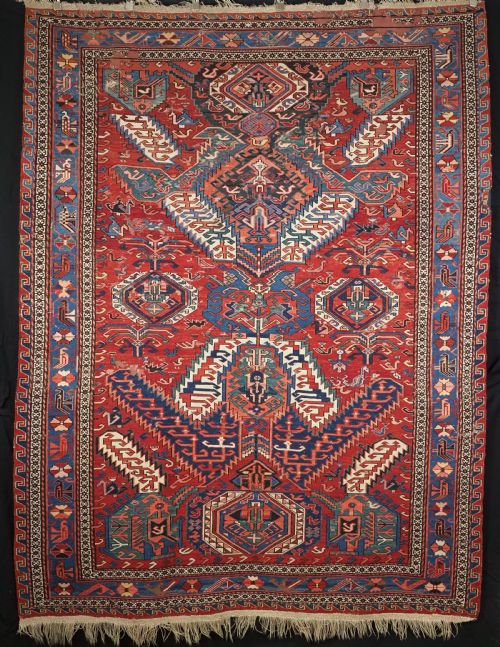
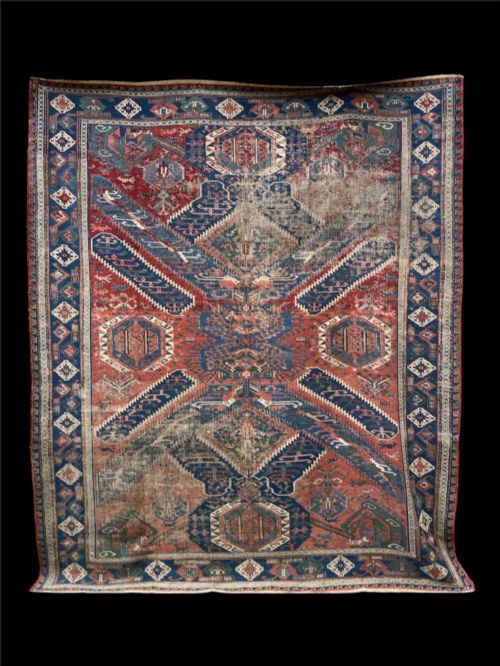
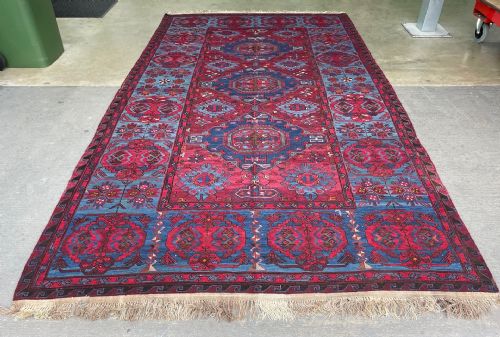
Traditional wool soumak flatweaves comprise durable carpets, rugs, tribal bags, and cushions originating from nineteenth and early twentieth-century nomadic and tribal workshops. The pieces on this page span styles from Caucasian and Turkmen tribal to Persian tribal traditions, offering distinct regional patterns.
Buyers frequently encounter nineteenth-century Caucasian examples alongside Yomut Turkmen palas kilims and specialised pieces like salt bags and mafrash panels. These textiles display diverse formats, from large floor carpets to smaller cushion covers and long kilims with extended ends.
How they were made
Weavers constructed traditional wool soumak flatweaves using wool and cotton foundations, employing a wrapping technique that creates a distinctive raised surface texture on the front. This wrapping method differs from standard interlocking tapestry weaves by carrying and wrapping the supplementaryweft threads around the warp strings.
The choice of materials ensures both flexibility and structural integrity, allowing the dense wool yarns to hold rich natural dyes. Artisans incorporated cotton typically for structural strength in foundations, while wool provided the primary pile and surface ornamentation.
Listings feature wool and cotton materials across Caucasian, Turkmen tribal, and Persian tribal styles from the nineteenth and early twentieth centuries.
What varies in quality
Quality in traditional wool soumak flatweaves depends on the precision of the geometric execution, the crispness of motifs such as medallions or dragon designs, and the condition of the flatweave ends. Finer pieces demonstrate tighter wrapping and more complex iconography.
The integrity of the wool and cotton materials also determines the grade of a piece, with well-preserved structural foundations and intact long kilim ends elevating the textile. Original tribal context and regional attribution further distinguish exceptional examples from standard production.
Afshar Tribe·Yomut Turkmen·Shahsavan·Quchan Kurds
The Traditional Wool Soumak Flatweave Glossary
- Soumak
- A flatweave technique where pattern wefts are wrapped over and under warp threads, producing a durable textile with a braided appearance on the face and loose floats on the reverse. This method yields a thicker and sturdier fabric than standard kilims.
- Palas
- A term used to describe flatwoven rugs or covers, often associated with Turkmen tribal weaving traditions. These textiles typically showcase bold geometric palettes and functional utility.
- Mafash
- A rectangular tribal storage bag panel or complete container produced by nomadic groups for household storage. They frequently utilise soumak wrapping to achieve robust, decorative side and face panels.
- Warp
- The stationary vertical strings stretched on a loom that form the structural foundation of the textile. Weft threads are interlaced or wrapped through these parallel warp lines.
- Medallion
- A central ornamental motif dominating the field of a carpet or rug. In these pieces, they often take geometric or stylised multi-lobed forms characteristic of Caucasian and tribal designs.
Traditional Wool Soumak Flatweave: Frequently Asked Questions
What is a soumak flatweave?
A soumak flatweave is a non-pile textile created by wrapping supplementary weft threads around the vertical warp threads in a continuous sequence. This technique produces a sturdy fabric with a textured, ridged face.
The method allows weavers to incorporate intricate geometric patterns and iconography without cutting pile yarn. It sits between standard flatweaves and knotted pile carpets in terms of weight and durability.
How do I care for a wool flatweave?
Care for these textiles by regular gentle vacuuming without a rotating brush roll to protect the flatwoven surface and delicate ends. Professional cleaning by specialists in antique textiles is recommended when deep cleaning becomes necessary.
Keep pieces out of direct sunlight to prevent natural dye fading. Using a quality underlay rug pad helps prevent slipping and reduces friction between the floor and the wool fibres.
Where were these textiles made?
These pieces originate from regions across the Caucasus, Central Asia, and Persia, produced by nomadic and settled tribal groups. Specific localities include Daghestan, Kuba, and regions associated with Turkmen and Kurdish weavers.
Each weaving culture developed distinct colour palettes, wool qualities, and geometric motifs. These regional traits allow collectors to attribute pieces to specific tribal workshops or geographic areas.
How can I tell the age of a soumak?
Age is determined by examining the characteristics of the wool, the composition of the dyes, and the structural wear patterns. Nineteenth-century examples often display subtle variations in natural dye shades and hand-spun wool textures.
Structural details such as selvedge construction and the specific geometry of tribal motifs also provide clues to the period. Comparing known regional structures helps narrow down the decade of production.