




Caucasian Soumak Textile
These caucasian soumak textile pieces are woven flat-weave tribal objects from the Caucasus and Azerbaijan, prized for their intricate patterns and rich history.
Caucasian Soumak Textile
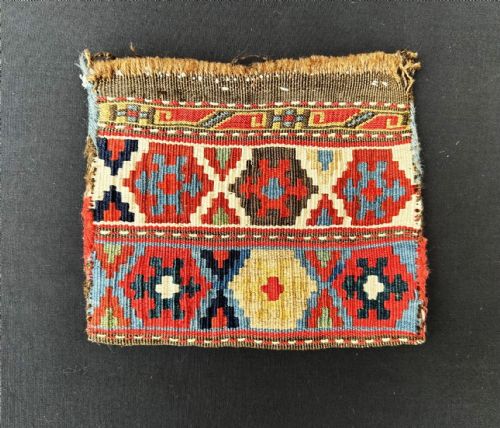
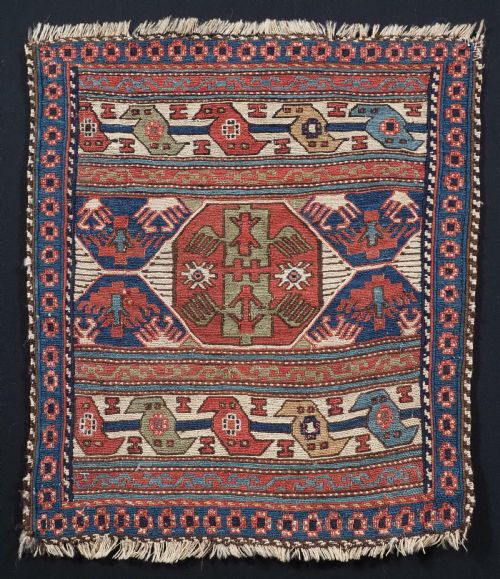
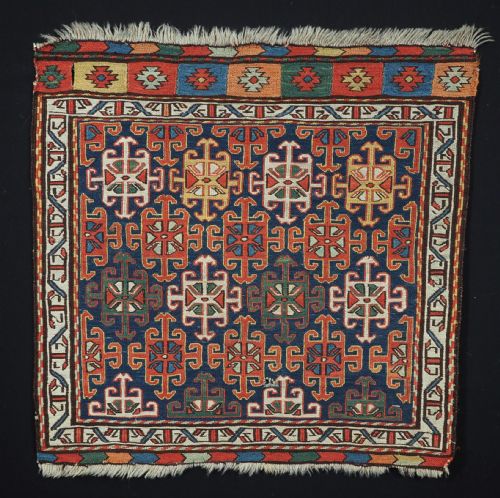
When you search for a caucasian soumak textile, you encounter flat-woven tribal pieces originating primarily from the nineteenth century, including items made around 1850, 1860, 1870, 1880, and 1890. The selection on this page consists largely of bags, bag faces, vanity bags, saddlebags, and panels produced by nomadic groups such as the Shahsavan nomads of the Moghan region in Azerbaijan.
These objects take various functional forms tied to nomadic life, such as khorjin saddlebags, half-saddlebags, and mafrash storage panels. Stylistically, they fall under categories like Caucasian Tribal, Shahsevan Tribal, and Persian Tribal, often displaying distinct regional motifs including birds and dragons.
The pieces reflect the heritage of Caucasian and Persian tribal weavers who utilised flat-weaving traditions to create durable, portable items. Buyers look to these textiles for their authentic tribal designs and the tangible connection they offer to nineteenth-century nomadic culture.
How they were made
The construction relies on wool and hand-spun wool manipulated through the specific soumak flat-weaving technique. This method involves wrapping weft threads around the warp beams in a way that creates a textured, durable surface on the front while leaving floats of yarn on the reverse.
Weavers employed natural dyes and vegetable dyes to colour the wool, producing deep, rich hues that age gracefully over time. These materials and techniques combine to create robust tribal textiles capable of withstanding the rigours of nomadic existence.
Nomadic weavers occasionally embedded hidden bird and dragon motifs into their bags, ensuring household goods came with built-in mythical protection.
What varies in quality
Quality in a caucasian soumak textile depends heavily on the crispness of the weave and the complexity of the design elements, such as well-defined bird and dragon motifs. Finer wrapping and tighter structure distinguish superior examples from simpler or more loosely woven pieces.
The depth and variety of natural and vegetable dyes also dictate the visual appeal of an item. Pieces retaining vibrant, well-matched colour palettes without heavy fading or harsh chemical alterations sit at the upper end of the range.
The Caucasian Soumak Textile Glossary
- Soumak
- A flat-weaving technique where coloured weft threads are wrapped around the vertical warp threads in decorative patterns. This method produces a durable fabric with a smooth face and unclipped yarn floats on the back.
- Khorjin
- A traditional double saddlebag used by nomadic groups for transport and storage. These items are often divided into separate faces that survive independently today.
- Mafrash
- A large rectangular storage bag or hamper panel used in nomadic households for bedding and clothing. They are typically constructed from multiple flat-woven panels stitched together.
- Shahsevan
- A nomadic confederation originating from the Moghan region in Azerbaijan and parts of the Caucasus. Their textiles are particularly celebrated for precise soumak weaving and imaginative zoomorphic iconography.
- Warp
- The stationary vertical threads stretched on a loom that provide the structural foundation for the textile. The weft and wrapping threads are interlaced through these foundational yarns.
Caucasian Soumak Textile: Frequently Asked Questions
What is a soumak textile?
A soumak textile is a flat-woven fabric created by wrapping supplementary weft threads around warp threads during production. This technique results in a sturdy textile with a distinctive braided appearance on the front.
These pieces were traditionally made by nomadic tribes in regions such as the Caucasus and Azerbaijan for practical use within daily life.
How were these bags used?
Nomadic groups utilised these bags for transporting belongings on pack animals and for storing household goods inside tents. Items like khorjin saddlebags and vanity bags held personal possessions during seasonal migrations.
Over time, many of these functional containers were separated into individual bag faces or panels as they transitioned into decorative objects.
How do I date these textiles?
Dating relies on stylistic analysis, material composition, and structural characteristics typical of nineteenth-century production. Pieces on this page commonly date from decades such as the 1850s, 1870s, or 1890s based on wool preparation and dye usage.
Natural and vegetable dyes combined with specific tribal motifs help contextualise the era in which the weaver worked.
How do I care for a textile?
Preserving a antique flat-weave involves keeping it away from direct sunlight to protect the natural and vegetable dyes from fading. Gentle vacuuming with a low suction setting helps remove dust without damaging the wool fibres.
Mounting the textile properly on a wall or placing it in a low-traffic area prevents excessive wear on the hand-spun wool structure.