
Traditional Wooden Office Chair
A traditional wooden office chair brings solid timber construction and practical seating to a workspace, rooted in centuries of desk furniture design.
Traditional Wooden Office Chair
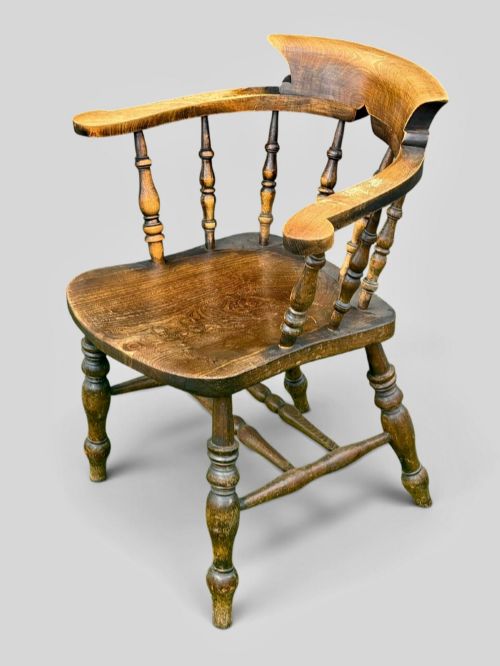
A traditional wooden office chair encompasses desk chairs, armchairs, and desk armchairs designed for workspace utility. When searching for a traditional wooden office chair, buyers encounter pieces originating primarily from the Victorian and Edwardian eras, alongside pieces dated across the nineteenth and early twentieth centuries.
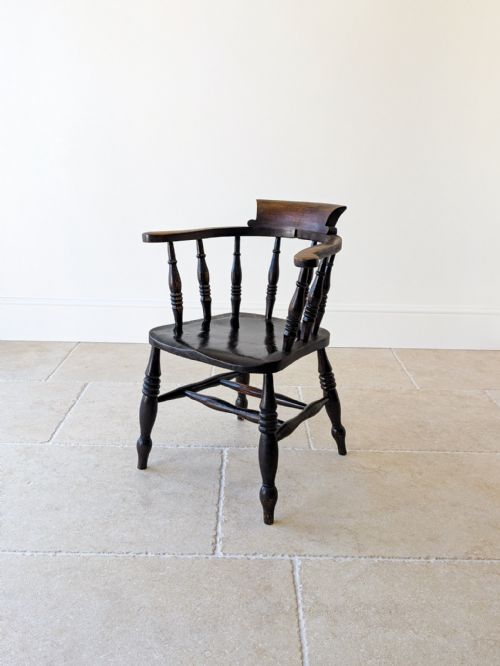
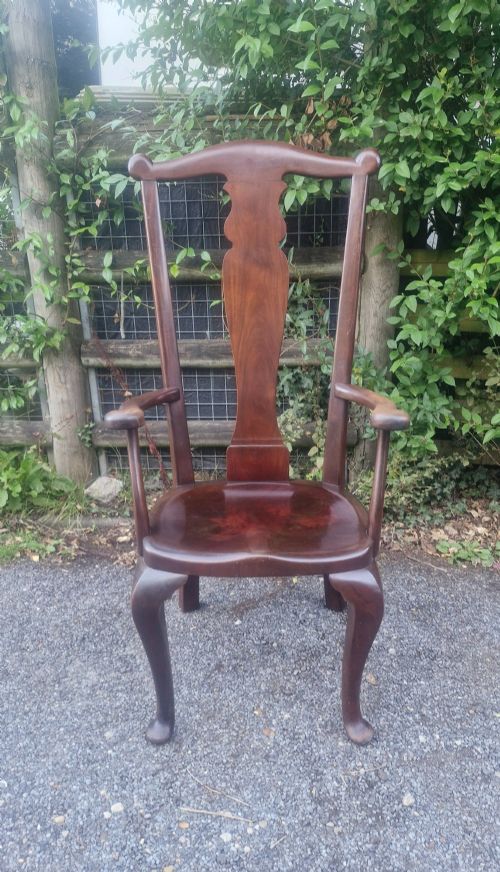
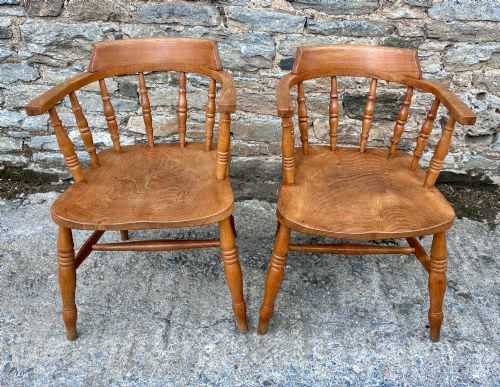
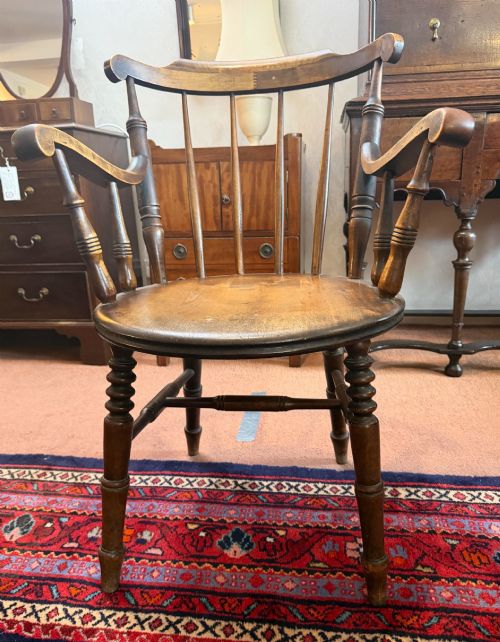
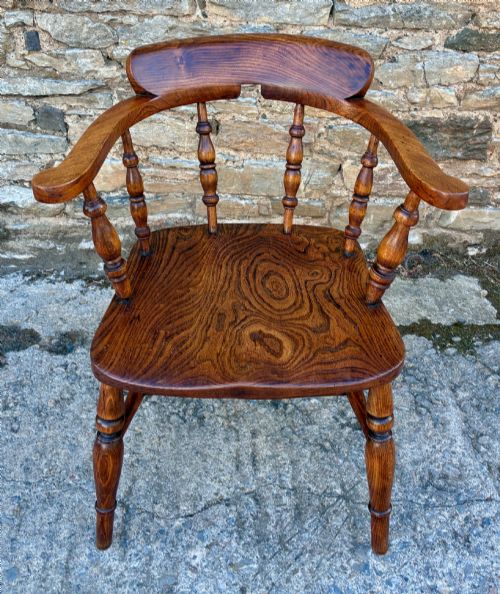
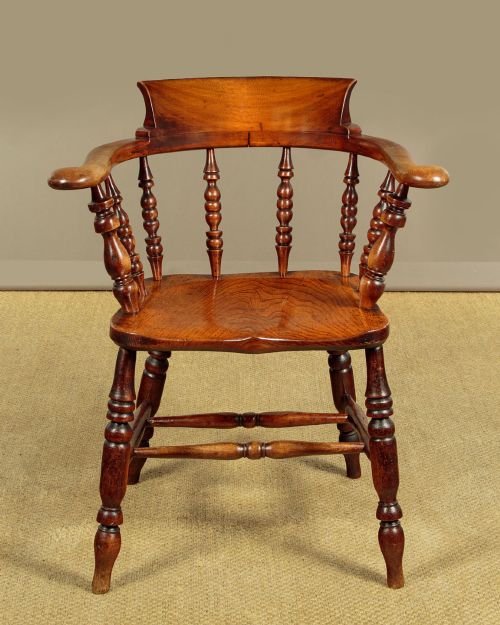
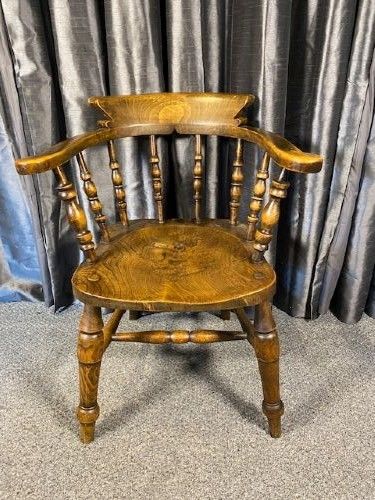
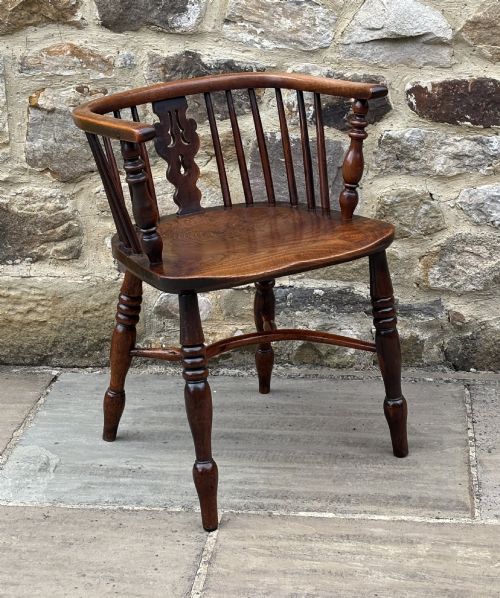
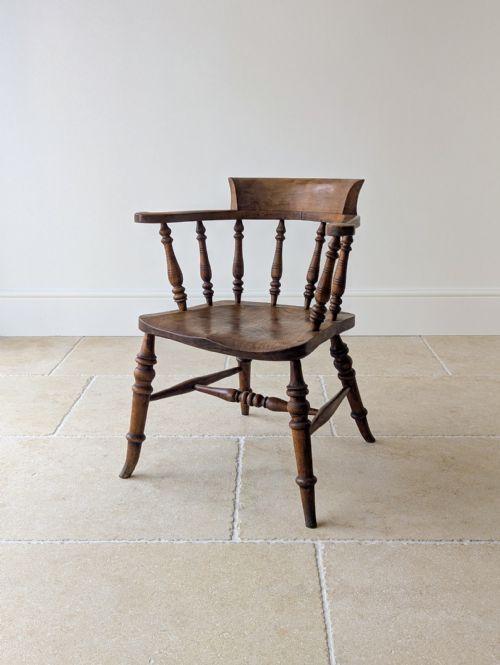
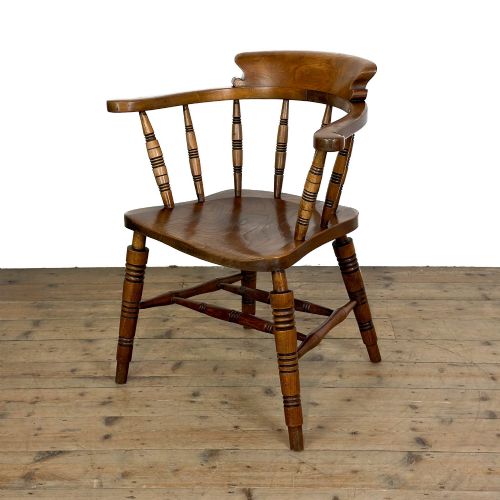
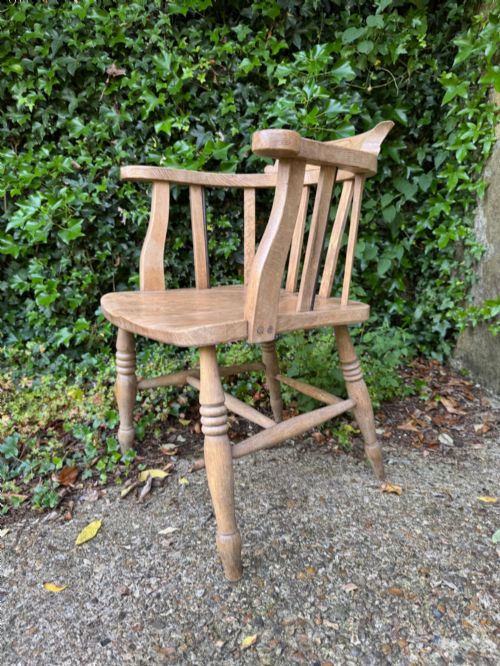
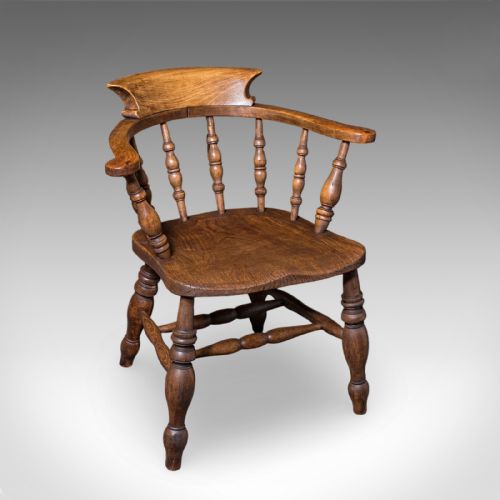
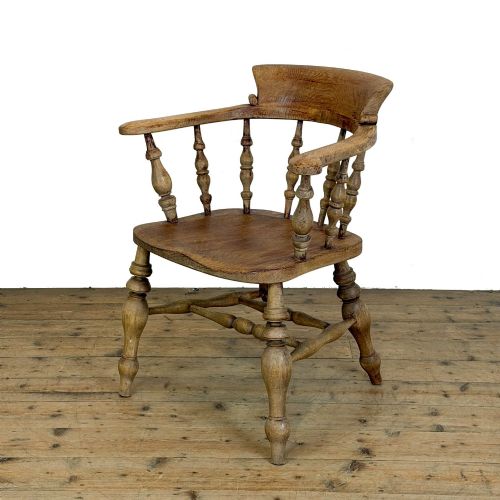
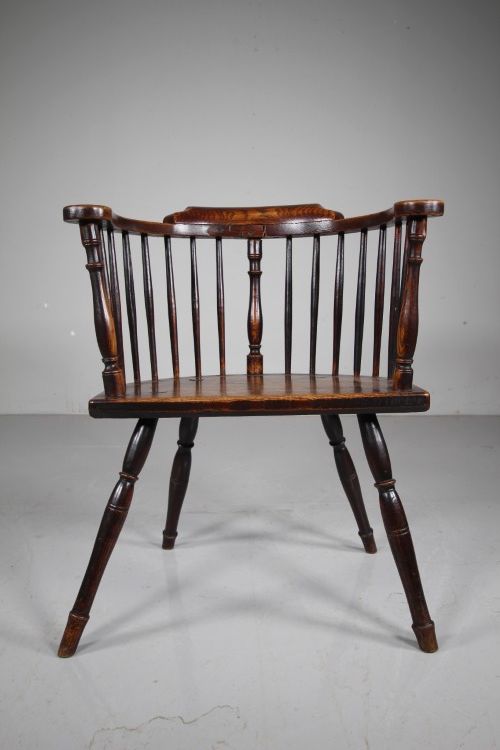
The selection includes Captain's chairs, smoker's bows, and Windsor forms alongside revival styles such as Chippendale, Queen Anne, and Regency. These seating options emerge from English provincial and country traditions as well as formal mahogany framing.
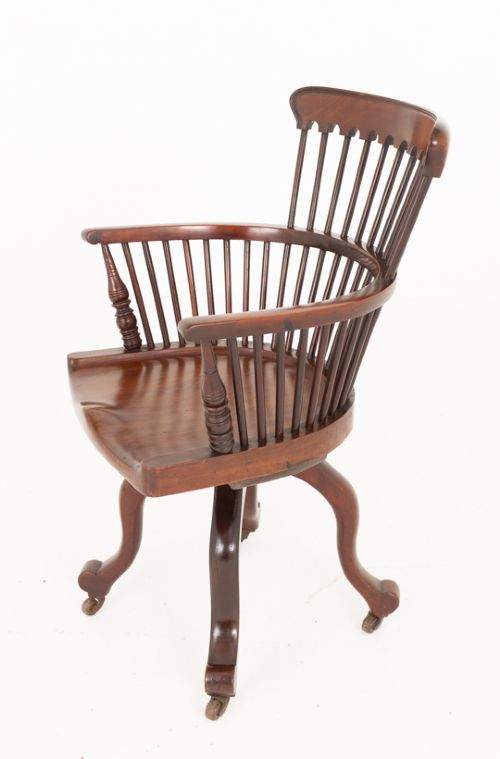
The most frequent examples combine sturdy wood species with functional seating designs intended for daily use at a desk. These chairs span revolving swivel mechanisms, high-backed mahogany frames, and low-slung elbow chairs.
Materials and Technique
Makers constructed traditional wooden office chairs using domestic timbers including elm, ash, beech, oak, and mahogany, often combining contrasting woods within a single frame. Elm and ash provided the necessary strength for bent components and seats, while mahogany and oak served formal desk environments.
Joinery methods relied on sturdy dowels, mortise and tenon joints, and steam bending for curved captain's chair rails and smoker's bow armrests. Brass fittings appeared on swivel mechanisms and castors, while leather and fabric inserts added cushioned seating surfaces to wooden frames.
Several captains chose a sturdy elm bow for their office.
Quality and Construction
The distinction between tiers rests upon timber selection and the integrity of the joinery beneath the seat. Dense grains of yew or well-figured mahogany separate refined desk furniture from simpler provincial workshop output.
Proportion and execution define the hierarchy, where fluidly steam-bent armrests and balanced swivel mechanisms demonstrate superior craftsmanship. The retention of original patination on the timber surface further separates preserved examples from heavily restored pieces.
The Traditional Wooden Office Chair Glossary
- Captain's chair
- A sturdy low-backed wooden armchair with a continuous curved armrail supported by multiple spindles. This form evolved from nineteenth-century Windsor designs to serve office and domestic workspaces.
- Smoker's bow
- A robust wooden armchair featuring a rounded spindle back and a deep saddle seat. It shares similarities with the captain's chair and often appears in provincial settings.
- Windsor chair
- A chair built with a solid wooden seat into which the legs and back spindles are bored directly. These pieces rely on turned wooden components and steam-bent framing.
- Swivel chair
- An office seat mounted on a revolving mechanism that allows the user to turn. Edwardian examples incorporate timber frames atop metal or wooden central screws and castors.
Traditional Wooden Office Chair: Frequently Asked Questions
What is a traditional wooden office chair?
A traditional wooden office chair is a work seat built from timber such as elm, oak, beech, or mahogany, designed for use at a desk. These pieces include swivel chairs, captain's chairs, and smoker's bows dating from the nineteenth and early twentieth centuries.
Such chairs combine functional seating ergonomics with period woodworking techniques. They reflect the evolution of workspace furniture before the advent of modern steel and moulded plastic.
How do I date a wooden office chair?
Dating relies on identifying stylistic revival markers, wood species, and construction hardware like brass swivel mechanisms or iron screws. Victorian and Edwardian examples often display distinct turnings and upholstery choices that align with their era of manufacture.
Examining the wear patterns on the seat and the construction of the underframe helps confirm age. Provincial pieces from the nineteenth century retain hand-worked tool marks distinct from later mass-produced office seating.
Where were these office chairs used?
These chairs served in professional offices, libraries, counting houses, and country estate writing rooms. Their sturdy construction made them ideal for long hours of administrative work.
Domestic studies and rural workshops also utilised these designs for daily writing and clerical tasks. The inclusion of arms and revolving bases provided practical comfort for working environments.
How do I care for a wooden office chair?
Caring for timber office furniture involves maintaining stable indoor humidity and applying appropriate wax polish to nourish the wood. Avoid placing antique chairs near direct heat sources that could dry out the timber or split the seat.
Regular dusting with a soft cloth preserves the existing surface patination. Leather and fabric elements require gentle cleaning suited to their specific textile composition.