


Late Victorian Captains Chair
A late Victorian captains chair offers sturdy comfort and timber character, combining swivel mechanics or Windsor forms for daily study.
Late Victorian Captains Chair
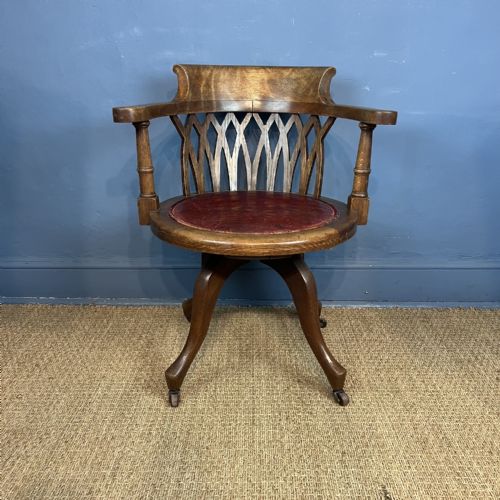
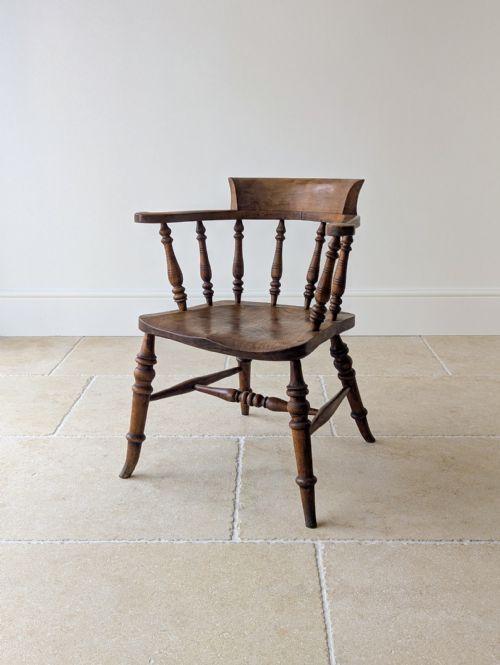
A late Victorian captains chair is a robust seating form originating in the nineteenth century, designed primarily for offices, studies and libraries. The pieces grouped under this search span the Victorian era, specifically drawing from the 1870s, 1880s, 1890s and around 1900. You encounter them as revolving desk chairs, smokers bows and solid timber armchairs.
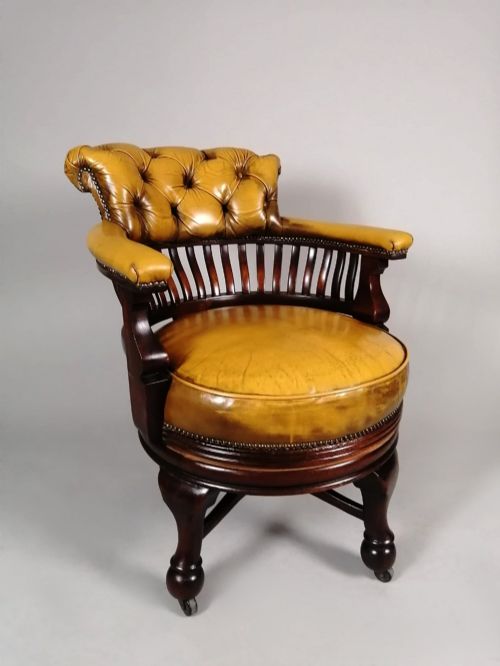
Most examples on this page combine traditional Windsor framing with functional swivel mechanisms or sturdy four-legged bases. Woods such as elm, beech, oak and walnut dominate the construction, often paired with leather upholstery or brass fittings. They function equally well as practical desk seating or substantial decorative armchairs in period interiors.
How they were made
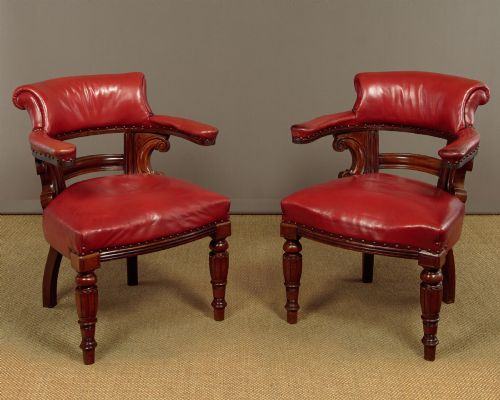
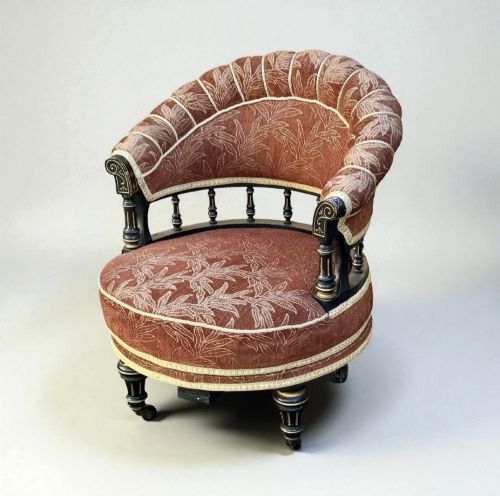
Upholstered variants incorporate stitched leather pads secured with brass tacks over supportive framing. Ebonised finishes and carved details appear on specific aesthetic movement pieces, while country workshops relied on solid pegged joints to ensure long-term stability.
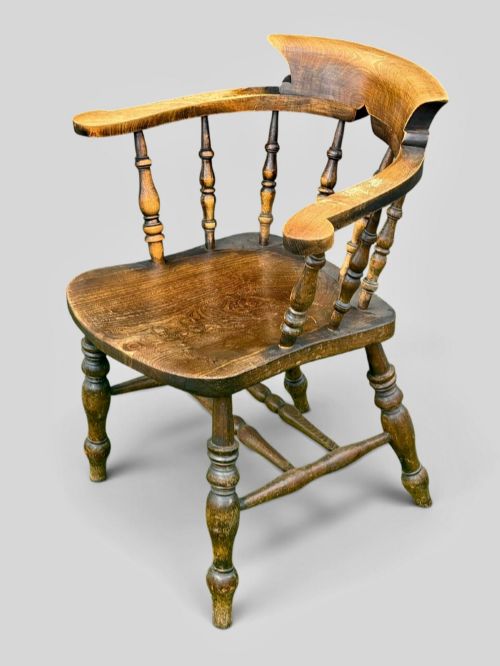
Several chairs feature well-worn saddle seats shaped by generations of industrious sitters.
What varies in quality
The sophistication of the timber selection and the complexity of the turning dictate the standing of each piece. Plain utility seating differs significantly from sculptural burr elm or walnut armchairs bearing maker attributions.
Mechanical complexity also divides the range, moving from simple static farmhouse seating to sophisticated revolving desk armchairs with integrated brass hardware. The depth of patination and the integrity of the original wood finish complete the distinction.
Edward William Godwin
The Late Victorian Captains Chair Glossary
- Smokers Bow
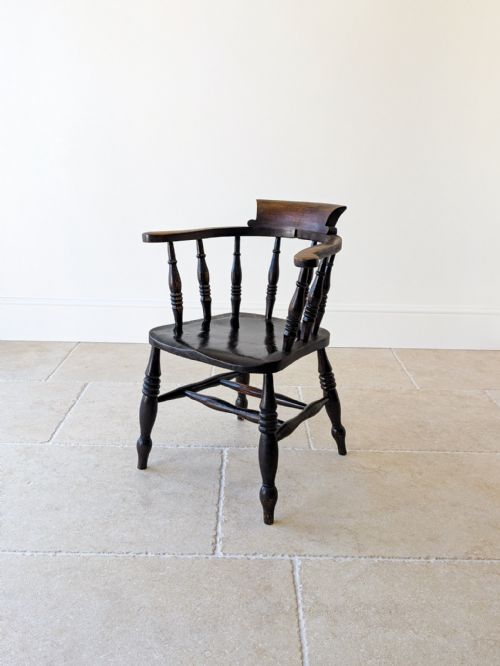
- A low-backed Windsor armchair with a continuous curved armrail, commonly found in nineteenth-century studies and public houses.
- Revolving Desk Chair
- An office seat mounted on a central pivot mechanism, allowing rotation and frequently featuring adjustable height.
- Windsor Chair
- A wooden seating form constructed with a solid saddle-shaped seat into which the legs and back spindles are directly bored.
- Aesthetic Movement
- A late nineteenth-century design style focusing on visual and material qualities rather than narrative subject matter.
Late Victorian Captains Chair: Frequently Asked Questions
How do I identify a late Victorian captains chair?
Look for nineteenth-century construction methods, including traditional Windsor framing, turned spindles and solid timber seats. The presence of oak, elm, beech and brass revolving mechanisms typically points to this period.
Examine the overall form for typical Victorian proportions, low spindle backs and sturdy armrests designed for desk use.
Were these chairs used only at desks?
While many examples feature swivel bases and serve as desk chairs, others are built on solid four-legged frames for general parlour or library use. Windsor and farmhouse variants provided sturdy seating throughout the home.
Their robust timber construction made them versatile enough for studies, smoking rooms and everyday domestic spaces.
How do I care for the leather upholstery?
Maintain leather pads by keeping them away from direct heat sources and applying appropriate conditioning balms periodically. This prevents the hide from drying out and cracking over time.
Ensure that brass tacks and surrounding timber frames remain dry during routine dusting to protect the original materials.
Are swivel mechanisms original to the period?
Many late nineteenth-century desk chairs incorporate original iron and brass swivel mechanisms designed to rotate and tilt. These functional components reflect the industrial innovations of the era.
Inspect the pivot hardware underneath the seat to understand how the revolving motion operates on specific desk chair variants.