

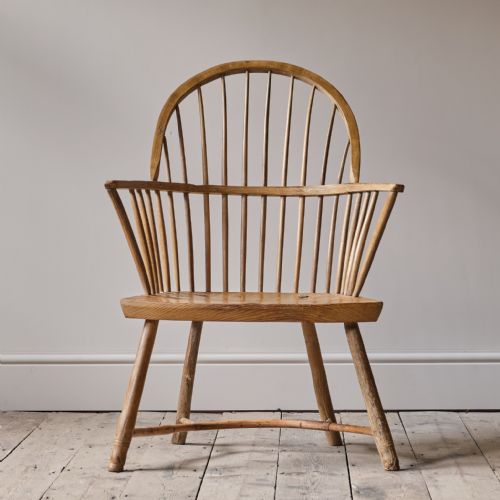
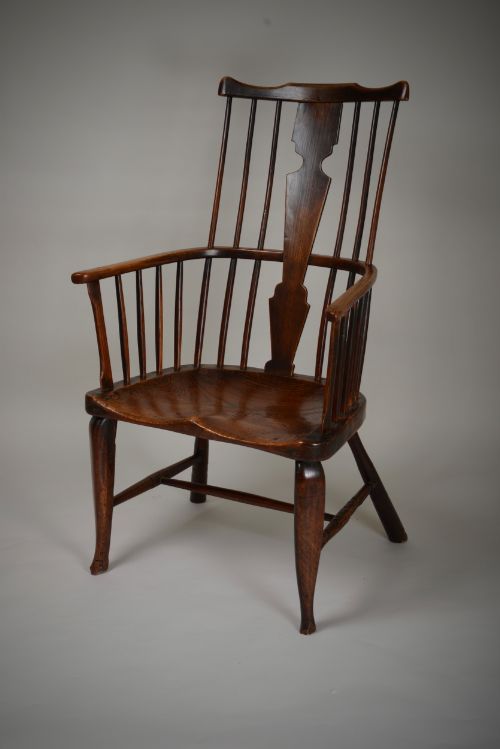
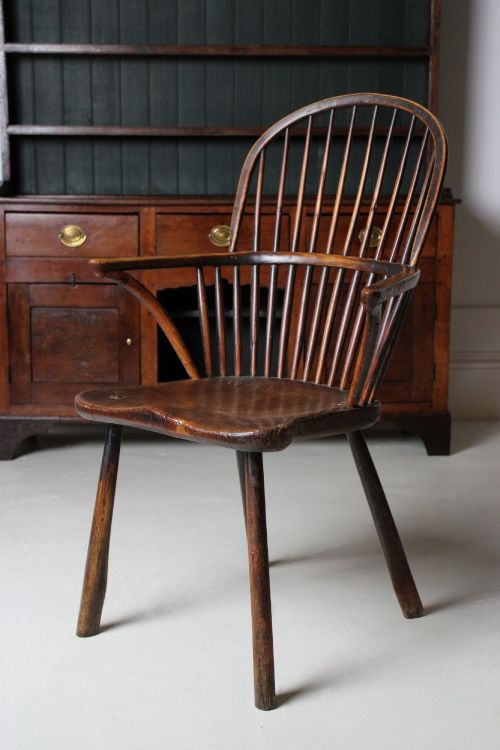
Rustic Elm Armchair
A rustic elm armchair brings tactile warmth and vernacular character to an interior through honest timber construction and regional design.
Rustic Elm Armchair
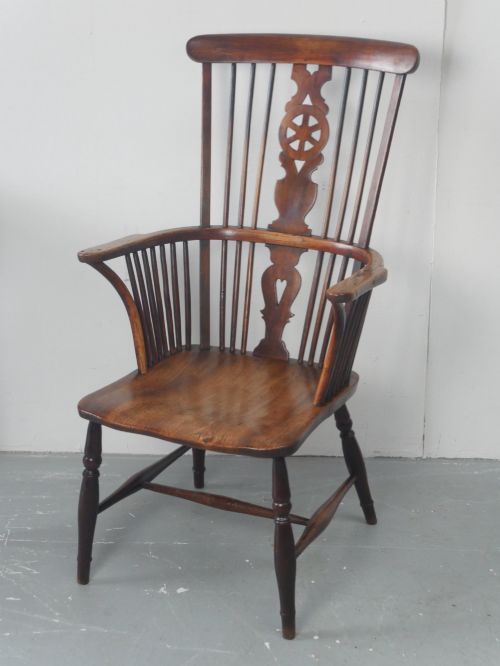
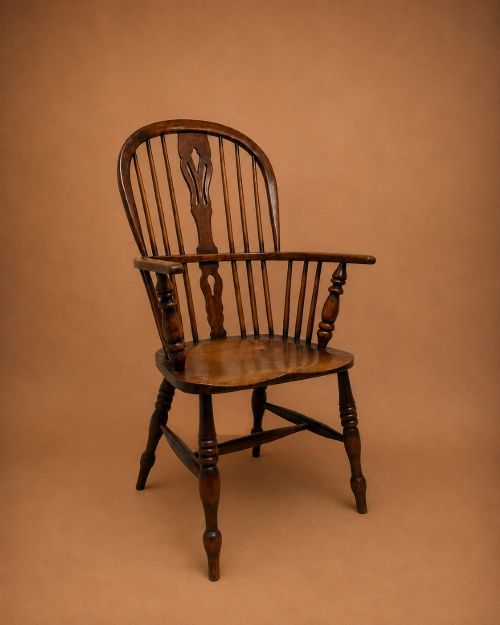
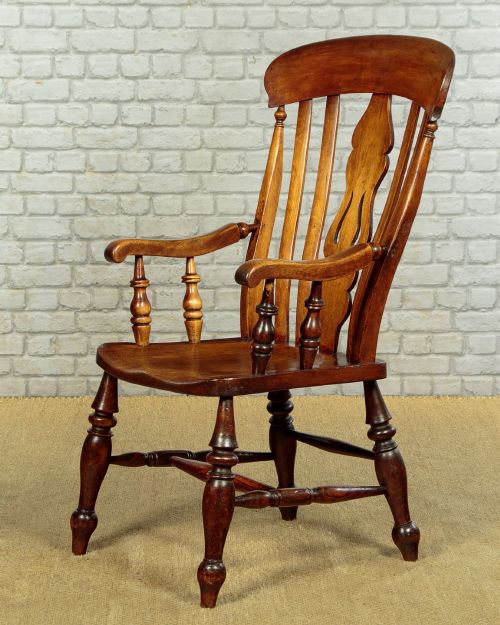
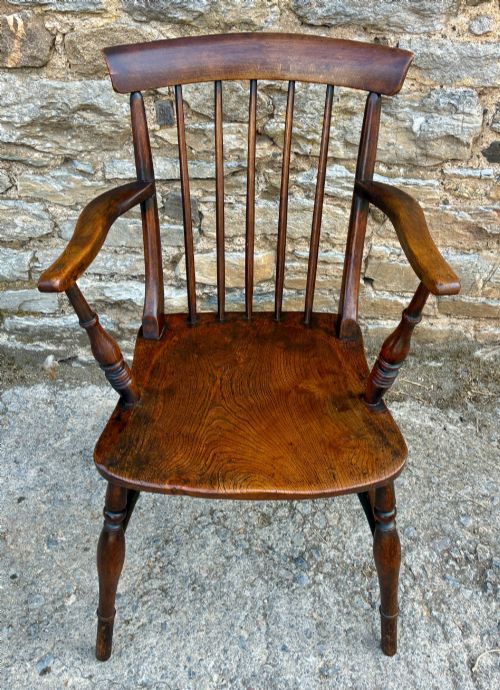
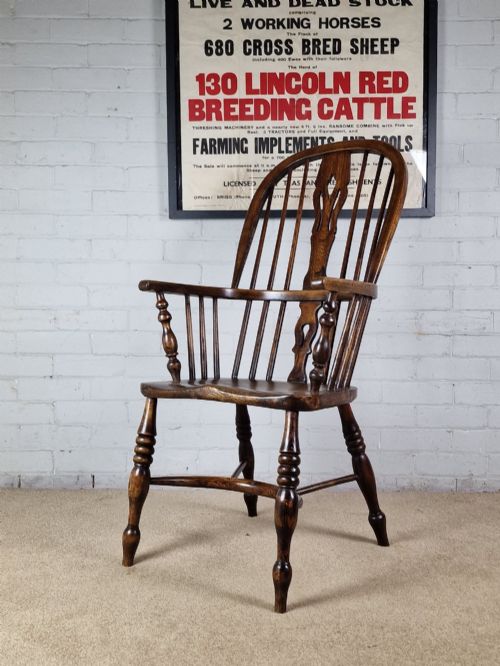
A rustic elm armchair is a traditional vernacular seating form, commonly found in farmhouse, kitchen and country settings across England. These pieces span periods from the eighteenth century through the Victorian era, encompassing regional styles such as West Country, Thames Valley, Lincolnshire and Nottinghamshire variants.
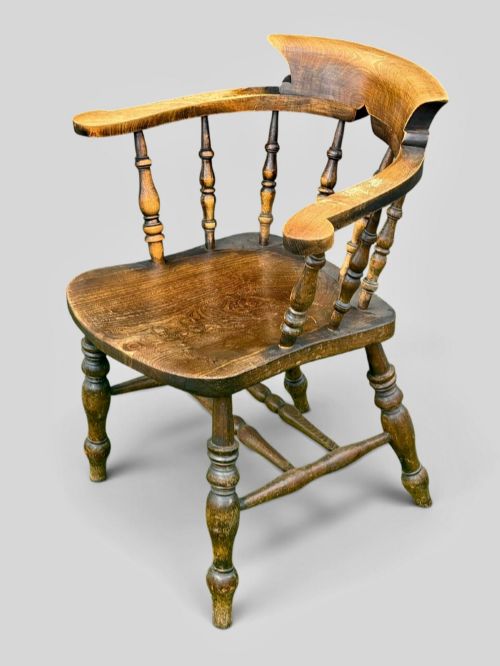
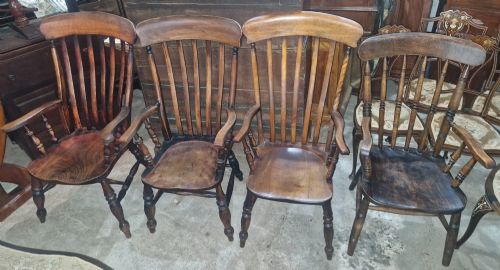
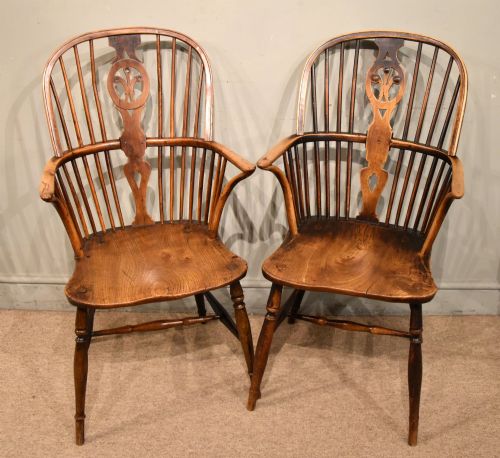
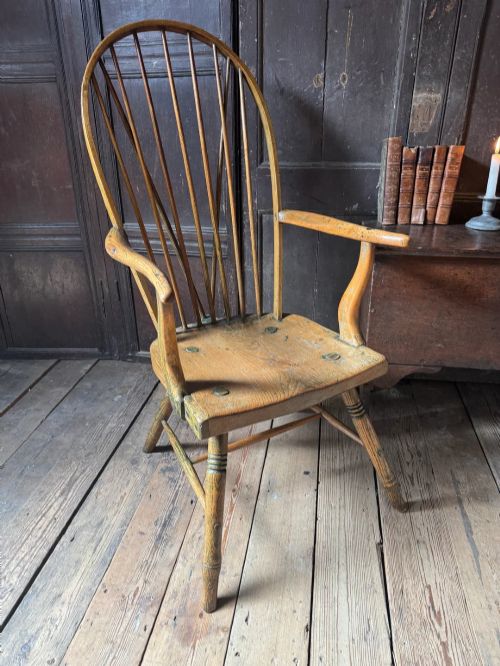
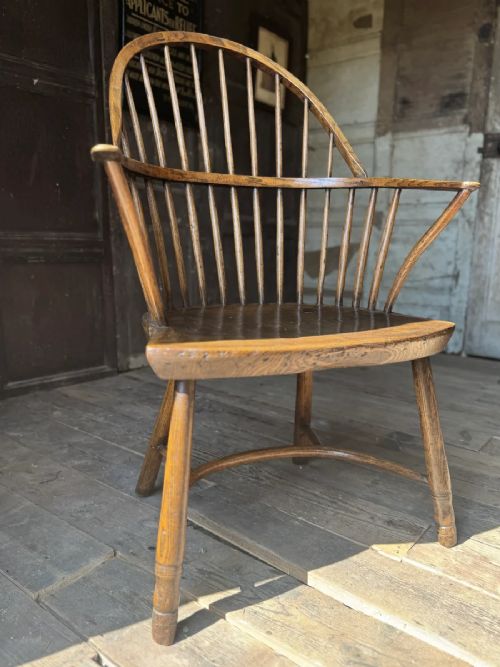
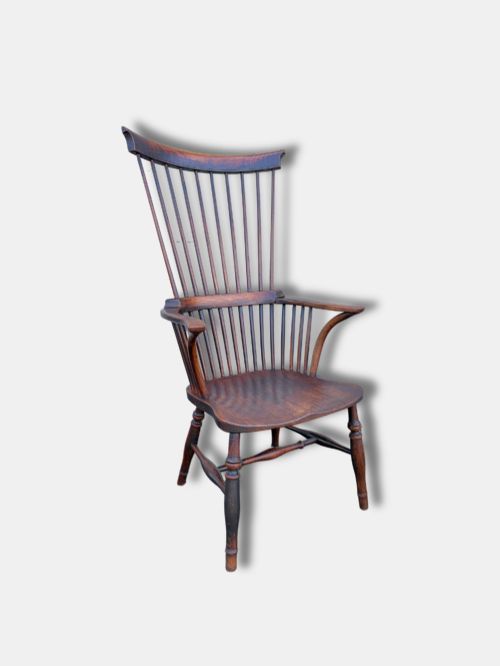
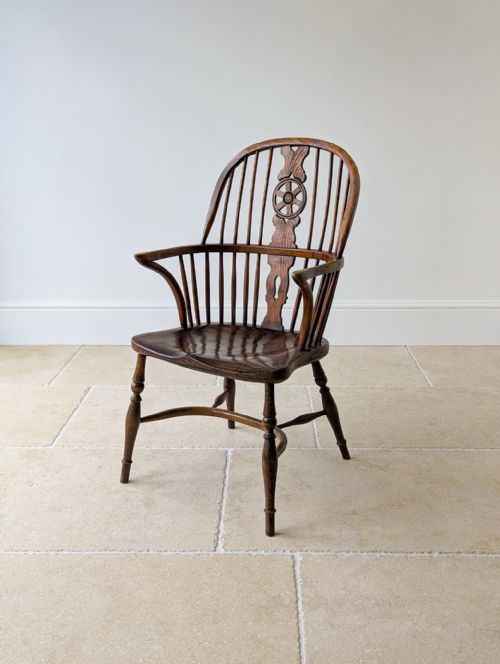
The versions most frequently met on this page include Windsor armchairs, smokers bows, comb backs, wheelbacks and rush-seated country chairs. They combine sturdy elm seats with complementary woods like ash, beech, yew or fruitwood, reflecting the practical choices of regional makers.
Materials and construction
Makers utilised dense elm for the solid plank seats, chosen for its interlocking grain that resisted splitting under heavy use. Spindles, bow backs and legs were frequently turned from tougher secondary timbers like ash, beech or fruitwood to provide structural resilience.
Joints relied on traditional stick and Windsor construction methods, pegging turned spindles directly into thick contoured seats. Regional workshops often added structural elements such as crinoline stretchers or steam-bent hoops to reinforce the high backs.
Distinctions in quality
Quality rests in the harmony of the timber selection and the purity of the regional form. Superior examples display richly figured elm grain on the seat plank alongside well-proportioned spindles and balanced hoop or comb backs.
The integrity of the original construction and the survival of a clean surface patina dictate the standing of a piece. Lower tiers often show heavy structural replacement, unsympathetic repairs or excessive surface stripping that removes historical character.
The Rustic Elm Armchair Glossary
- Windsor chair
- A chair built with a solid wooden seat into which the legs and back spindles are raked and wedged directly. This technique creates a sturdy framework without requiring a traditional box frame.
- Crinoline stretcher
- An arched or curved wooden brace connecting the legs of a chair to provide lateral stability. It often loops outwards towards the back legs, resembling the shape of a Victorian crinoline petticoat.
- Comb back
- A chair back featuring vertical spindles topped by a horizontal crest rail that resembles the shape of an eighteenth-century hair comb. This style provides high-backed support while maintaining an open silhouette.
- Smokers bow
- A low-backed Windsor armchair with a continuous curved armrail, historically popular in public houses and smoking rooms. It offers compact dimensions and robust arm support.
- Vernacular
- Objects designed and built by local craftsmen using regional traditions and readily available materials rather than following formal academic design canons.
Rustic Elm Armchair: Frequently Asked Questions
How do I care for a rustic elm armchair?
Keep the wood nourished by applying a traditional beeswax polish occasionally, avoiding silicone-based sprays that damage aged timber.
Position the chair away from direct heat sources and strong sunlight to prevent the elm seat from drying out or splitting.
Where were these chairs historically used?
These seating forms served multiple purposes in farmhouses, cottages, country kitchens and regional inns across Britain.
Their robust construction made them suitable for daily domestic tasks by the fireside or at the farmhouse dining table.
How can I tell which region a chair is from?
Regional attribution relies on specific turning details, wood combinations and structural traits unique to local workshops.
For instance, Thames Valley chairs often incorporate yew wood and delicate crinoline stretchers, whereas West Country pieces display distinct hoop proportions.