





Traditional Wooden Desk Box
A traditional wooden desk box brings centuries of fitted stationery storage and neat writing habits directly onto your modern table.
Traditional Wooden Desk Box
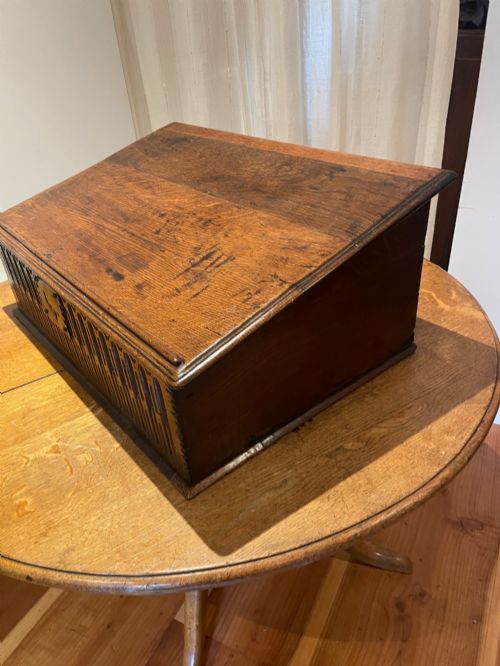
When you search for a traditional wooden desk box, you encounter a range of functional tabletop containers from periods such as the seventeenth century, the Georgian era, and the Victorian period. These pieces encompass writing slopes, stationary cabinets, Bible boxes, and table boxes designed to hold letters, documents, and writing implements.
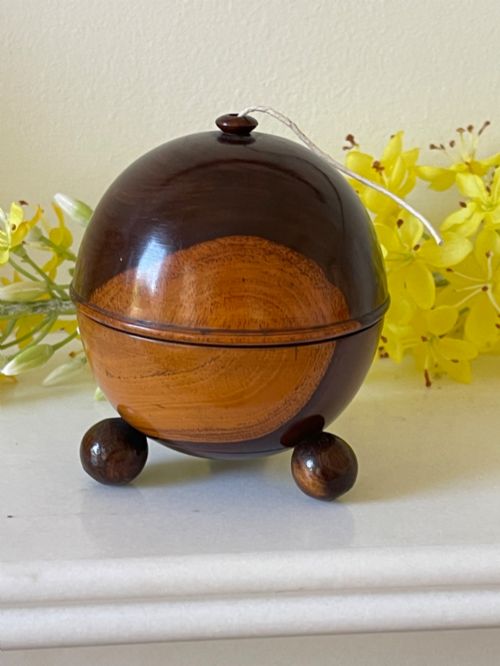
The versions you are most likely to meet on this page utilise durable timbers like oak and mahogany, often featuring internal drawers, fitted compartments, or brass details. Their forms span from rustic country styles and carved panels to refined rosewood slopes and mahogany butler trays.
How they were made
Carpenters constructed these boxes using solid timbers such as oak, mahogany, pine, and rosewood, frequently shaping them with hand-cut joints and carved decoration. Workshops integrated sturdy iron hardware and brass hinges to secure lids and internal compartments.
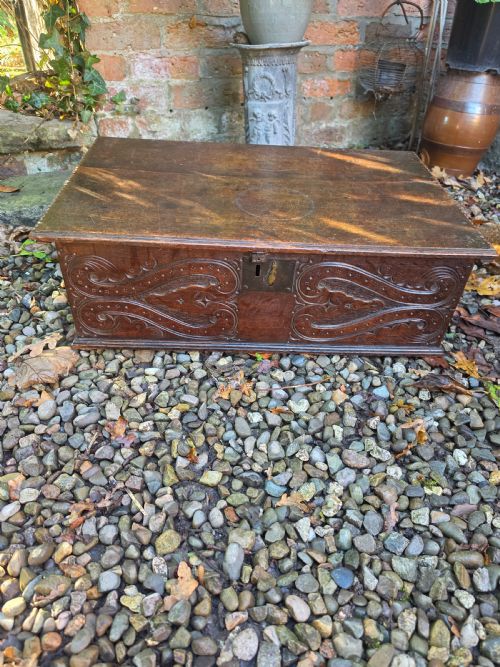
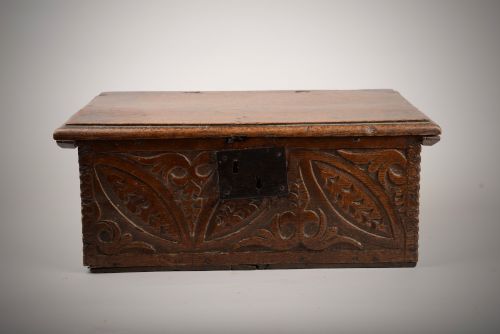
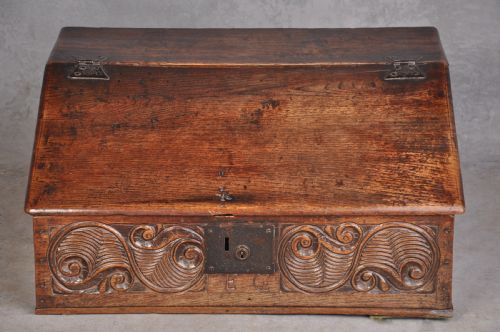
Makers applied glass, paper linings, and mother of pearl inlay to elevate the internal organisation of writing slopes and stationery cabinets. Selected pieces exhibit detailed surface carving, as seen on seventeenth-century table boxes and twentieth-century desk tidies.
Traditional Wooden Desk Box Retail Price Guide 2026
Typical asking prices for traditional wooden desk box among the pieces listed under this phrase on Sellingantiques today, from the lower quarter to the upper quarter. They describe what is for sale here now, not the wider market.
What varies in quality
The distinction between standard containers and superior examples rests on the selection of timber and the precision of the joinery. Dense grain patterns in mahogany and quarter-sawn oak indicate careful material selection by the maker.
Refined pieces display integrated internal drawers, secure brass fittings, and crisp carving that remains sharp across centuries of handling. Simpler utilitarian trays rely on straightforward pine or oak construction without decorative embellishment.
The Traditional Wooden Desk Box Glossary
- Writing slope
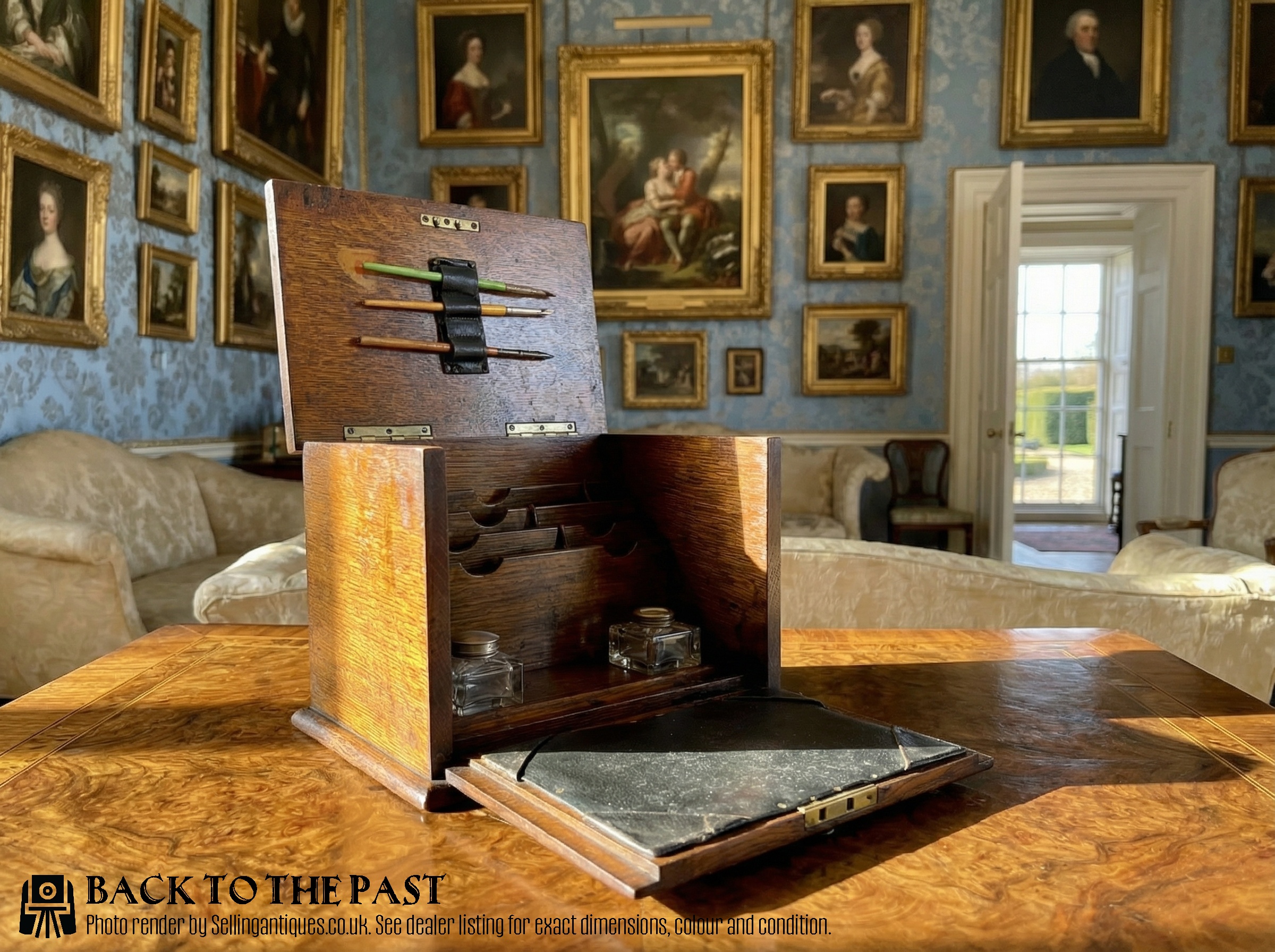
- A portable box with an angled lid designed to provide a flat writing surface when opened. These interiors typically house inkwells, pen trays, and secret compartments.
- Bible box
- A sturdy wooden container historically utilised to store household religious texts and important documents. They often feature hinged lids and sloping tops suited for reading.
- Butler tray
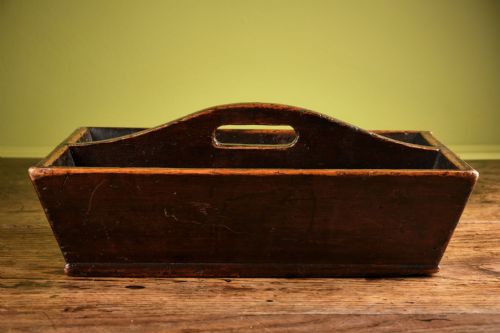
- A shallow wooden tray constructed for carrying cutlery or correspondence, sometimes paired with a folding stand. They utilise robust timbers like mahogany or oak.
- Table box
- A compact storage chest built for placement on desks or side tables to organise small papers and valuables. Early examples frequently include internal drawers.
- Stationery cabinet
- An upright wooden box featuring shelves or pigeonholes designed to sort letters and writing paper. These pieces became prominent in the late nineteenth and early twentieth centuries.
Traditional Wooden Desk Box: Frequently Asked Questions
What is a traditional wooden desk box?
A traditional wooden desk box is a portable or tabletop container designed to store writing materials, letters, and documents. These pieces range from simple oak trays to fitted mahogany writing slopes.
Historically, they kept paperwork organised in homes and offices before fitted desk furniture became common. Today, they serve practical storage roles while displaying period cabinet-making techniques.
How do I date a wooden box?
Dating a wooden box involves examining the timber species, construction joints, and hardware style. Seventeenth-century examples often use heavy oak with hand-carved panels.
Victorian and later pieces frequently utilise rosewood, mahogany, or pine with machine-sawn elements and brass inlays. Comparing these physical traits to documented periods clarifies the box's age.
Were these boxes used for writing?
Many of these boxes served multiple functions, including letter writing, document storage, and Bible keeping. Writing slopes specifically open to reveal an angled surface designed for composition.
Other variants, such as stationery cabinets and table boxes, focused on sorting paper rather than providing a writing surface. Their internal layouts reflect the specific administrative needs of their period.
How do I care for antique wood?
Caring for antique wood requires maintaining stable indoor humidity and avoiding direct sunlight. Gentle cleaning with a dry or slightly damp cloth preserves the original polish.
Applying occasional appropriate wax helps protect dry timbers like oak and mahogany without building up heavy residue. Careful handling of brass hinges and locks ensures the longevity of moving parts.