
Traditional Windsor Side Chairs
Traditional windsor side chairs are sturdy vernacular seating pieces defined by their distinctive pegged construction and comfortable wooden seats.
Traditional Windsor Side Chairs
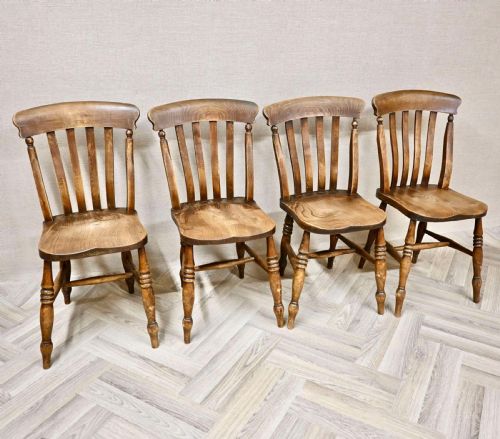
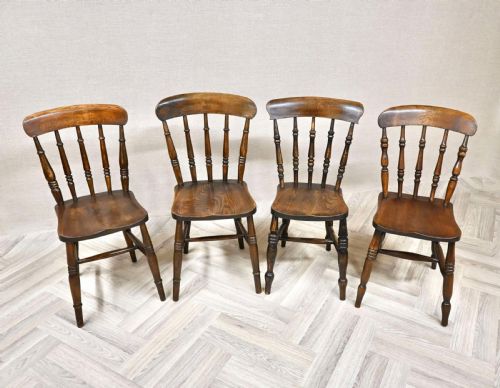
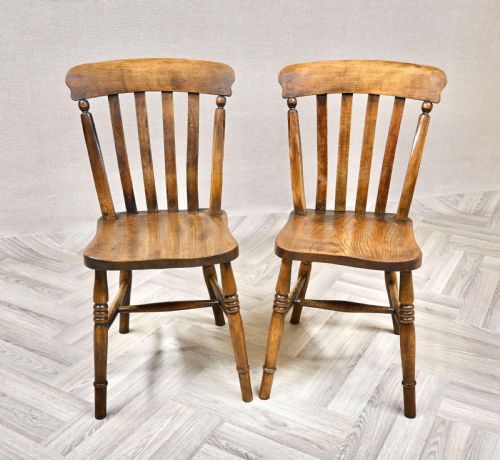
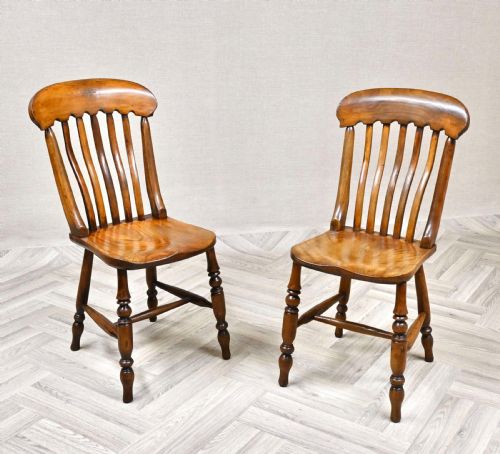
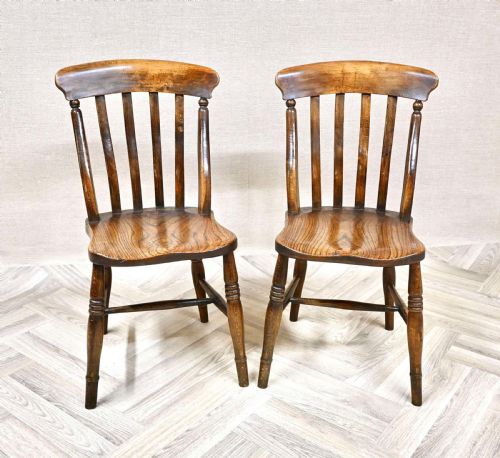
Traditional windsor side chairs are robust vernacular seating forms that emerge predominantly from the nineteenth century in various regional English styles.
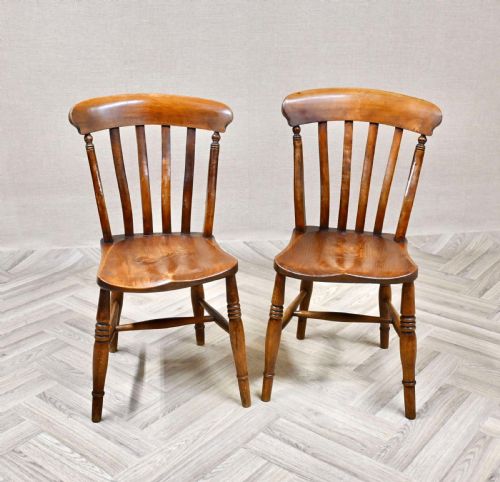
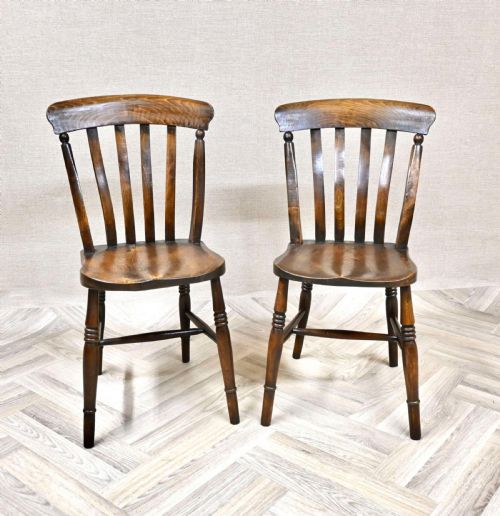
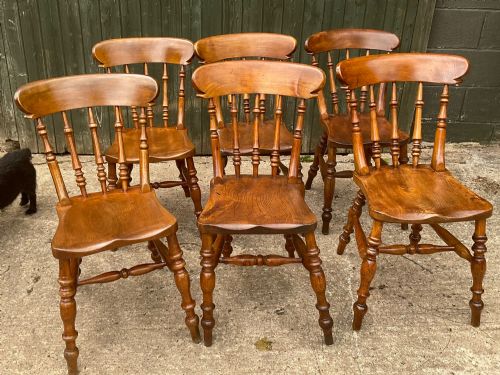
You are most likely to encounter nineteenth century examples shaped as kitchen dining chairs, often appearing in pairs or larger sets.
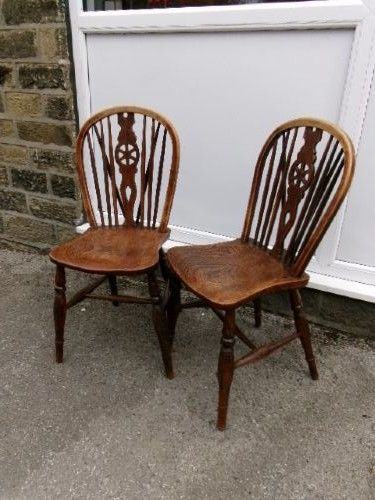
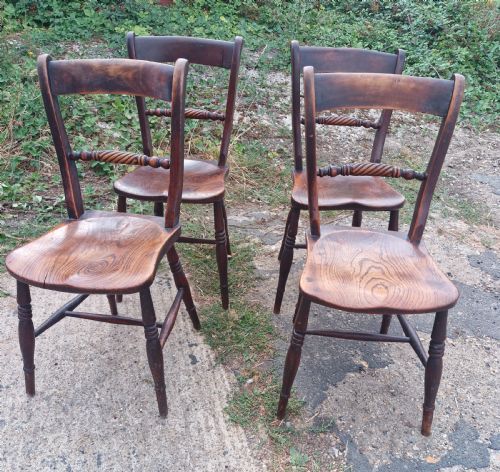
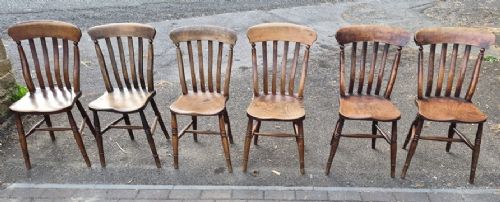
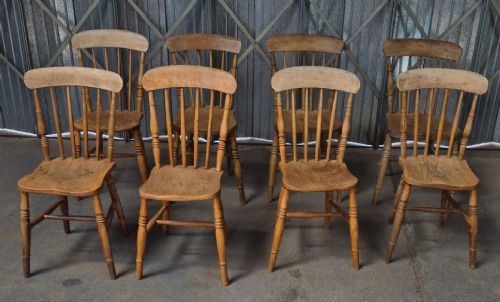
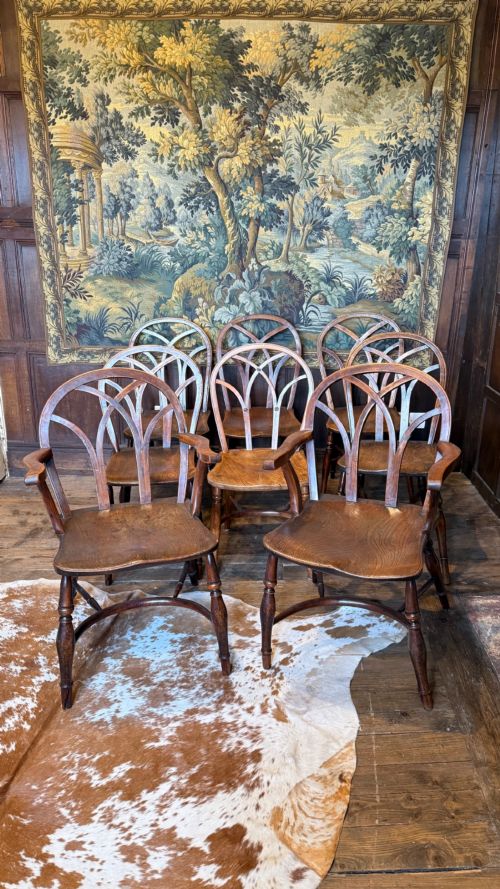
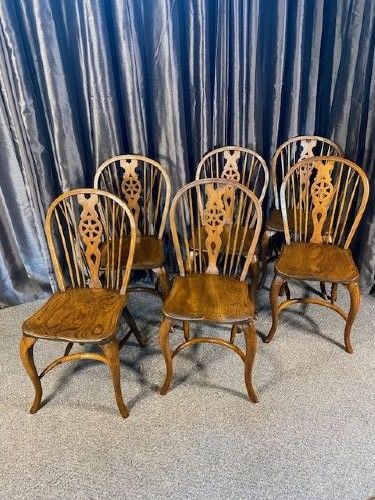
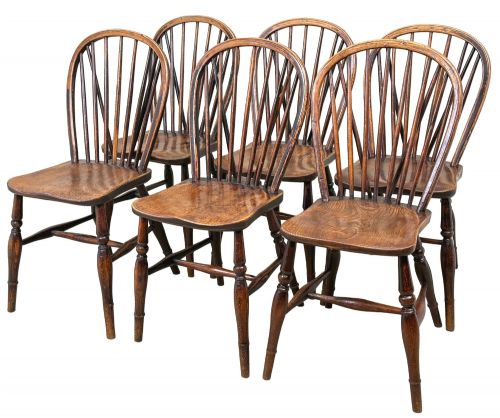
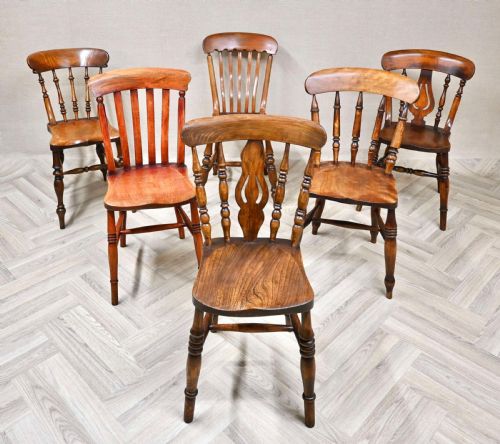
The regional variations encompass Thames Valley stick backs, lathbacks, wheelbacks, and comb backs constructed for everyday domestic use.
Materials and construction
These chairs combine multiple timbers, typically employing elm for the carved solid seats alongside ash, beech, fruitwood, and oak for the spindles, legs, and bentwood bows.
The construction relies on socketing turned legs and back spindles directly into a thick wooden seat using wedged tenons for lasting stability.
Penny seats feature a neat circular depression carved into the wood, proving that comfort mattered just as much in the dairy as in the parlour.
Determinants of quality
Quality rests on the selection of timber contrasts, particularly richly figured elm seats paired with finely turned ash or yew spindles.
The sophistication of the back design and the grace of the leg turnings distinguish superior workshop output from simpler utilitarian seating.
The Traditional Windsor Side Chairs Glossary
- Lathback
- A chair back featuring a central vertical slat, or lath, framed by upright spindles. This design provides robust vertical support for everyday dining.
- Wheelback
- A Windsor chair back incorporating a pierced wheel-shaped splat. It is a defining decorative motif of nineteenth century vernacular seating.
- Comb back
- A chair featuring a low back surmounted by a horizontal headpiece resembling a comb. Spindles rise through the seat to meet this top rail directly.
- Penny seat
- A wooden seat featuring a circular depression carved into the centre. This shaping provides ergonomic comfort for the sitter.
- Stick back
- A chair back constructed from plain turned spindles without a solid central splat. This form prioritises simple structural integrity.
Traditional Windsor Side Chairs: Frequently Asked Questions
How do I identify a traditional windsor side chair?
These chairs are identified by individual components socketed directly into a solid wooden seat rather than a continuous frame. They combine turned legs, spindles, and bentwood elements.
Look for contrasting timbers, such as elm seats paired with ash or beech framing, which indicate traditional regional British vernacular construction.
What periods do these chairs date from?
The available pieces span from the eighteenth century through the nineteenth century and into the early twentieth century. Nineteenth century examples predominate on this page.
Earlier eighteenth century pieces feature refined fruitwood and elm construction, while Victorian and later examples show robust farmhouse and kitchen utility styles.
Were these chairs used for dining?
Kitchen and farmhouse dining tables were their primary historical setting. Their sturdy construction made them ideal for daily domestic utility.
Sets ranging from pairs up to eight chairs reflect their long-standing use around large household tables.
How should I care for a wooden seat?
Maintain the timber by avoiding direct heat sources and sudden humidity changes that can cause wood to split. Regular dusting preserves the surface finish.
Apply occasional appropriate wax polish to nourish dry elm and hardwood surfaces without building up heavy residues.