



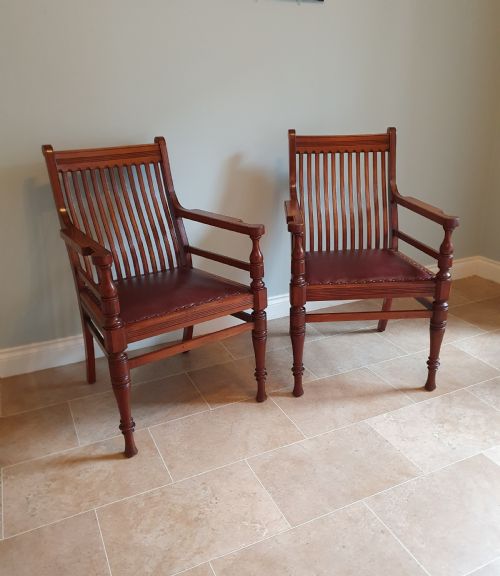


Traditional Walnut Side Chairs
Traditional walnut side chairs bring rich timber tones and classic seating into a room, offering sturdy utility with historic character.
Traditional Walnut Side Chairs
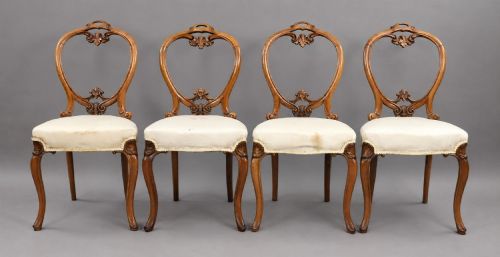
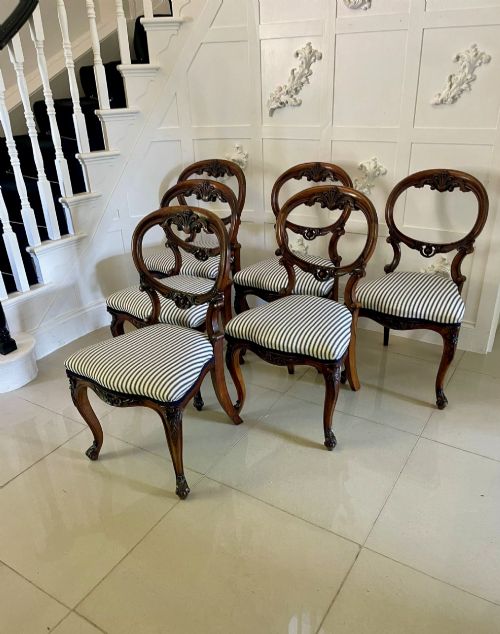
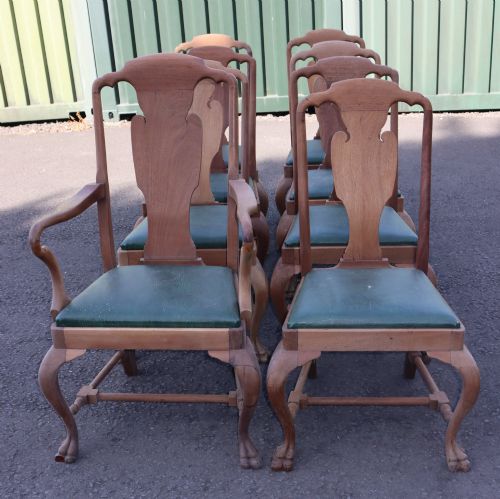
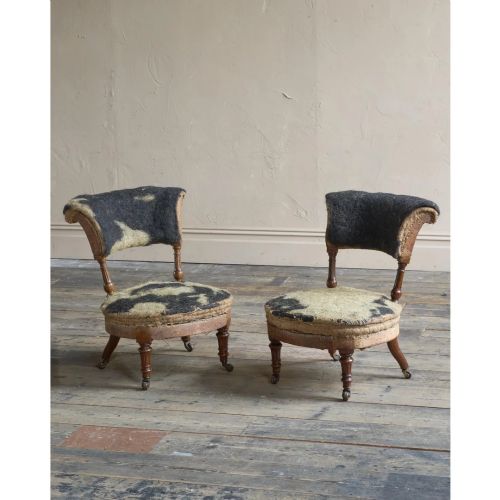
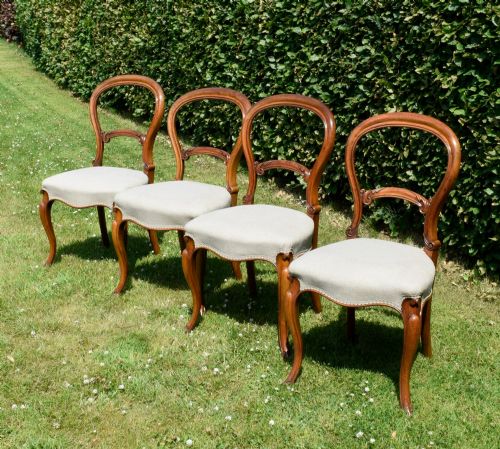
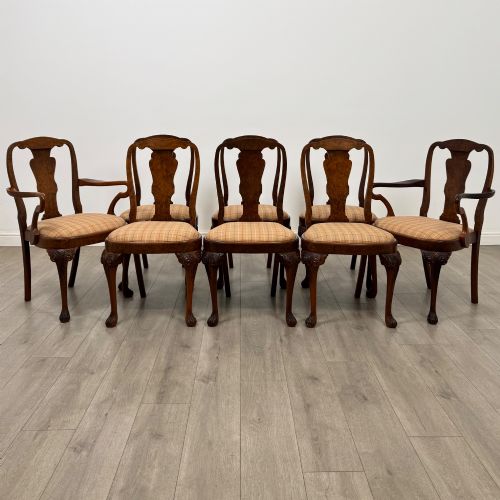
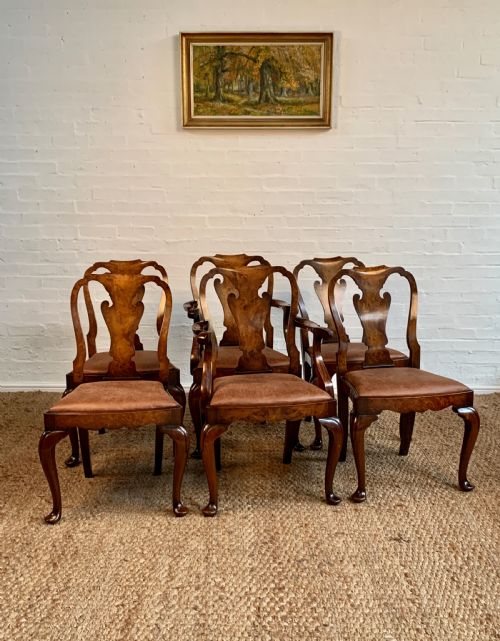
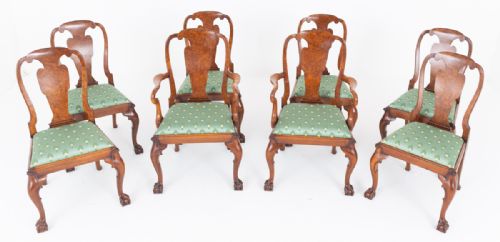
Traditional walnut side chairs encompass various seating forms designed for dining rooms, halls, and salons, appearing frequently in sets or pairs spanning the Victorian and Edwardian eras. The evidence shows these pieces heavily reflect revival styles, with Queen Anne and Chippendale influences dominating the selection alongside balloon back and high-back forms.
Buyers will encounter single chairs as well as large matched sets numbering up to fifteen pieces, often built with side or dining functions in mind. Woods range from plain walnut to figured burr walnut, sometimes paired with leather, needlepoint, or velvet upholstery.
Originating largely from the nineteenth and early twentieth centuries, these chairs bridge formal historic aesthetics with domestic utility. The listings demonstrate that makers drew heavily upon eighteenth-century motifs like the Queen Anne taste and Anglo-Dutch designs when constructing these pieces.
Materials and construction methods
Makers utilised solid walnut and decorative burr walnut veneers for the frames, carving the timber to achieve shaped splats, cabriole legs, and scroll arms. Brass elements occasionally appear on the fittings, while parcel-gilt details highlight high-back styles.
Upholstery materials recorded in the evidence include textile, fabric, leather, and velvet, often applied over traditional padding for seat pads. Needlepoint work also surfaces on specific bedroom and hall variants.
Materials recorded across the inventory include solid walnut, burr walnut veneers, brass accents, and various upholstery textiles such as velvet, leather, and needlepoint.
Assessing quality in walnut seating
Quality rests significantly upon the depth and crispness of the carved details on the walnut frame, especially around the knees of cabriole legs and the crest rails of balloon back forms. Superior examples display thoughtful grain selection, particularly in burr walnut pieces where matched veneers create balanced patterns across the splats.
The integrity of the construction and the fidelity to historical styles, such as accurate Queen Anne revival proportions or robust joinery in large dining sets, separate standard production from finer cabinet work.
Charles Tozer·Spillman & Co
The Traditional Walnut Side Chairs Glossary
- Burr walnut
- A figured timber harvested from tree growths that produces intricate, swirling grain patterns. Cabinet makers utilised these veneers on chair backs to create decorative visual appeal.
- Cabriole leg
- A furniture leg that curves outward in a convex arc and tapers inward in a concave arc, resembling an animal's leg. This form appears frequently on Queen Anne style chairs.
- Balloon back
- A chair back shaped like a continuous rounded oval, resembling a balloon. This form is common among Victorian walnut dining chairs.
- Splat
- The vertical wooden strip down the centre of a chair back. It provides structural support and often carries carved decoration or veneering.
- Parcel-gilt
- Partially gilded with gold leaf to highlight specific carved details on a wooden frame. This technique appears on high-back decorative seating.
Traditional Walnut Side Chairs: Frequently Asked Questions
How do I date a walnut side chair?
Dating relies upon stylistic markers such as balloon backs or Queen Anne revival curves, alongside timber preparation methods and upholstery traces. Comparing the construction details against documented period furniture helps narrow the manufacturing decade.
Makers often repeated historic forms well into the twentieth century, meaning Edwardian revivals can mimic earlier aesthetics closely. Close inspection of the walnut grain and joinery reveals the true manufacturing era.
Are these chairs suitable for daily dining?
Many traditional walnut side chairs were built explicitly for dining use and remain sturdy enough for regular seating. Sets featuring strong frames and solid joints handle everyday placement around a table well.
Buyers should inspect the structural integrity of the legs and seat rails before daily deployment. Professional checks ensure the historic timber holds up under modern weight and use.
What is the difference between side chairs and hall chairs?
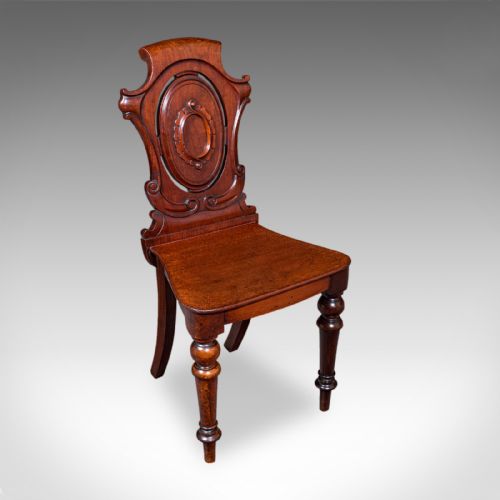
Side chairs generally feature upholstered seats designed for comfort in dining rooms or parlours. Hall chairs often consist entirely of carved wood intended for brief use in reception areas.
Evidence shows hall chairs frequently incorporate solid walnut panels and heraldic or carved motifs. Side chairs lean towards textile, leather, or velvet pads for extended seating.
How should I care for antique walnut furniture?
Walnut requires stable indoor humidity levels to prevent the timber from drying out or splitting. Gentle dusting with a soft cloth preserves the polished surface without stripping the patina.
Avoid placing chairs in direct sunlight or near heat sources, which can damage burr walnut veneers. Periodic application of appropriate wax feeds the wood and maintains its natural lustre.