


Traditional Wall Textile Panel
Traditional wall textile panel selections bring rich regional needlework, woven tribal motifs, and historic fabric fragments directly into domestic interiors.
Traditional Wall Textile Panel
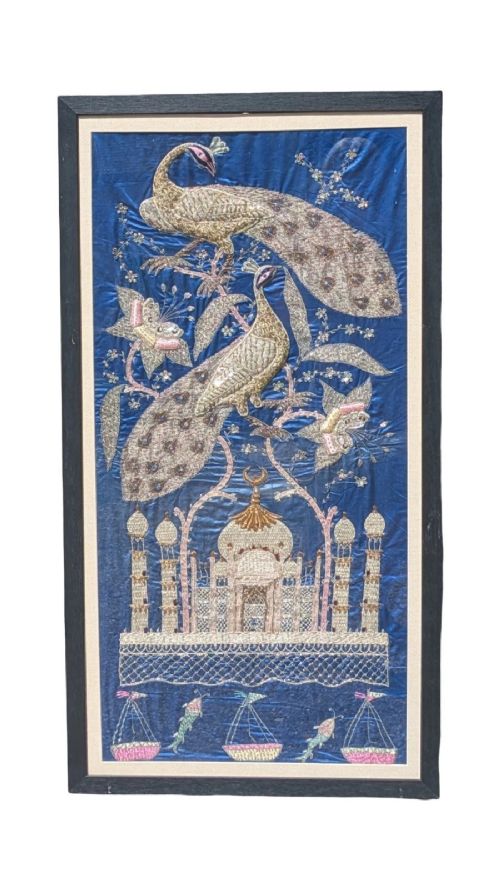
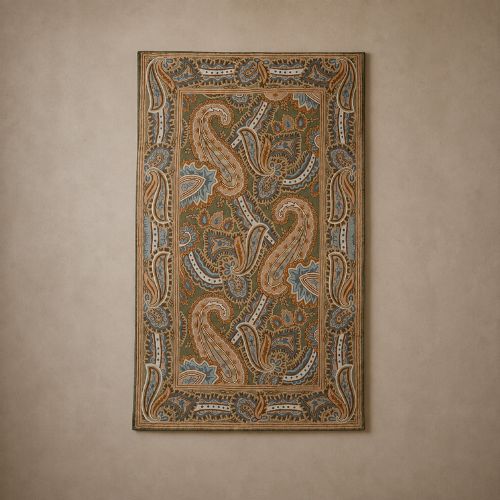
A traditional wall textile panel encompasses embroidered suzanis, ikat fabric lengths, tribal bags, and historic European tapestries repurposed for display. Buyers searching this phrase encounter Central Asian needlework, Persian Rasht panels, and English or French framed hangings spanning the nineteenth and early twentieth centuries.
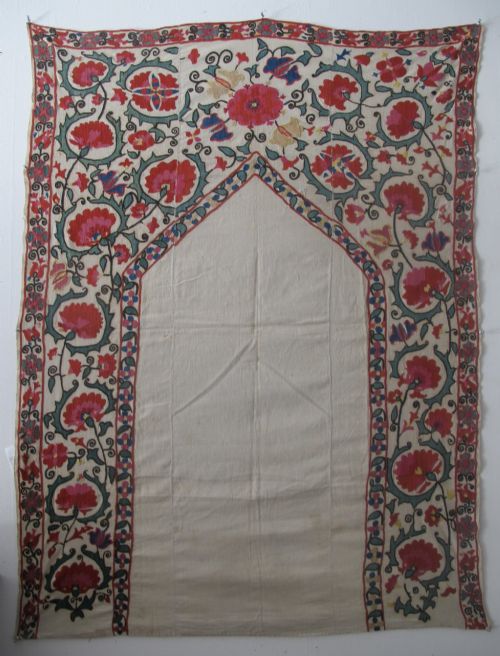
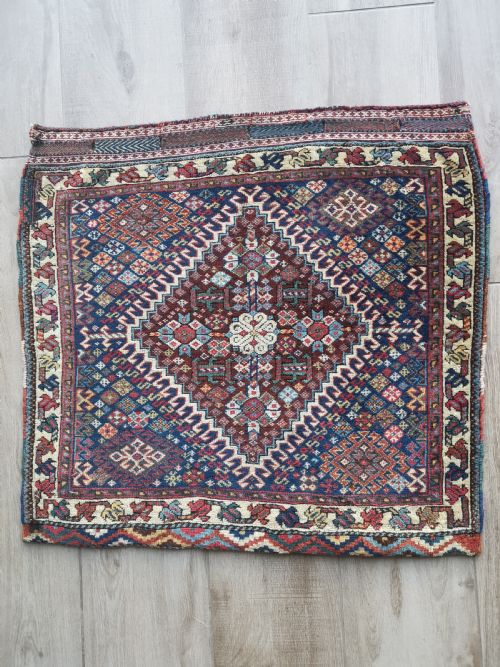
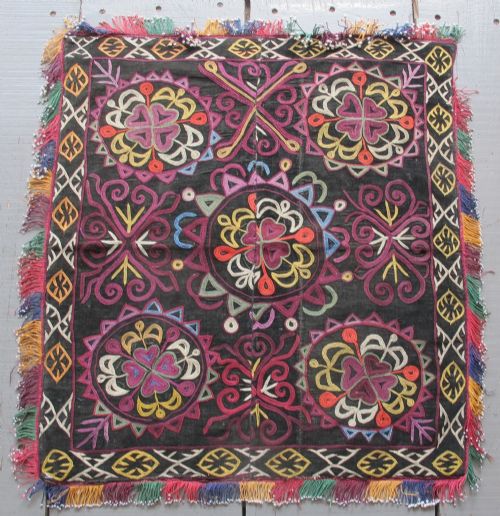
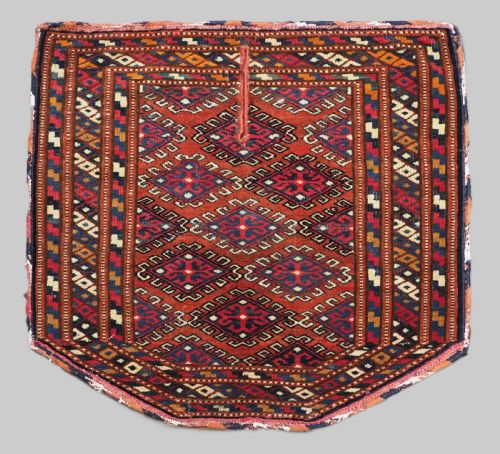
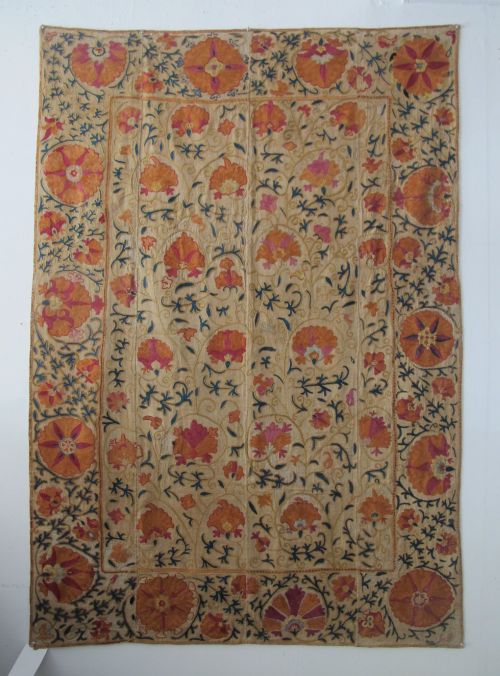
Suzanis from Uzbekistan dominate the selection, featuring bold floral designs or architectural motifs worked in silk thread on cotton or adras grounds. Alongside these, tribal trappings such as Turkmen asmalyks, torbas, and chuvals offer geometric woolwork designed originally for nomadic dwellings.
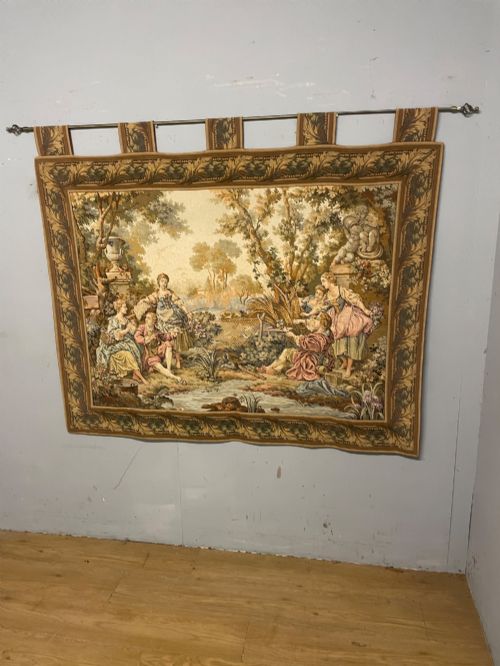
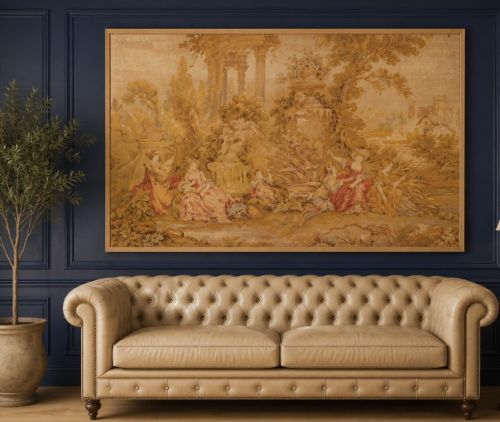
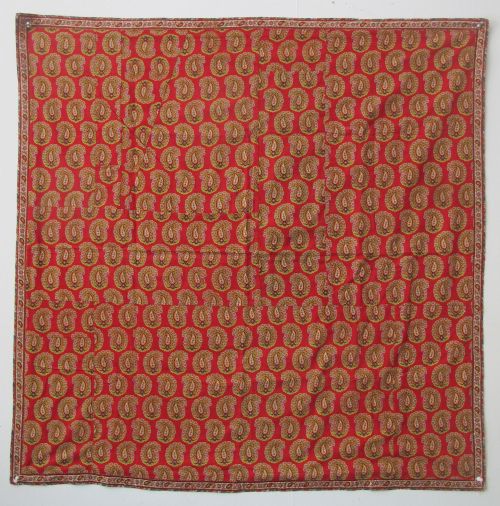
European examples take the form of crewelwork embroideries, blockprinted cottons, samplers, and large tapestry panels. Each piece reflects the domestic crafts, regional traditions, and textile arts of its specific origin.
Objects range from small mirror covers and pillow fragments to room-sized hangings. The common thread is their textile nature and suitability for wall mounting.
Materials and construction
Makers utilised natural fibres including silk, cotton, wool, linen, and felt as the foundation for these textiles. Grounds often consist of hand-woven cotton, adras silk-cotton blends, or heavy woollen cloth.
Needlework components rely on silk or wool embroidery threads dyed with natural pigments to achieve deep reds, yellows, and blacks. Surface decoration extends to appliqué work, blockprinting, and sumac weaving techniques.
Many Central Asian suzanis employ tambour stitch or hook-embroidery executed on multiple joined fabric panels. European items display crewel embroidery, cross-stitch samplers, and woven tapestry structures.
Several embroidered samplers preserve the domestic practice of stitching the alphabet alongside domestic animals and naive floral pots.
Factors of quality
Quality rests upon the fineness of the needlework, the complexity of the design, and the vibrancy of the remaining dyes. Dense, precise stitching on suzanis or tapestries indicates higher workshop skill and invested time.
The integrity of the ground fabric and the stability of the natural dyes significantly affect a piece's visual impact. Intact borders, balanced compositions, and minimal ground degradation distinguish superior examples from simpler domestic efforts.
Regional rarity and the preservation of original formats also influence standing. Pieces retaining their full scale without major later alterations hold greater clarity of historical design.
The Traditional Wall Textile Panel Glossary
- Suzani
- An embroidered tribal hanging originating from Central Asia, typically worked in silk thread on a cotton or silk-cotton ground. These textiles often feature large floral medallions and were traditionally made as part of a bride's dowry.
- Ikat
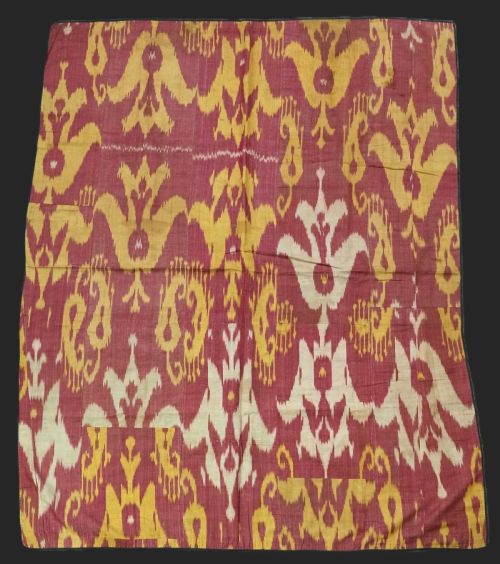
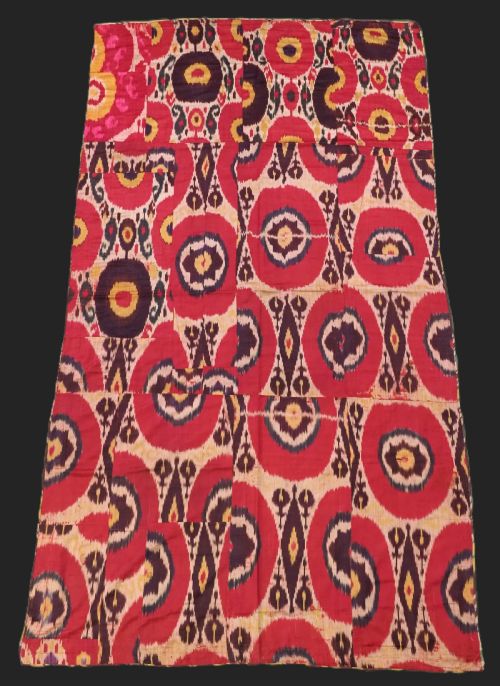
- A dyeing and weaving technique where yarns are tie-dyed before being woven into fabric, creating characteristic feathered pattern edges. Uzbek ikat panels display bold, blurred geometric and floral designs.
- Asmalyk
- A pentagonal or triangular camel-caparison trapping produced by Turkmen tribes. They were used during wedding processions before later being hung inside the nomadic yurt.
- Torba
- A small rectangular storage bag woven or embroidered by tribal groups in Central Asia. They hung inside tents to hold personal possessions and household items.
- Adras
- A traditional Central Asian fabric woven with a silk warp and a cotton weft. It combines the lustrous sheen of silk with the sturdiness of cotton.
- Crewelwork
- A type of surface embroidery executed using wool yarn on a heavy linen or cotton twill ground. English crewelwork panels often depict flowing floral and arboreal motifs.
Traditional Wall Textile Panel: Frequently Asked Questions
How were traditional wall textile panels used originally?
Many Central Asian suzanis and tribal trappings served domestic and ceremonial functions within nomadic or village communities, acting as dowry items, wall hangings, or storage bags.
European pieces such as tapestries, samplers, and crewelwork were made to decorate the walls of country houses, parlours, and domestic interiors.
How do I hang a fragile textile panel safely?
Textiles require weight to be distributed evenly rather than pulled from single points. Conservation-grade mounting often involves stitching the piece to a padded, fabric-covered board or using a concealed fabric sleeve.
Direct exposure to strong sunlight should be avoided to prevent natural dyes from fading over time.
What is the difference between a suzan and an ikat panel?
A suzani is an embroidered textile where designs are stitched onto a pre-woven fabric ground by hand using needle and thread.
An ikat panel is patterned through a resist-dyeing process applied to the threads themselves before the fabric is woven on the loom.
How can I tell the region of origin?
Regions reveal themselves through specific colour palettes, motif structures, and textile techniques. Bokhara and Shakrisabz suzanis display distinct floral arrangements, while Yomut and Teke tribal pieces utilise characteristic geometric gul motifs.
European samplers and crewelwork bear distinctive stitching styles and regional lettering traditions.