

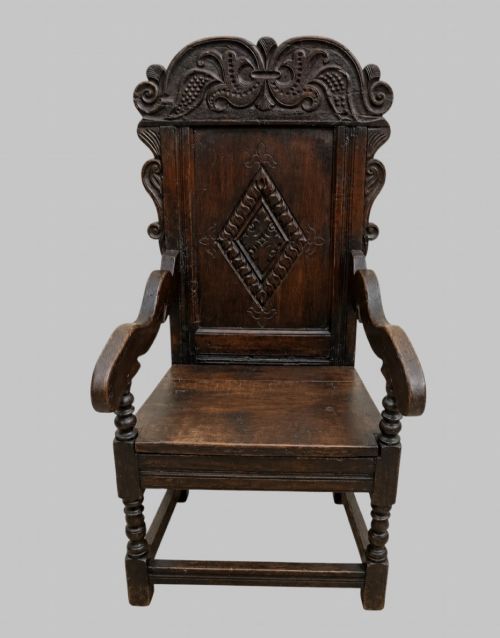
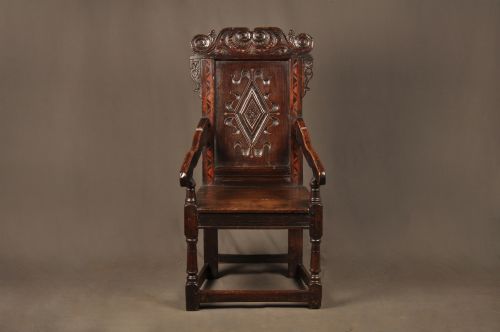
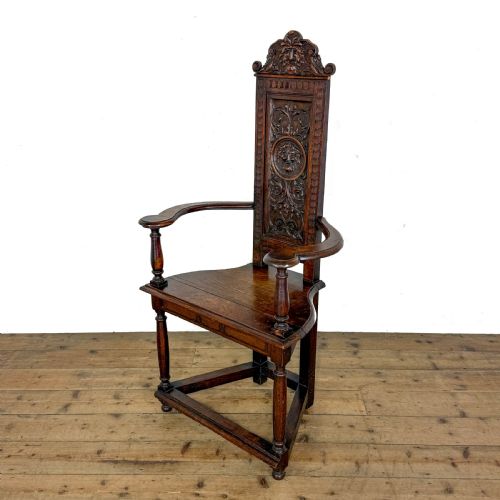


Traditional Wainscot Armchair
A traditional wainscot armchair offers solid timber construction and panelled backs, bringing heavy seventeenth-century presence into a modern room.
Traditional Wainscot Armchair
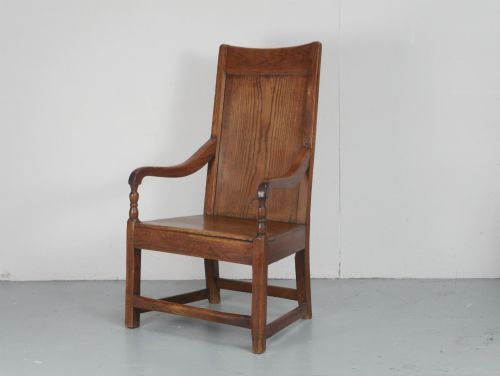
A traditional wainscot armchair is a heavy wooden seat built with a panelled back and solid armrests, originating from periods when seating was scarce and costly. Buyers searching for a traditional wainscot armchair encounter examples spanning from the seventeenth century through to nineteenth-century revivals.
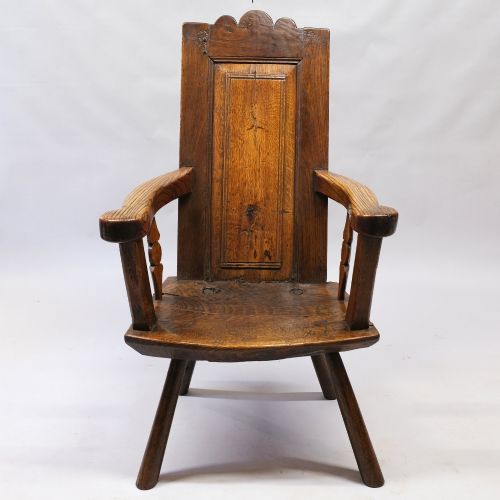
Regional variations appear frequently across England, Wales, and Scotland, with specific pieces originating from Yorkshire, Lancashire, and Fair Isle. Many items date from the eighteenth century or adopt seventeenth-century styles during Victorian and Edwardian revival periods.
Quality factors
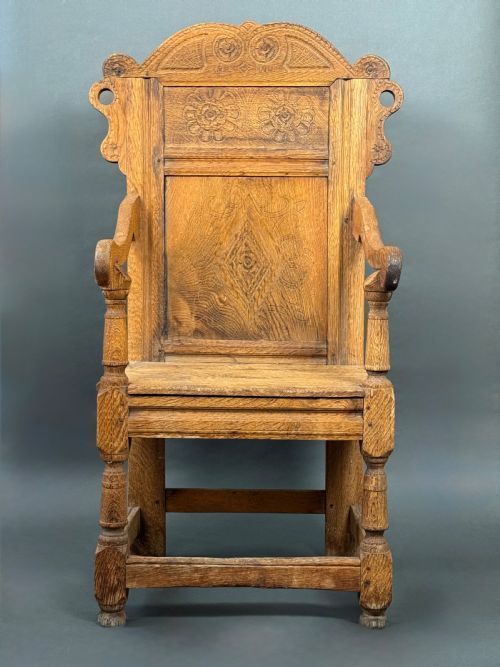
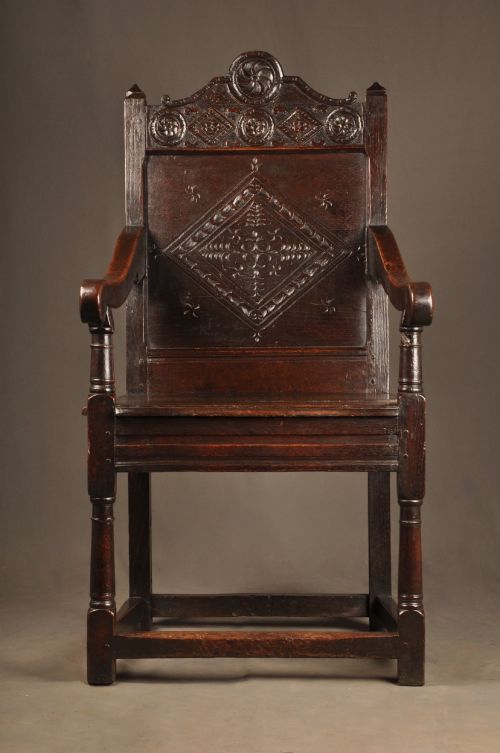
Quality rests upon the integrity of the timber and the proportion of original material retained through centuries of use. Chairs displaying crisp carving on the crest rail and panels command greater attention than later copies.
The relationship between the heavy panelled back and the turned or square-section legs dictates the overall structural balance. Period examples show appropriate surface wear and stable joints developed over generations.
Traditional Wainscot Armchair Retail Price Guide 2026
Typical asking prices for traditional wainscot armchair among the pieces listed under this phrase on Sellingantiques today, from the lower quarter to the upper quarter. They describe what is for sale here now, not the wider market.
The listings span from the seventeenth century through Georgian, Victorian, and Edwardian periods, including nineteen-thirties revival pieces.
The Traditional Wainscot Armchair Glossary
- Wainscot chair
- A wooden armchair featuring a panelled back, typically constructed from oak during the sixteenth or seventeenth centuries. The term originally referred to fine oak panelling imported from the Low Countries.
- Jacobean
- A design style spanning the early seventeenth century, characterised by rigid symmetry, straight lines, and geometric carved motifs. Revival pieces from later centuries often replicate these heavy architectural forms.
- Crest rail
- The top horizontal member of a chair back, frequently shaped, carved, or arched. In wainscot chairs, this component receives the most decorative attention.
- Vernacular furniture
- Domestic items made by local tradesmen using regional materials and traditional methods rather than following metropolitan fashion. These pieces often reflect local agricultural or coastal building traditions.
Traditional Wainscot Armchair: Frequently Asked Questions
How do I identify a true seventeenth-century wainscot chair?
Authentic period pieces show genuine timber shrinkage, hand-cut peg joints, and surface patination developed over centuries of handling.
Revival pieces made during the Victorian era or the nineteen-thirties often use machine-cut elements and lack the natural wear patterns of early examples.
Where were these chairs originally used?
These seats belonged in great halls, farmhouses, and civic rooms where solid timber furniture denoted status and provided protection from draughts.
The panelled back shielded the sitter from cold stone or timber walls.
Can I use a traditional wainscot armchair daily?
Solid oak construction makes these chairs exceptionally sturdy for everyday seating in living spaces or studies.
Placing them away from direct heat sources protects the ancient timber from drying out and splitting.
What is the difference between regional English and Welsh chairs?
Regional pieces incorporate local woodworking traits, such as specific carving patterns found in Yorkshire or Lancashire workshops.
Welsh examples often utilise local oak and vernacular proportions suited to rural domestic interiors.