







Traditional Vienna Wall Clock
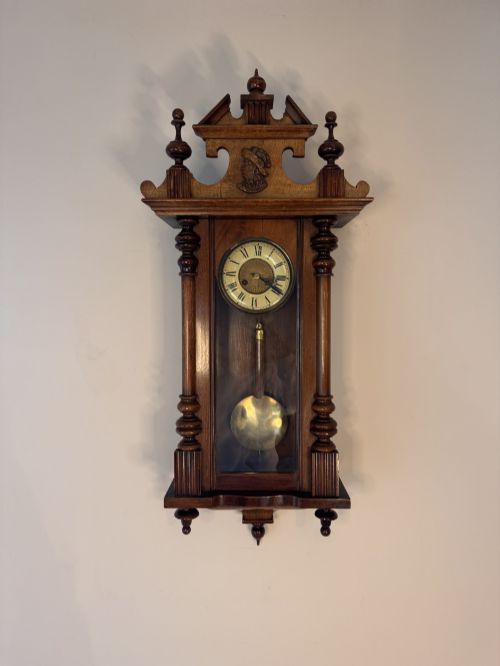
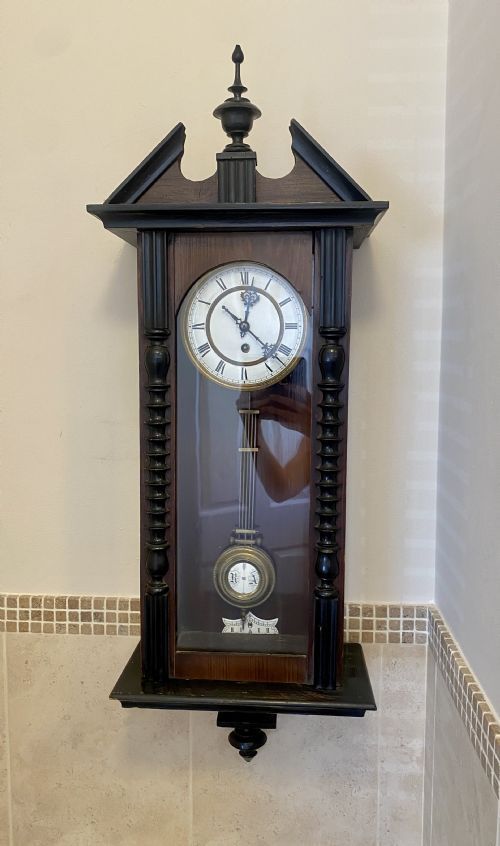
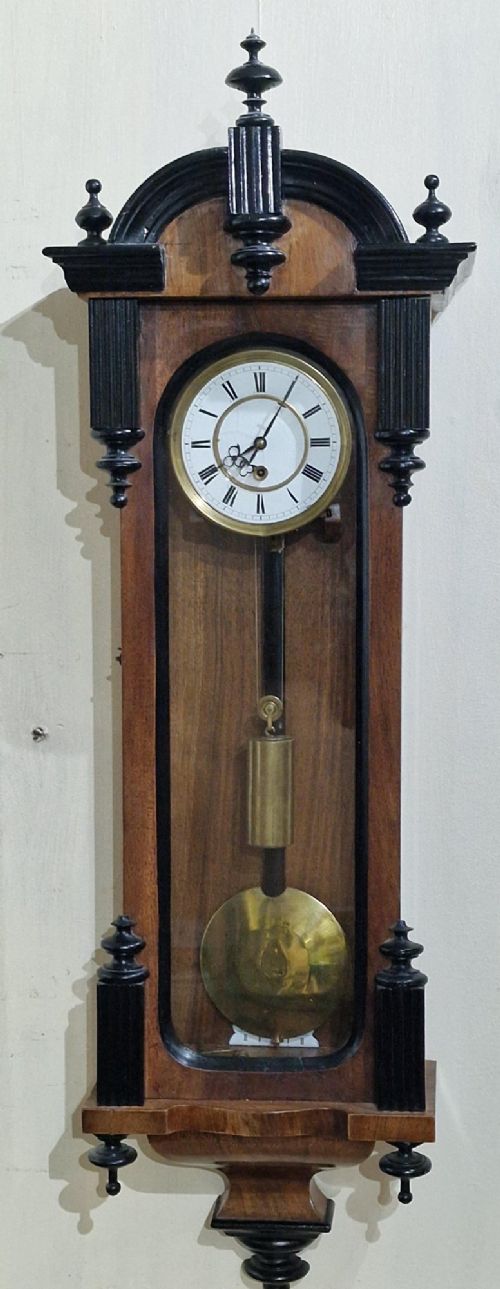
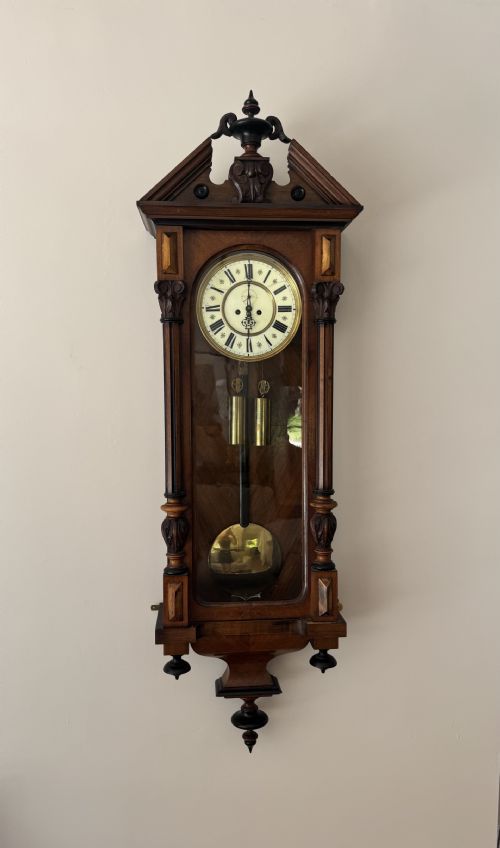
A traditional vienna wall clock brings precise movement and architectural presence to a room, driven by brass weights and swinging pendulums.
Traditional Vienna Wall Clock
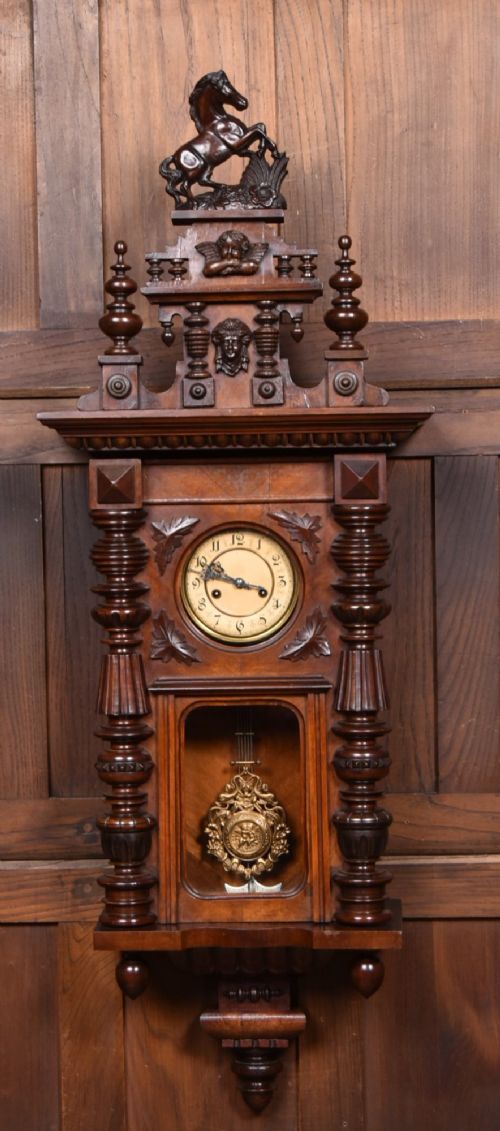
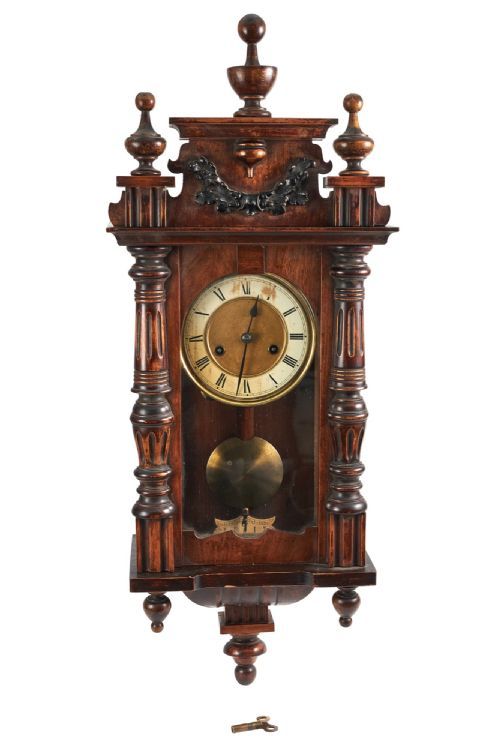
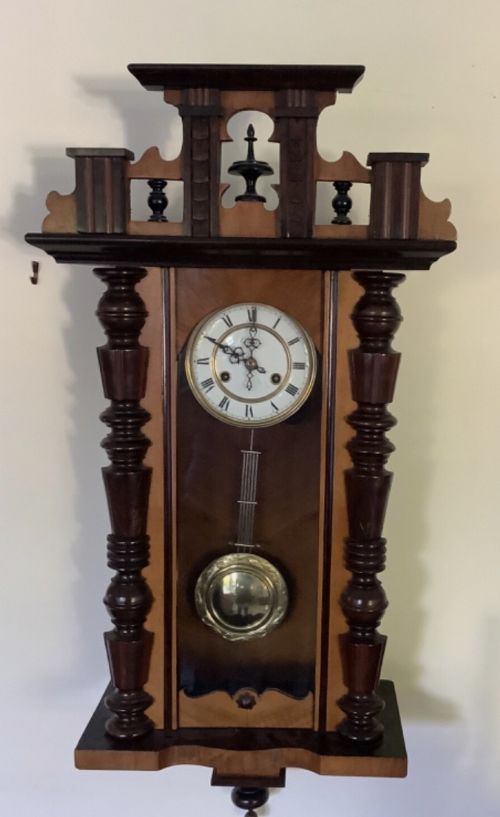
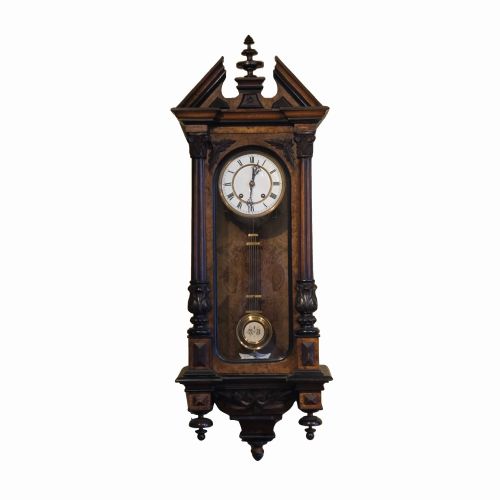
A traditional vienna wall clock typically takes the form of a regulator or drop dial timepiece, designed to hang securely on a wall. These pieces originate primarily from the nineteenth century, spanning periods from mid century Biedermeier examples through to Victorian and later iterations.
The selections available on this page reflect diverse regional origins including German and Austrian workshops. Cabinets house visible pendulums behind glass panels, offering a clear view of the mechanical movement within domestic spaces.
How they were made
Cabinetmakers utilised timber such as walnut, oak, mahogany, and ebonised wood to construct the tall wooden cases. Carved details and glass front doors required precise joinery to protect the delicate internal movements.
Mechanical components incorporate brass for weights, gears, and pendulums, paired with enamel dials that display the hours. Clockmakers engineered eight-day striking mechanisms and simpler timepiece configurations to regulate time accurately.
Traditional Vienna Wall Clock Retail Price Guide 2026
Typical asking prices for traditional vienna wall clock among the pieces listed under this phrase on Sellingantiques today, from the lower quarter to the upper quarter. They describe what is for sale here now, not the wider market.
Count how many seconds the heavy brass pendulum swings past the enamel dial before the striking train chimes the hour.
What varies in quality
The degree of cabinet ornamentation and timber selection distinguishes standard pieces from finer examples. Elaborate carvings, highly figured walnut veneers, and architectural pediments indicate greater workshop investment during production.
Internal complexity also separates the range, with double weight mechanisms and striking trains demanding higher skill from the clockmaker than basic single weight or time-only movements.
JOHANN BAPTIST BEHA
The Traditional Vienna Wall Clock Glossary
- Regulator
- A precision clock designed to keep exceptionally accurate time. These models typically feature a long pendulum and a prominent glass door displaying the swinging motion.
- Vienna Regulator
- A style of wall clock originating in Austria during the nineteenth century. They are characterised by refined wood cases and weight-driven movements visible through glass.
- Double weight
- A movement powered by two suspended weights rather than one. This setup usually drives both the timekeeping mechanism and a striking train.
- Drop dial
- A clock design featuring a circular dial mounted above an extended wooden case. The lower portion often houses the pendulum and weight assembly.
- Enamel dial
- A clock face made by fusing powdered glass to a metal base at high temperature. This creates a durable, glossy white surface with painted numerals.
Traditional Vienna Wall Clock: Frequently Asked Questions
How do I wind the clock?
Most models require a specialised winding key to pull the weights back up or tension the spring mechanism every eight days. Care must be taken not to over-wind the movement.
Ensuring the weights or springs are engaged correctly keeps the pendulum swinging at a steady beat without straining the internal brass gears.
Why does the clock stop ticking?
Wall clocks are sensitive to being hung level on a vertical surface. Even a slight tilt can cause the pendulum to catch and halt the movement.
Adjusting the suspension or moving the case slightly left or right on the wall usually restores the correct alternating beat of the escapement.
Where should I hang a wall clock?
Select a sturdy interior wall that experiences minimal vibration from doors or heavy foot traffic. Solid masonry or secure wall studs provide the necessary support for heavier timber cases.
Keep the clock away from direct sources of heat and dampness to protect the wooden veneer and internal metal components over time.
How do I identify the period?
Examine the cabinet style, wood choice, and dial construction for clues to the era of manufacture. Mid nineteenth century pieces often show Biedermeier restraint, while later Victorian examples display heavier carving.
Signatures on the movement or backplate can occasionally provide a more precise workshop origin and date of production.