


Traditional Turkmen Wool Carpet
Traditional Turkmen wool carpet pieces bring tribal geometric motifs and deep red tones from Central Asian weaving traditions into domestic spaces.
Traditional Turkmen Wool Carpet
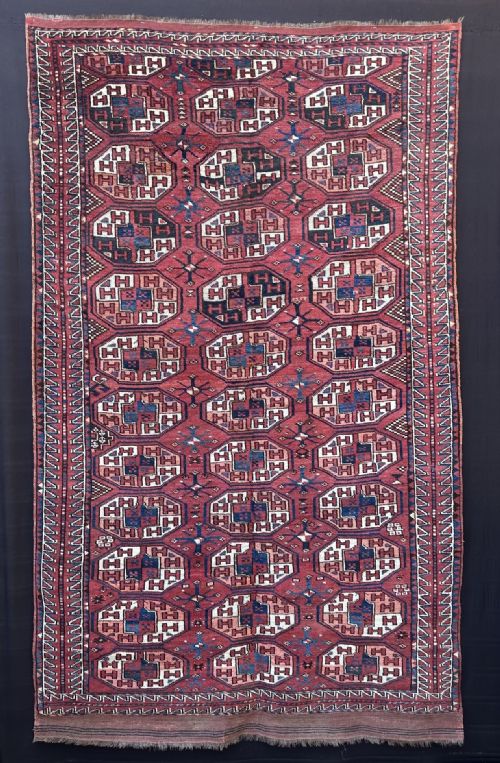
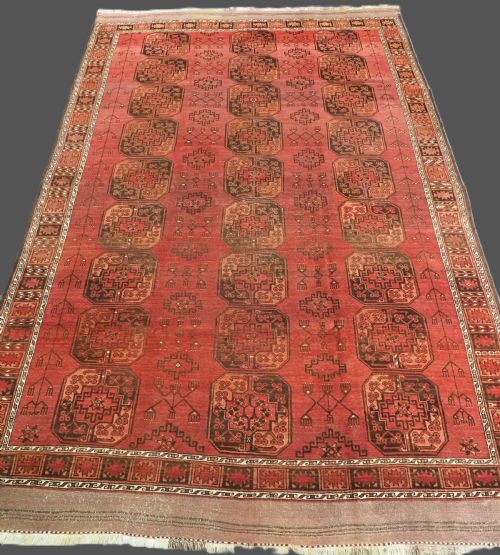
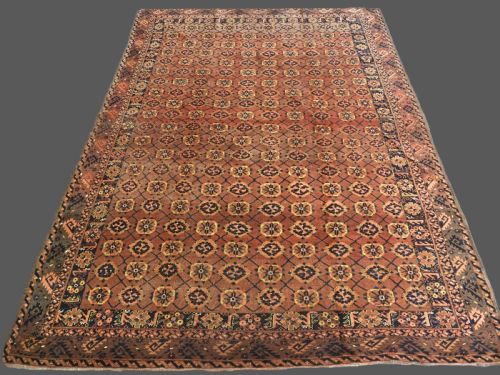
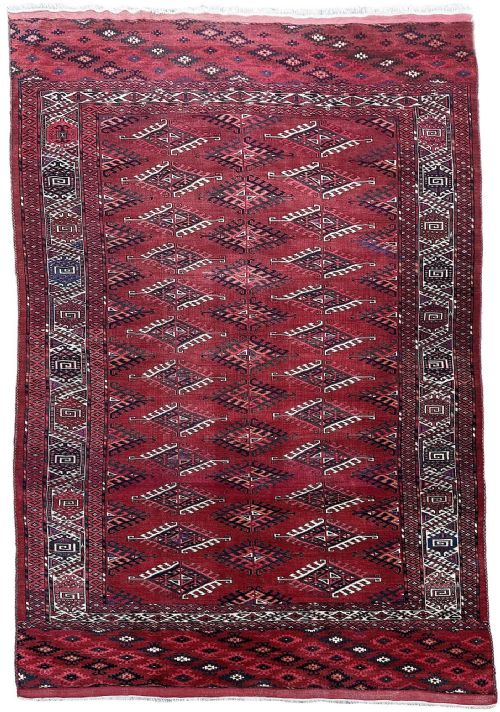
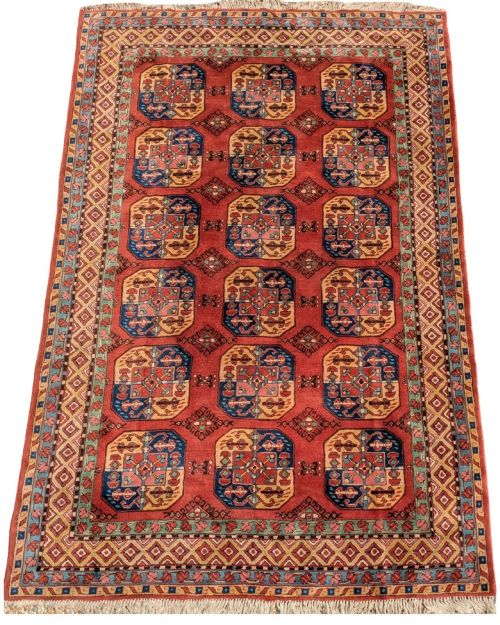
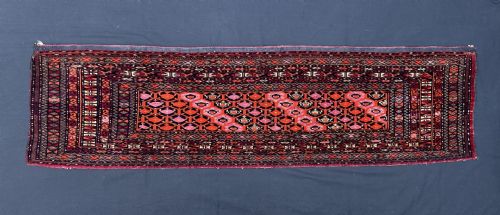
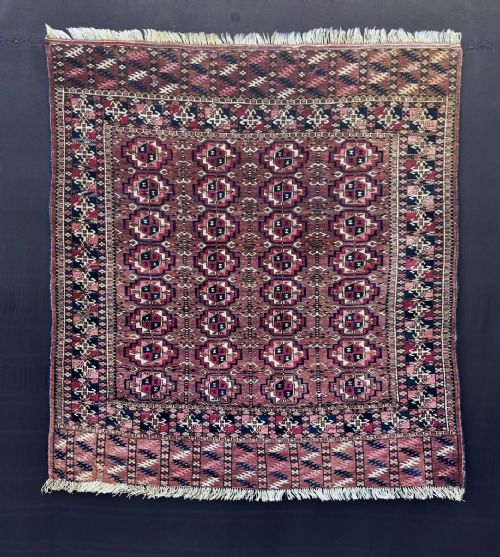
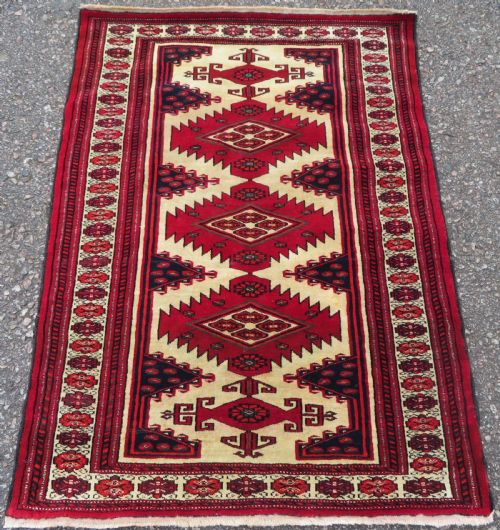
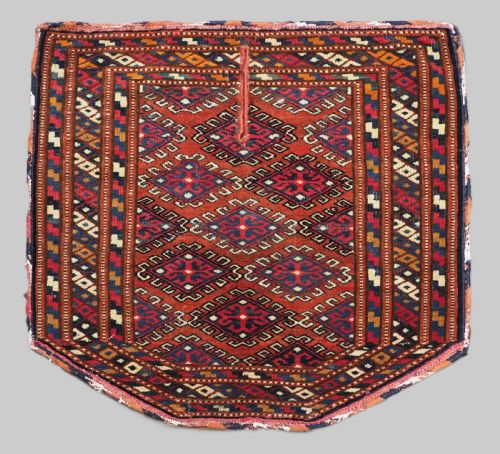
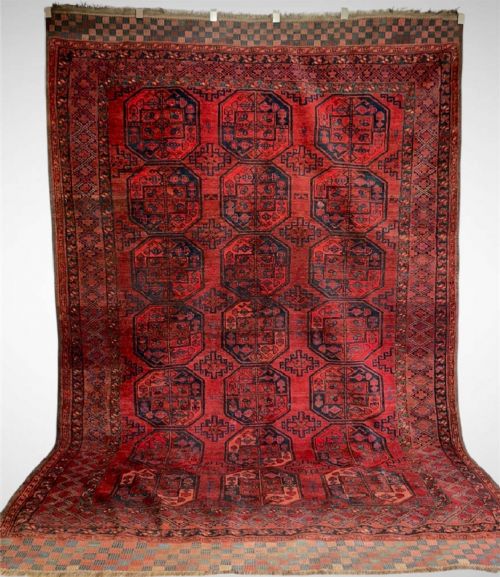
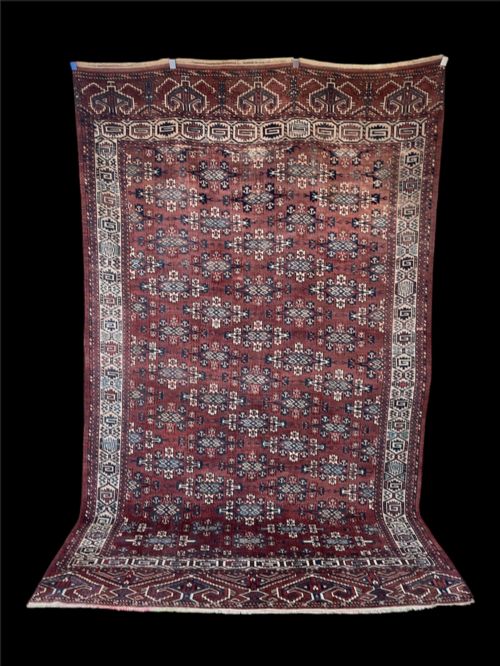
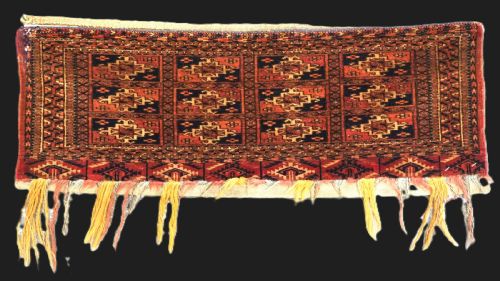
When you search for traditional turkmen wool carpet, you encounter heavy geometric textiles created by various tribal groups across Central Asia, including the Yomut, Tekke, Ersari, and Saryk tribes. These works include large room-sized main carpets, long rugs, and smaller items such as wedding rugs, asmalyks, and saddle covers.
The objects span from the mid-nineteenth century through the early twentieth century, reflecting the material culture of nomadic and village workshops. You will frequently find specific tribal formats like the engsi tent door hangings, torba bag faces, and chuvals.
Tribal designations in the titles point to specific design traditions and regional palettes associated with Turkmenistan and Northern Afghanistan. These pieces serve both utilitarian flooring purposes and ceremonial functions within tribal life.
Materials and Construction
The construction relies fundamentally on hand-spun wool for the pile, foundations, and plain weave backs, frequently supplemented by cotton, silk highlights, goat hair, and horsehair. Natural dyes provide the characteristic saturated madder reds, browns, and dark tones that ground the palette.
Weavers knotted the wool onto warp threads using precise structural techniques, often achieving dense, fine weaves in specialised items like dowry rugs and torbas. Structural supports such as wool selvages and woven backs ensure the durability of these historic textiles.
Camels once wore elaborate pentagonal asmalyks during wedding processions, carrying these masterworks through the dust of the Central Asian steppes.
Evaluating the Weavings
Quality rests upon knot density, the precision of the geometric layout, and the clarity of the primary guls and secondary motifs. Finer examples display meticulous handling of detail, particularly in pieces featuring silk highlights or complex elem panels.
The integrity of the natural dyes and the preservation of original side cordings and flatweave ends also distinguish superior specimens. Well-preserved structures with complete backs and intact borders represent the higher tier of these tribal textiles.
Kizyl Ayak Tribe·Ersari Tribe·Yomut Tribe·Sariq Tribe·Tekke Tribe·Karadashli Tribe
The Traditional Turkmen Wool Carpet Glossary
- Gul
- The primary octagonal medallion motif repeated across main carpets and tribal rugs. These repeating patterns often identify the specific tribe that made the piece.
- Ensi
- A tribal rug specifically designed to hang over the wooden doorway inside a nomadic felt tent or yurt. They typically feature a quartered cruciform field design.
- Torba
- A small storage bag face used within nomadic households for domestic organisation. They display intricate tribal patterns and were often woven as part of dowry groups.
- Asmalyk
- A pentagonal trapping mounted on the flank of a camel during traditional wedding processions. These ceremonial items show elaborate weaving and symbolic ornamentation.
- Elem
- The decorative end panel situated at the lower or upper horizontal border of a rug or tent hanging. This section often contains tree motifs or geometric shrubs.
Traditional Turkmen Wool Carpet: Frequently Asked Questions
What is a tribal gul?
A gul is an octagonal medallion motif repeated in rows across the field of the textile. These shapes serve as distinct emblems for different tribal groups.
Weavers arranged these geometric symbols to denote clan heritage and visual identity within the region.
How were these rugs used?
Nomadic and village communities utilised these textiles as floor coverings, tent door hangings, camel trappings, and storage bags in daily life. Special pieces also played central roles in weddings and dowry exchanges.
Their heavy wool construction provided insulation against cold steppe climates inside traditional dwellings.
How do I care for wool carpets?
Protect the wool pile by vacuuming gently without a rotating brush roll and keeping the textile out of direct sunlight. Professional cleaning by specialists in antique textiles ensures the natural dyes remain stable.
Allowing proper ventilation beneath the carpet prevents moisture accumulation in the historic wool fibres.
How to identify tribal origins?
Tribal attributions rely on the specific structure of the guls, the secondary border ornaments, and the dominant colour palette. Yomut, Tekke, and Ersari weavers each employed distinct structural traits and colour combinations.
Comparing the end finishes and knotting characteristics helps distinguish between the various Turkmen and Afghan workshop traditions.