



Traditional Turkmen Trappings
Traditional turkmen trappings are woven wool artefacts of Central Asian nomadic life that bring rich tribal geometry and deep natural dye colour into a room.
Traditional Turkmen Trappings
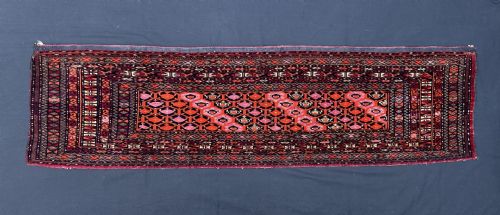
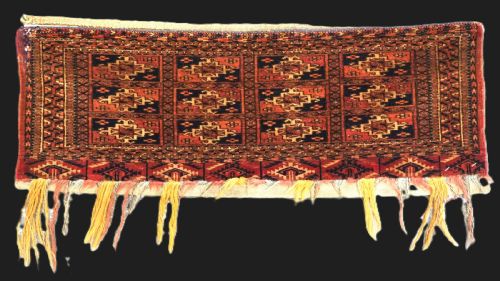
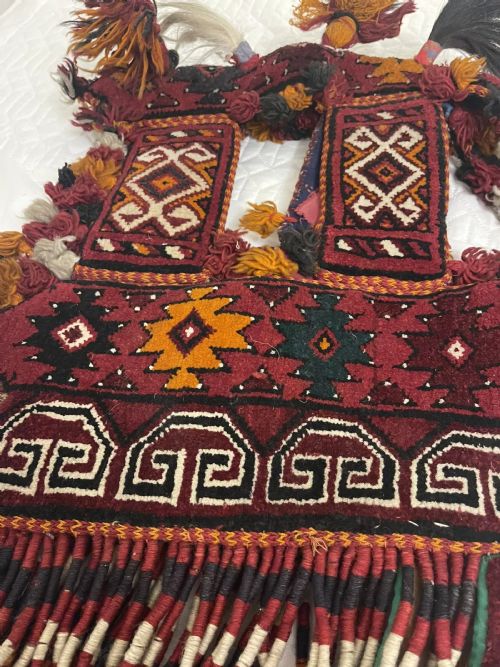
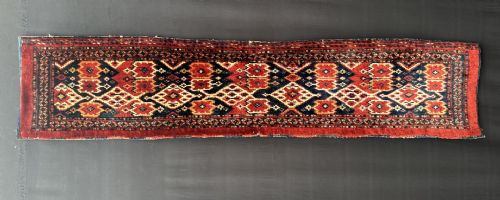
Traditional turkmen trappings encompass tribal weavings such as torbas, asmalyks, jollars, and dizlyks created by Central Asian nomadic groups. These pieces served practical roles in daily camp life, camel transport, and wedding ceremonies across the steppes.
Buyers browsing traditional turkmen trappings will most frequently encounter nineteenth-century torba faces and wedding camel trappings originating from specific tribal groups like the Tekke, Saryk, Yomut, and Ersari. These textiles carry distinct regional motifs and structures that mark their specific nomadic heritage.
What varies in quality
The fineness of the knotting and the crispness of the tribal guls distinguish standard examples from finer works. Denser pile construction allows intricate secondary motifs to remain sharp and legible across the textile surface.
Completeness alters the character of these textiles, as surviving original backs, side cords, and complete formats retain their original ethnographic context. The depth and saturation of the natural dye palette further define the visual power of each piece.
Listings feature nineteenth-century wool trappings utilising natural dyes from Turkmen and Central Asian tribal origins.
Sariq Tribe·Tekke Turkmen·Karadashli Tribe·Yomut Tribes·Ersary Tribes
The Traditional Turkmen Trappings Glossary
- Torba
- A small storage bag produced by nomadic tribes for use inside a yurt. These pieces typically feature wide horizontal formats and prominent primary guls.
- Asmalyk
- A pentagonal trapping traditionally hung on the flanks of a camel during wedding processions. These decorative weavings display elaborate field designs and hooked borders.
- Gul
- A repeating primary medallion motif used by Central Asian carpet-weaving tribes. Each tribal group utilised distinct gul variants to signal lineage and identity.
- Jollar
- A long, narrow bag used for tent storage or pack transport across nomadic routes. They share the dense geometric pile work characteristic of tribal weaving.
- Dizlyk
- Knee covers woven for camel or horse decoration during ceremonial events. These specialised pieces reflect the high status of animal adornment in tribal culture.
Traditional Turkmen Trappings: Frequently Asked Questions
What is a torba used for?
A torba served as a practical storage bag within the portable felt tents of Central Asian nomads. Families used them to hold small household goods, clothing, or provisions.
Over time, these bags became important elements of dowry displays and tribal identity. Their distinct formats allowed them to hang securely against lattice tent walls.
How do I hang a textile?
Mounting traditional turkmen trappings requires a support method that distributes weight evenly across the top edge. A sleeved cotton backing attached by a conservator prevents the textile from stretching or pulling.
Keep woven trappings out of direct sunlight to protect the natural wool dyes from fading. Rotating pieces periodically ensures even environmental exposure in a room.
What is an asmalyk?
An asmalyk is a large pentagonal trapping created specifically to adorn the flanks of a camel during wedding processions. These ceremonial weavings formed part of a bride's dowry.
Their striking geometric patterns and fringed borders were designed to impress onlookers during nomadic celebrations. Surviving examples remain prized for their scale and artistry.
How do I identify tribal origins?
Tribal attribution relies on the specific primary gul medallions, border systems, and colour palettes unique to groups like the Tekke, Yomut, or Saryk. Each region employed distinct structural details in the weave.
Comparing structural formats and wool characteristics helps connect a trapping to a particular oasis or steppe region. Reference literature on Central Asian carpets aids in mapping these subtle design differences.