
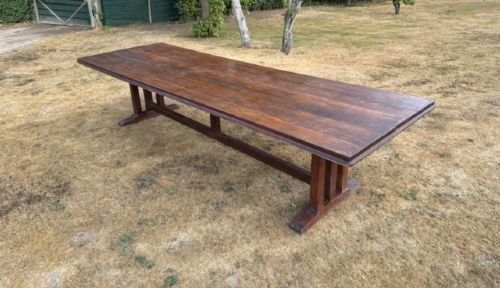
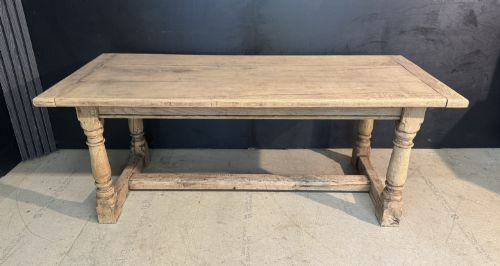
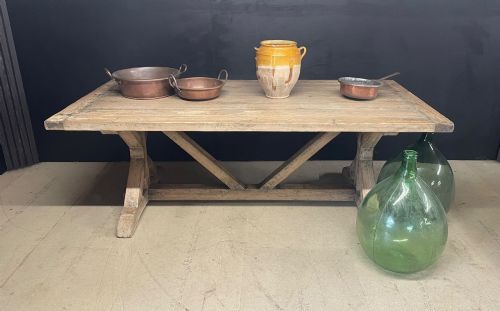
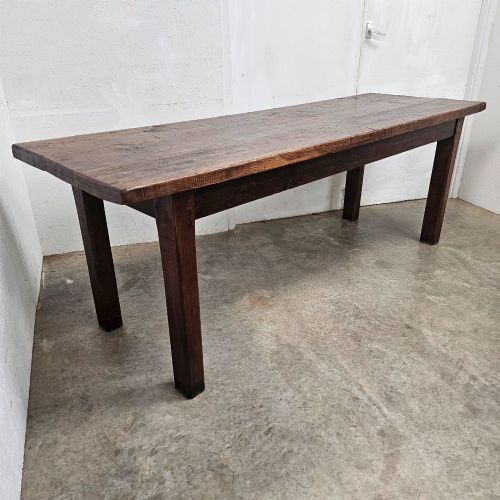



Traditional Timber Refectory Table
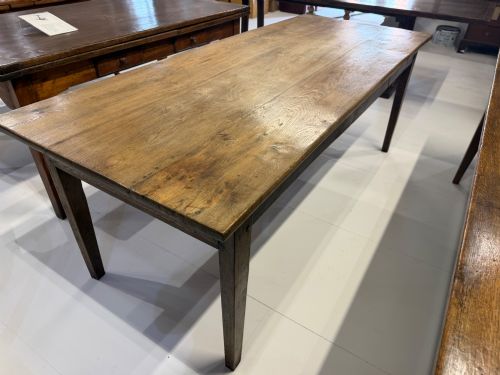
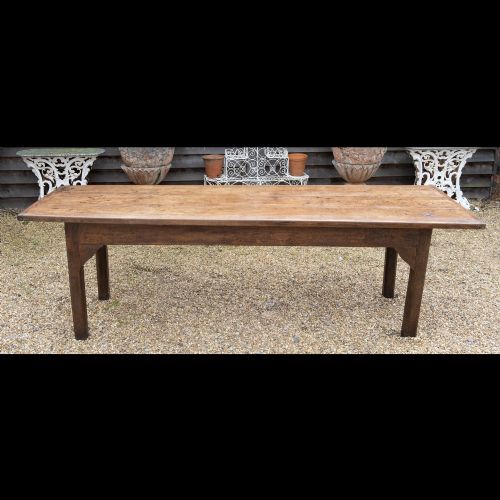
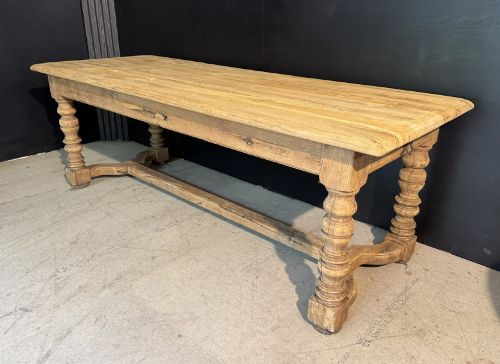
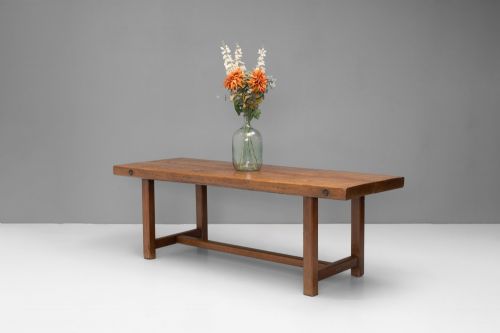
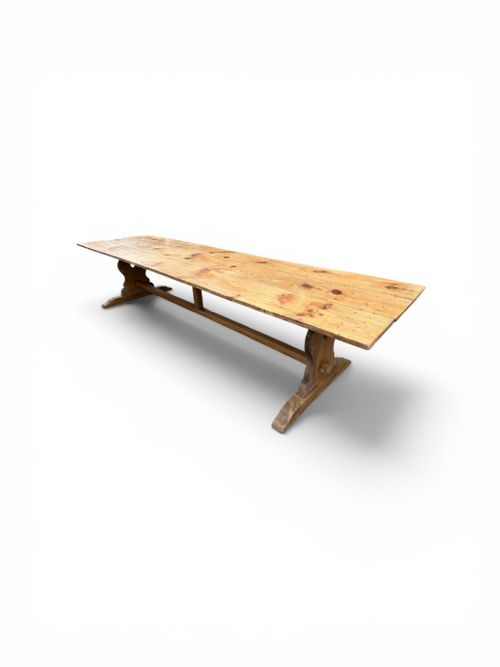
A traditional timber refectory table anchors a room with solid presence, offering the long expanse and sturdy build needed for communal dining.
Traditional Timber Refectory Table
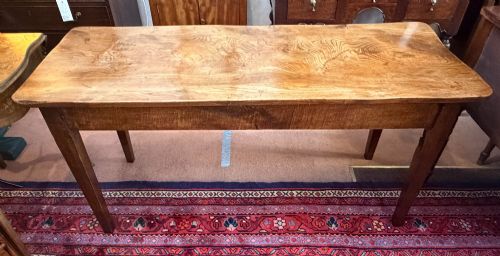
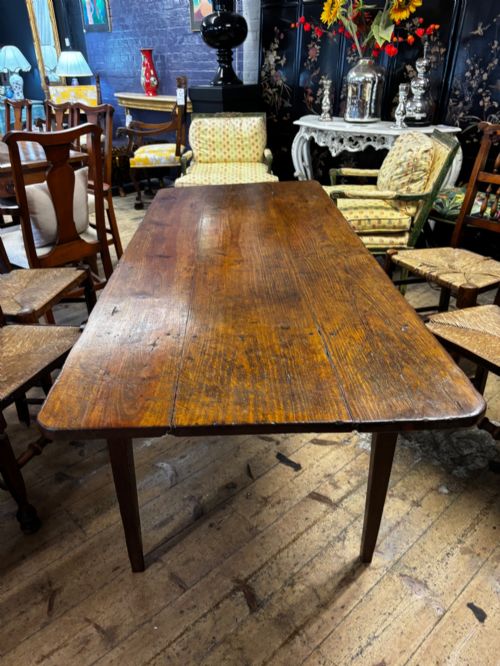
A traditional timber refectory table is a long, utilitarian surface built for dining, sharing meals, and gathering in large rooms. When searching for a traditional timber refectory table, buyers encounter formats spanning the eighteenth century through to the Edwardian period, alongside Victorian and early twentieth-century examples.
The pieces listed on this page appear in various functional guises, including tavern tables, kitchen prep tables, and boardroom tables. Oak, fruitwood, pine, and elm dominate the selection, often grouped within rustic farmhouse, French provincial, and Jacobean revival styles.
Most pieces meeting this description date from the nineteenth century, showcasing long rectangular boards designed to seat multiple guests. They function primarily as dining tables, kitchen tables, or large coffee tables within domestic and country house settings.
How they were made
Carpenters constructed these tables using dense timbers such as oak, elm, fruitwood, and pine, frequently selecting thick planks for the top to withstand heavy daily use. Metal elements in brass and iron appear occasionally in structural or auxiliary fixings.
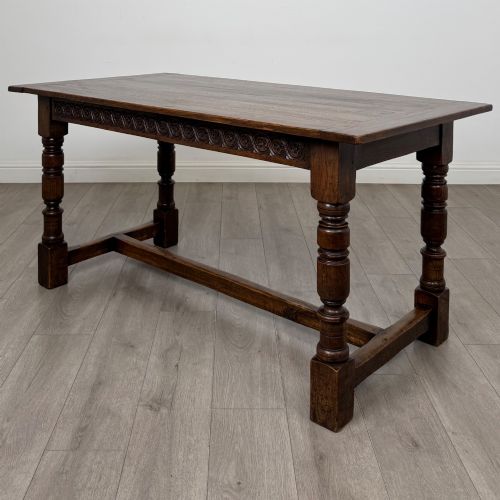
Joinery methods relied on sturdy framing to support the extended lengths required for refectory and tavern formats. Many examples incorporate trestle supports, X-legs, or four-legged frames, sometimes integrating single or double drawers into the apron.
Several tables retain handy side drawers that once stored tavern tally sticks or stray kitchen crumbs.
What varies in quality
Quality in these tables rests on the selection of timber and the integrity of the structural frame. Thicker top boards and denser woods like oak or fruitwood indicate a higher grade of manufacture intended for enduring service.
The refinement of the joinery and the balance between the top and the base separate standard utility pieces from finer examples. Subtle details such as integrated drawers and balanced proportions elevate certain tables above simpler farmhouse variants.
The Traditional Timber Refectory Table Glossary
- Refectory table
- A long narrow dining table historically used in monasteries and great halls. These surfaces provide generous length for communal seating.
- Tavern table
- A compact or moderately sized wooden table built for public houses and domestic taprooms. They often feature sturdy legs and thick timber tops.
- Trestle table
- A table comprising two or more supports connected by a horizontal beam holding a broad top. This construction allows maximum legroom along the length.
- Apron
- The wooden framework beneath the tabletop that connects the legs and frequently houses one or more storage drawers.
- Fruitwood
- Timber harvested from fruit-bearing trees such as cherry or pear. Cabinetmakers valued it for its fine grain and warm tone.
Traditional Timber Refectory Table: Frequently Asked Questions
How do I clean a timber table?
Wipe the surface with a damp cloth and dry it immediately with a soft cloth to protect the grain.
Avoid harsh chemical cleaners that strip the natural finish of antique wood over time.
Can I use a refectory table daily?
These tables were built for heavy daily service in kitchens, dining rooms, and taverns. Their robust construction handles regular family meals and gatherings with ease.
Use protective mats for hot dishes to preserve the vintage timber surface.
What chairs match these tables?
Pair these tables with wooden chairs or benches matching the period or rustic style. Mismatched rustic seating often complements the country house aesthetic.
Ensure the clearance under the apron accommodates the seat height of your chosen chairs.
How do I date a wooden table?
Examine the tool marks, timber selection, and construction joints to estimate the period. Eighteenth and nineteenth-century pieces display hand-cut joinery methods.
Compare the style and secondary woods with documented examples from similar eras.