
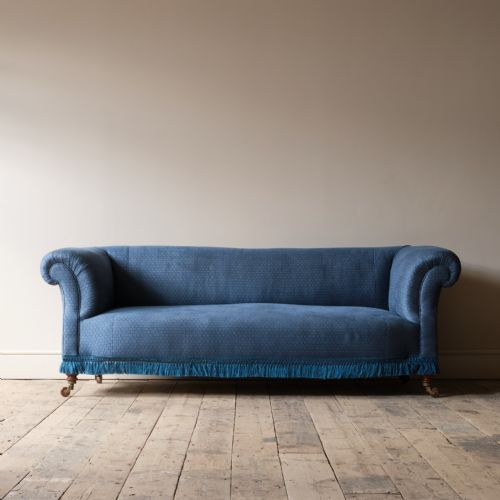
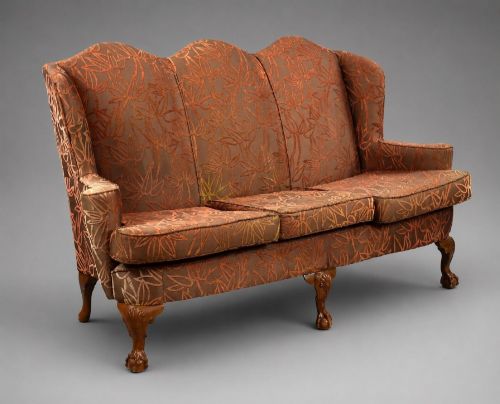
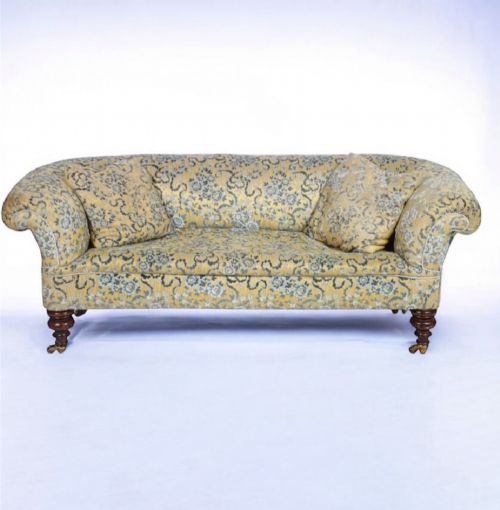
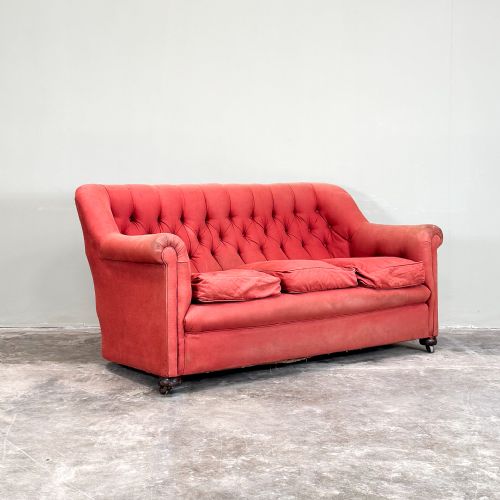


Traditional Three Seater Sofa
A traditional three seater sofa brings deep seating and period character into a room, spanning nineteenth century upholstery styles and twentieth century club designs.
Traditional Three Seater Sofa
A traditional three seater sofa encompasses large upholstered seating options found in nineteenth century and twentieth century homes, ranging from heavy leather chesterfields to fabric covered country house designs. Buyers searching for a traditional three seater sofa will encounter Victorian buttoned models, Edwardian country house pieces, and 1930s deep seated variations.
The selections on this page draw from distinct stylistic roots, including Queen Anne style walnut frames, Georgian proportions with serpentine camel backs, and French provincial forms. Many examples arrive covered in floral textiles, velvet, or hand dyed brown leather, offering substantial proportions designed for principal reception rooms.
What varies in quality
Quality differences emerge in the execution of the timber framing and the complexity of the upholstery work, distinguishing standard commercial production from workshop pieces by makers such as Howard and Sons or William Birch. Superior examples display refined hand carving on mahogany legs, precise deep tufting, and structural integrity in the underlying webbing and springs.
The condition of the covering material creates a further distinction between pieces retained in original fabric, those requiring complete reupholstery, and items restored with hand dyed leather. The presence of documented maker stamps or specific regional styling influences the overall character of the piece.
Materials recorded across the inventory include mahogany, walnut, brass, leather, velvet, hessian, and various timber supports.
Hampton and Sons·Howard and Sons·William Birch
The Traditional Three Seater Sofa Glossary
- Chesterfield
- A deep buttoned upholstered sofa, traditionally finished in leather with arms and back of the same height. This form appears frequently in nineteenth century brown and red leather variants.
- Camelback
- A sofa with a curved, undulating backrest resembling a camel's hump, popular in Georgian and Chippendale revival styles. These frames often showcase exposed mahogany woodwork.
- Drop end
- A sofa arm mechanism that lowers on one or both sides to form a daybed or lounger. Late 1920s examples frequently incorporate this adjustable feature.
- Knowle sofa
- A traditional English sofa style featuring hinged or adjustable high walls for arms, secured by decorative cords or braids. Listed examples include floral upholstered versions paired with armchairs.
- Serpentine
- A furniture outline characterised by a wavy line of alternating convex and concave curves. This contour frequently defines the front rail or backrest of nineteenth century settees.
Traditional Three Seater Sofa: Frequently Asked Questions
What is a traditional three seater sofa?
A traditional three seater sofa is a large upholstered seat dating from the nineteenth or early twentieth century, encompassing styles like the Chesterfield, Knowle, and country house settee.
These pieces use wooden frames of mahogany or walnut, finished in leather, velvet, or printed fabric with deep buttoning or scrolled arms.
How do I identify a Victorian chesterfield?
Victorian chesterfields are distinguished by deep buttoned leather upholstery, low backs, and rolled arms set at the same height as the backrest. They often feature hand dyed brown or red leather.
Many examples from this era rest on short wooden legs fitted with brass castors, built with substantial internal framing for heavy domestic use.
What is a country house sofa?
A country house sofa is a large, deep seated upholstered piece designed for relaxed comfort in nineteenth and early twentieth century English drawing rooms. They frequently feature loose cushions and floral fabric coverings.
These sofas prioritize depth and softness, often showing generous proportions intended for lounging rather than formal posture.
How do I style a period sofa?
Living with a period sofa involves pairing its traditional woodwork, leather, or fabric with complementary nineteenth or early twentieth century furniture. They serve as central seating anchors in living spaces.
Consider the existing upholstery tone, whether hand dyed leather or patterned fabric, when selecting surrounding rugs, lighting, and occasional tables.
Are these sofas suitable for reupholstering?
Several listed pieces are explicitly designated for reupholstering or restoration, allowing buyers to select their own fabrics. These frames provide sturdy antique foundations.
Restoration projects often involve replacing internal webbing, updating stuffing, and applying new top fabric or leather while preserving the original timber frame.