


Traditional Three Legged Table
A traditional three legged table offers steady footing on uneven floors, bringing compact utility and period character to any room.
Traditional Three Legged Table
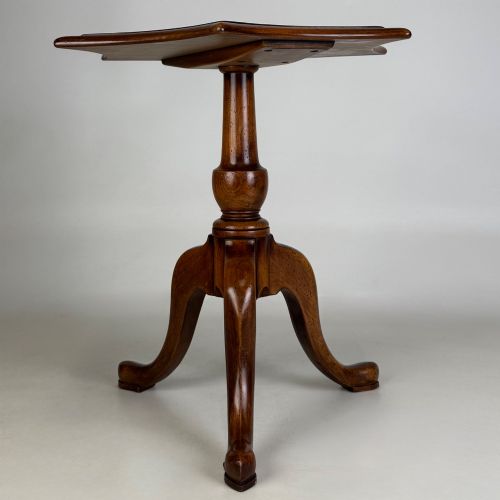
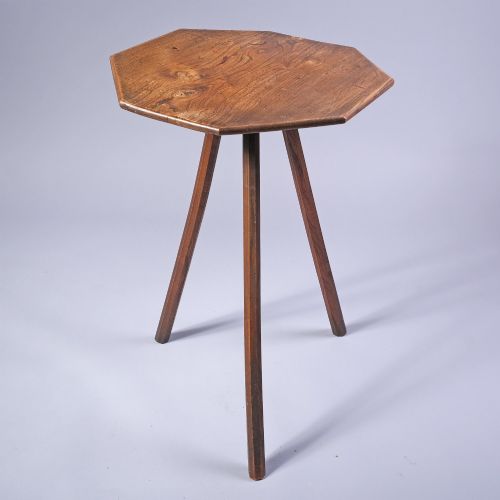
A traditional three legged table typically appears as a cricket table, a wine table, or a tripod table dating from the Georgian period through to the early twentieth century. These pieces emerge in formats ranging from rustic elm and pine examples to polished mahogany and oak designs.
The most common form encountered on this page is the cricket table, frequently fashioned in pine, oak, or elm with three splayed legs designed to remain stable on flagstone or timber floors. Alongside these sit small occasional wine tables and pedestal types rooted in Georgian and Victorian workshops.
Materials and Construction
Cabinet makers utilised native timbers such as oak, elm, ash, and pine for vernacular tripod tables, often turning legs on a lathe and slotting them directly into solid wooden tops. Finer examples employed imported mahogany and walnut with turned pedestals or polished finishes.
Joinery on these tables relies on pegged mortise and tenon joints or simple three-legged box frames that provide inherent rigidity without complex metal hardware. Surfaces display the tool marks of early saws and hand planes, reflecting period workshop practices.
Many early cricket tables owe their survival to standing steady on lumpy cottage floors where four legs would simply wobble.
Defining Quality
Quality rests in the choice of timber and the crispness of the turning on the legs, where well-proportioned components balance the natural tendency of a three-legged frame to tip under uneven loads. Thicker solid timber tops with minimal warping distinguish superior examples from simpler utilitarian pieces.
The integrity of the structural joints where the legs meet the underside of the top dictates the longevity of the table. Original surface patination and honest wear through decades of use carry greater favour among collectors than overly restored or stripped finishes.
The Traditional Three Legged Table Glossary
- Cricket table
- A small vernacular table featuring three legs, typically braced with lower stretchers, originally designed for domestic utility in farmhouses.
- Tripod table
- A freestanding table supported by a central pillar resting on three spreading feet, popular during the Georgian and Victorian eras.
- Wine table
- A compact occasional table with a small circular top, intended for holding glasses or decanters beside seating.
- Pollard oak
- Oak timber taken from trees that have been pollarded, producing wood with dense, highly decorative circular growth markings.
Traditional Three Legged Table: Frequently Asked Questions
What is a cricket table?
A cricket table is a traditional three-legged small table, usually built from timber like pine, oak, or elm for domestic farmhouse use.
Their three-legged design prevents rocking on uneven historical floors, making them practical portable furniture.
How do I style a tripod table?
Tripod tables work effectively as bedside surfaces, corner accent pieces, or beside armchairs to hold lamps and small objects.
Because of their modest footprint, they fit easily into narrow spaces without crowding a room.
Are these tables sturdy?
Three-legged tables naturally stabilize on uneven stone or timber flooring without needing adjustable feet.
However, buyers should check the joint where each leg joins the underside of the top for firmness.
What woods were commonly used?
Cabinet makers built these tables from native hardwoods and softwoods including oak, elm, ash, pine, and mahogany.
Vernacular pieces usually feature local timber, while formal examples utilise imported mahogany or walnut.